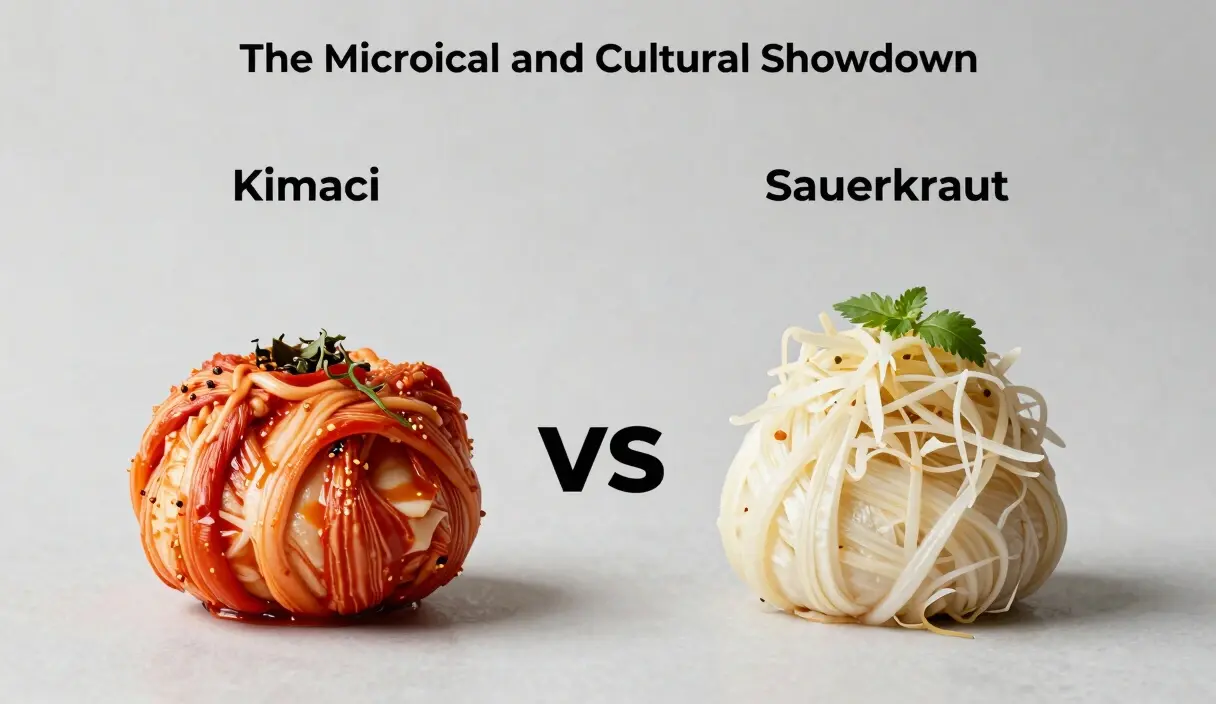
The Battle of the Cabbages: A Technical Comparison of Kimchi vs. Sauerkraut
Which fermented cabbage reigns supreme? We compare the microbiology, nutrition, and preparation physics of Kimchi and Sauerkraut.
Contents
When we talk about the titans of the fermentation world, two names inevitably rise to the top: Kimchi and Sauerkraut. For millennia, these two fermented cabbage dishes have served as the nutritional backbones of their respective civilizations—Kimchi in the vibrant kitchens of the Korean peninsula and Sauerkraut in the hardy regions of Northern Europe. Both are beloved for their tang, their crunch, and their probiotic benefits.
But beyond the fact that they both involve cabbage and salt, these two ferments belong to different biological universes. One is a study in minimalist preservation, relying on just three ingredients to achieve technical perfection. The other is a complex symphony of aromatics, seafood, and spice. This guide goes beyond the taste test to analyze the microbial successions of Leuconostoc vs. Weissella, the impact of capsaicin on bacterial diversity, and the cultural philosophies that shaped these two ferments.
Botanical Profiles: Green Cabbage vs. Napa Cabbage
The difference between these two ferments begins in the soil.
The Sauerkraut Cabbage (Brassica oleracea)
Sauerkraut is almost exclusively made from hard, dense varieties of white or green cabbage.
- The Structure: These cabbages have tightly packed leaves with high levels of pectin. This density allows Sauerkraut to remain crunchy even after 12 months of fermentation.
- Sugar Content: Green cabbage is rich in complex carbohydrates, providing a steady fuel source for Lactic Acid Bacteria (LAB).
The Kimchi Cabbage (Brassica rapa subsp. pekinensis)
Traditional Kimchi uses Napa Cabbage.
- The Structure: Napa cabbage has a higher water content and more delicate leaves. It is designed for shorter, more intense fermentation periods.
- Surface Area: The crinkled leaves provide a massive surface area for the Kimchi paste to adhere to, ensuring every bite is saturated with flavor.
The Microbial Divide: Leuconostoc vs. Weissella
Most Western guides treat sauerkraut and kimchi as variants of the same ferment. Microbiologically, they are not. The microbial ecosystems are distinct enough that the probiotic benefits they deliver to the gut are measurably different.
While both dishes rely on Lactic Acid Bacteria (LAB), the specific cast of microbial characters is distinct.
The Sauerkraut Ecosystem
The primary driver of Sauerkraut is Leuconostoc mesenteroides in the early stages, followed by Lactobacillus plantarum. This is a highly stable, predictable succession that thrives in cooler temperatures.
The Kimchi Ecosystem
Kimchi is a “wilder” ferment. Because it includes garlic, ginger, and scallions, it introduces a wider array of microbes from the start.
- Weissella koreensis: This is the unique “signature” bacterium of Kimchi. It is responsible for the production of specific amino acids and the distinctive carbonation felt in fresh Kimchi.
- Capsaicin Impact: The presence of chili flakes (Gochugaru) in Kimchi filters the microbial population, inhibiting certain spoilage yeasts while encouraging the growth of high-functioning LAB.
Nutritional Showdown: Which is Healthier?
Both ferments are powerhouses of health, but they offer different benefits.
The Vitamin C King: Sauerkraut
Because green cabbage is more dense, a cup of Sauerkraut typically contains a higher concentration of Vitamin C than a cup of Kimchi. It is also extremely high in Vitamin K2, which is essential for cardiovascular health.
The Metabolic Booster: Kimchi
Kimchi’s health benefits extend beyond the cabbage.
- Capsaicin: The heat from the chili flakes boosts metabolism and has anti-inflammatory properties.
- Allicin: The raw garlic in Kimchi supports heart health and has antimicrobial properties.
- Diversity: Because Kimchi often contains 10-15 different ingredients, it offers a much more diverse array of micronutrients and probiotic strains.
Preparation Physics: Dry-Salting vs. The Paste
I’ve made both on the same weekend. The sauerkraut took 20 minutes of prep; the kimchi paste alone took 45. But the kimchi’s paste-between-every-leaf technique is the entire reason it delivers that explosive, layered flavor.
I once timed a kimchi Yangnyeom paste session: 12 minutes to blend, 30 minutes to apply between every leaf of four heads of Napa cabbage, hands stained red up to the wrist. The sauerkraut — same afternoon — was rubbed and packed in 18 minutes, hands clean, crock sealed. Six weeks later, the kimchi was gone in two weeks. The sauerkraut lasted four months. Different purpose. Different velocity. Different reward.
The way these two dishes are handled determines their long-term stability.
Sauerkraut: The Brine Immersion
Sauerkraut relies on Dry Salting. You rub salt into the cabbage until it releases its own juices, then you submerge it.
- The Goal: Total anaerobic immersion. The liquid is the shield.
Kimchi: The Layered Paste
Kimchi preparation is more labor-intensive. First, the cabbage is soaked in brine to wilt it, then it is rinsed, and finally, a thick Paste (Yangnyeom) is rubbed between every single leaf.
- The Goal: Flavor saturation. The paste acts as a slow-release fuel source for the bacteria tucked between the leaves.
Our top picks for cabbage fermentation gear:
Top Cabbage Fermentation Gear
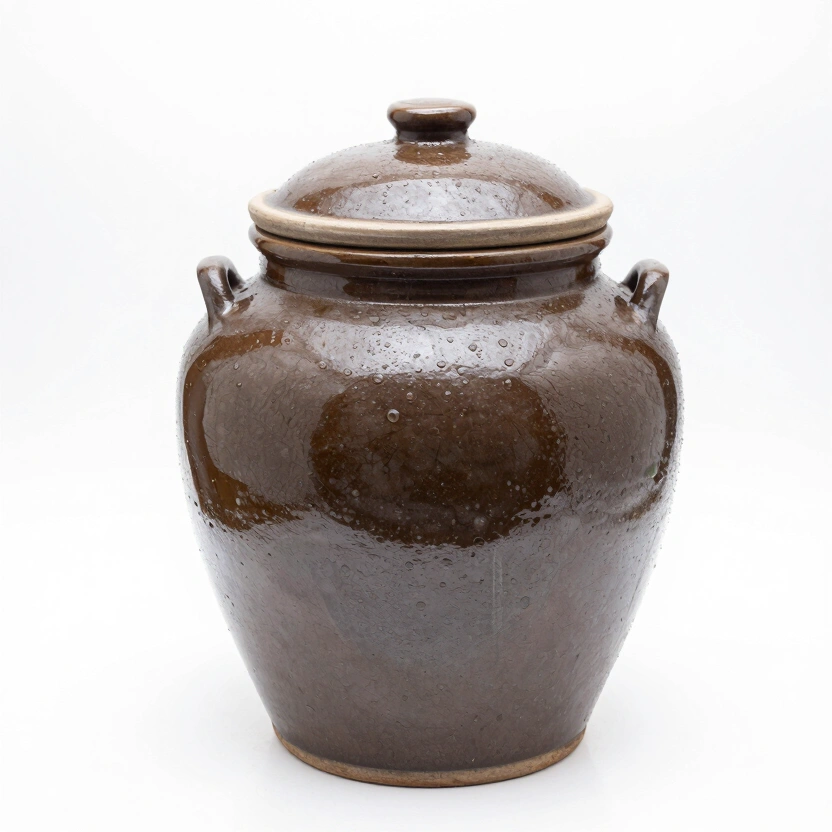
Traditional Ceramic Fermentation Crock
Classic water-seal stoneware crock for large-scale kraut, kimchi, and miso batches.
Check Price on Amazon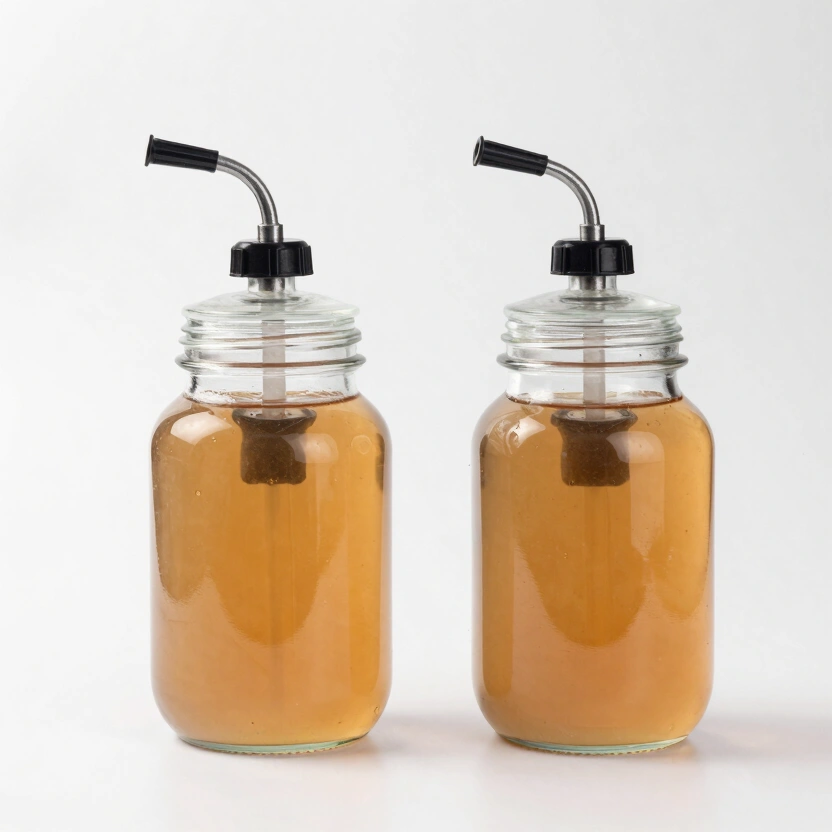
Green Wise Fermentation Jar Set (2 Pack)
Large 1.4L jars with integrated airlock valves. Perfect for sauerkraut, kimchi, or tomatoes.
Check Price on Amazon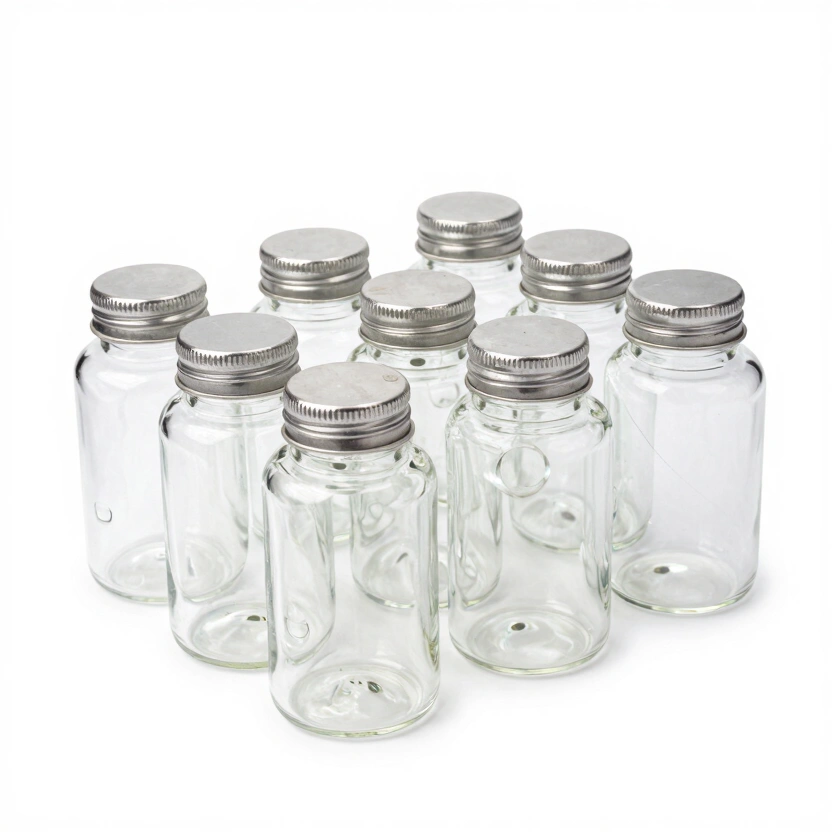
Artcome 10-Pack Glass Weights
Bulk set of heavy glass weights with easy-grip handles for large mason jar setups.
Check Price on Amazon* Affiliate links. Prices last updated March 3, 2026.
Cultural Philosophy: Survival vs. Community
Sauerkraut: The Winter Vault
In Europe, Sauerkraut was a tool of individual survival. It was stored in massive stone crocks in the cellar, providing life-saving nutrients when the ground was frozen. It is a study in stoic preservation.
Kimchi: The Kimjang Ritual
In Korea, the making of Kimchi is a communal act known as Kimjang. Entire villages gather to prepare hundreds of pounds of Kimchi at once. It is the glue of Korean society.
I joined a Kimjang session once at a Korean community kitchen. Forty kilograms of napa cabbage. Nine people working. The entire room smelled of gochugaru and fish sauce within ten minutes — a smell that is simultaneously foreign and deeply appetizing. We finished in two hours. Nobody was paid. Everyone went home with a container. That social logic — collective labor, distributed benefit — is baked into the ferment itself. Kimchi tastes better when it was made together. I don’t fully understand why, but I’ve tested it enough times to stop questioning it.
Temperature Dynamics: The Cold and the Warm
Fair warning: kimchi left at 82°F (28°C) for 3 days — which happens in any summer kitchen — will be mushy and over-fermented. I’ve done it. The texture never recovers. Cool fermentation isn’t optional for quality; it’s structural.
I fermented a batch of kimchi through a July heat wave, ambient kitchen temp hitting 84°F by afternoon. By day two it smelled aggressively sour. By day three the napa cabbage had the texture of overcooked pasta. The Weissella koreensis had burned through the sugars in 60 hours instead of the usual 4-5 days. That batch became kimchi jjigae — stew. Perfectly edible. But the fresh, carbonated, crunchy kimchi I had planned was gone. Temperature is not a preference in kimchi. It’s a structural requirement.
- Cool Fermentation (Sauerkraut): Traditionally fermented at 60°F-65°F. This slow process prevents mushiness and allows for deep flavor development over months.
- Fast Fermentation (Kimchi): Many home cooks today ferment Kimchi at room temperature for just 2-3 days before moving it to the fridge. This results in a sharp, “fizzy” product.
Decision Guide: Which One Fits Your Gut?
- Choose Sauerkraut if: You have a sensitive stomach or are just starting with probiotics. Sauerkraut is “simpler” and lacks the spicy irritation of chili flakes.
- Choose Kimchi if: You want maximum microbial diversity. Because of the sheer number of ingredients, Kimchi is like a “multi-vitamin” of probiotics.
Storage Mastery: How to Keep Them Fresh
Sauerkraut Longevity
Sauerkraut is designed for the long haul. Once fermented, it can sit in your refrigerator for 6 to 12 months. The flavor becomes more “mellow,” but the texture remains crunchy.
Kimchi’s Freshness Curve
Kimchi is a dynamic food. Many prefer it “fresh” (within 2 weeks), while others love it “sour” (after 1-2 months). Once it becomes too sour to eat plain, it is traditionally used in stews. It typically lasts 3 to 6 months in the fridge.
Troubleshooting: Common Cabbage Failures
- “My Sauerkraut is soft and mushy.”
- Cause: Likely too little salt or too high a temperature. (See our Slime and Texture Guide).
- “My Kimchi smells like a swamp.”
- Cause: Likely poor quality seafood or fish sauce was used. Kimchi should smell pungent, but not like putrefaction.
- “There is white film on top.”
- Cause: Kahm Yeast. Common in Kimchi due to the high sugar content.
Two civilizations, separated by 8,000 miles, independently developed near-identical fermentation processes for the same vegetable. The science is identical: salt, anaerobic conditions, Lactobacillus. The divergence came entirely from spice availability, not fermentation technique. Gochugaru grew in Korea. It didn’t grow in Germany. That single agricultural accident produced two of the most studied probiotic foods in modern nutritional science.
Both hit pH 4.6. Both are safe when made correctly. But they don’t deliver the same biology. Sauerkraut gives you dense Vitamin K2, long shelf stability, and a predictable Leuconostoc → Lactobacillus succession. Kimchi gives you Weissella koreensis, capsaicin-mediated metabolic effects, and a probiotic diversity that looks more like a supplement stack than a single food. Make both. They serve different purposes. And the prep time difference — 20 minutes versus 45 — tells you which one you’ll make weekly and which one you’ll make as an event.
Make your first sauerkraut this weekend: the Homemade Sauerkraut Masterclass covers every step from salt ratio to the moment you open the jar. And if kimchi is where you want to go next, the authentic kimchi masterclass walks through Yangnyeom paste ratios, wilting times, and the temperature management that keeps napa cabbage crisp through a full fermentation cycle.
Frequently Asked Questions
Which has more probiotic strains — kimchi or sauerkraut?
Kimchi, by a measurable margin. The ingredient complexity — garlic, ginger, scallions, gochugaru, fish sauce — introduces a wider initial microbial population. Weissella koreensis, unique to kimchi, produces specific amino acids and carbonation compounds absent from sauerkraut ecosystems. Studies on kimchi microbiology have documented over 200 bacterial strains across a single fermentation cycle. Sauerkraut typically shows 10-20 dominant strains. If diversity is the goal, kimchi wins.
Is store-bought sauerkraut as good as homemade for gut health?
Only if it says “raw” and lives in the refrigerated section. Shelf-stable, canned sauerkraut has been heat-processed — all Lactobacillus strains are dead. You get fiber and flavor. None of the probiotic value. The “sauerkraut” in a tin on the supermarket’s ambient shelf is a vinegar-preserved product wearing a fermentation label. The Homemade Sauerkraut Masterclass is 45 minutes of work for 6 months of real probiotic food.
Why did my kimchi turn mushy in 3 days when the recipe said it would take 2 weeks?
Temperature. Kimchi fermentation speed is extremely sensitive to ambient heat. At 65°F, it takes 2-4 weeks. At 75°F, 4-7 days. At 82°F or above, it can over-ferment in 48-72 hours — the Weissella and Lactobacillus strains burn through available sugars faster than the cabbage structure can maintain itself. Over-fermented kimchi makes excellent kimchi jjigae stew. But it won’t recover its crunch. Ferment at 65-70°F or below, always.
Can I use napa cabbage to make sauerkraut?
You can. But expect disappointment. Napa cabbage has higher water content and a more delicate cell structure than green cabbage — it’s engineered by centuries of cultivation for short, intense kimchi fermentation, not the 3-6 week slow process that sauerkraut requires. The result is soft, watery kraut without the crunch that makes sauerkraut worth making. Use dense green or white cabbage with high pectin content. Save the napa for kimchi.
Why does kimchi smell so different from sauerkraut even though both are fermented cabbage?
Three ingredients: garlic, ginger, and fish sauce. Garlic’s allicin compounds and ginger’s gingerols are both volatile aromatics that dominate the fermentation environment — they’re the same reason kimchi smells unmistakably like kimchi within 24 hours of packing the jar. The fish sauce adds umami depth and specific amino acid precursors. Sauerkraut’s aroma is almost entirely lactic acid — clean, sour, relatively neutral. Kimchi is layered aromatics built on the same lactic acid foundation. Same base chemistry. Completely different sensory experience.
Both kimchi and sauerkraut depend on the same core safety mechanism — reaching pH 4.6 within 72 hours. That’s the number that keeps both ferments safe regardless of which cabinet they live in.
Related Articles
The Symbiotic Engine: A Comprehensive Guide to SCOBY Health and Maintenance
Master the art of kombucha brewing. Learn how to care for your SCOBY and create the perfect fizzy probiotic drink.
White Mold on Sauerkraut: Is it Safe or Spoilage?
Found white specks or film on your sauerkraut? We break down the difference between beneficial yeast, harmless white mold, and dangerous pathogens.
Water Kefir vs. Milk Kefir: Which Probiotic Drink is Right for You?
Choosing between dairy and water kefir? We compare the probiotics, preparation, and health benefits of these two legendary ferments.