Best Fermentation Weights: Glass vs. Ceramic vs. Stone Review
Keep your ferments safe from mold. Our 2026 review compares glass, ceramic, and stone fermentation weights to find the best anchor for your jars and crocks.
Contents
In the world of lacto-fermentation, there is one golden rule that stands above all others: “Under the brine, all is fine. Above the brine, mold is mine.” Lactic acid fermentation is an anaerobic process, meaning it must happen in the absence of oxygen. When even a single piece of cabbage or a stray peppercorn floats to the surface, it becomes a beachhead for mold and kahm yeast.
This is where fermentation weights come in. They are the silent anchors of your kitchen lab, ensuring that your vegetables stay safely submerged in their protective, acidic bath. But not all weights are created equal. In this 2026 review, we put glass, ceramic, and stone weights to the test to help you choose the best hardware for your next batch.
The Contenders: Material Deep Dive
This is the step most beginners skip entirely — they just shove a small jar on top and call it done. Don’t. The material of your weight determines whether it’s actually protecting your ferment or slowly contaminating it.
Choosing the right material for your weights isn’t just about aesthetics; it’s about hygiene, durability, and chemical safety.
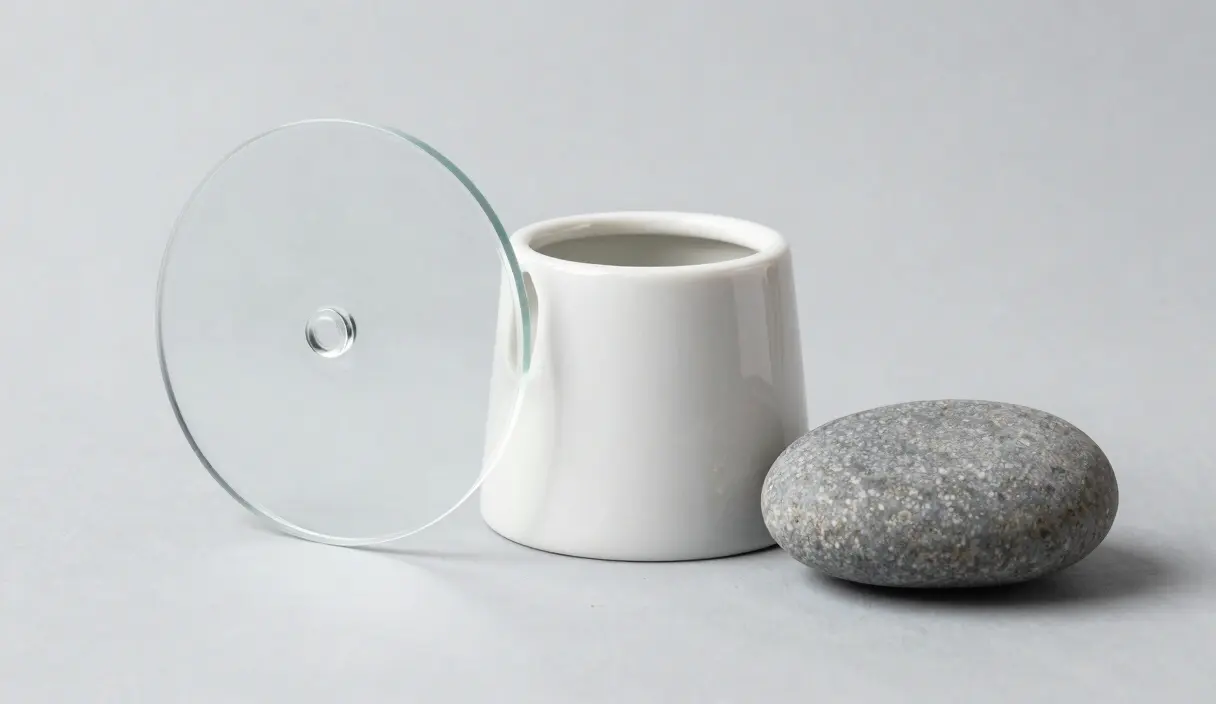
1. Glass Weights (The Modern Standard)
Glass has quickly become the preferred choice for 90% of home fermenters. Most high-quality glass weights are made from lead-free, soda-lime or borosilicate glass.
- Pros: Non-porous (won’t absorb odors or bacteria), transparent (allows you to see bubbles), and completely dishwasher safe.
- Cons: They can chip or shatter if dropped, and they aren’t quite as heavy as large ceramic stones.
2. Ceramic Weights (The Traditional Choice)
Usually made of unglazed stoneware, these are the split-disks traditionally found in water-seal fermentation crocks.
- Pros: Extremely heavy, rustic aesthetic, and perfect for large 5-to-10-liter batches.
- Cons: Porous. If not cleaned meticulously, unglazed ceramic can harbor mold spores between batches. They are also prone to absorbing the “funk” of strong ferments like garlic or onions.
If you have been using the same ceramic stones across multiple batches without a boil-clean between each one, stop. Those pores are holding onto live culture from your last ferment. It may be Lactobacillus. It may be Kahm yeast. You do not know, and neither does your next batch.
3. Natural Stone (The Forager’s Choice)
Some traditionalists still use smooth river stones as weights.
- Pros: Free and environmentally friendly.
- Cons: Risky. Natural stones can leach unknown minerals or heavy metals into your acidic brine. They are also notoriously difficult to sanitize effectively.
Key Feature: The “Grip” Factor
Early fermentation weights were smooth, flat disks. If you’ve ever tried to pry a slippery glass disk out of a jar filled with brine, you know it’s a recipe for frustration (and potentially broken glass).
Top-Rated Glass Weights with Grips
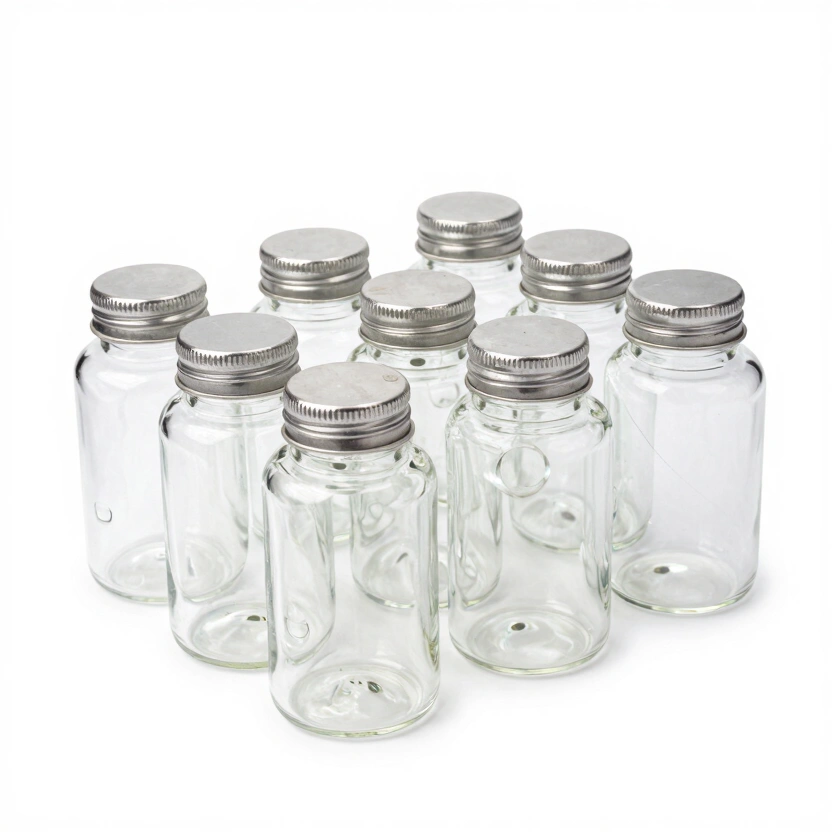
Artcome 10-Pack Glass Weights
Bulk set of heavy glass weights with easy-grip handles for large mason jar setups.
Check Price on Amazon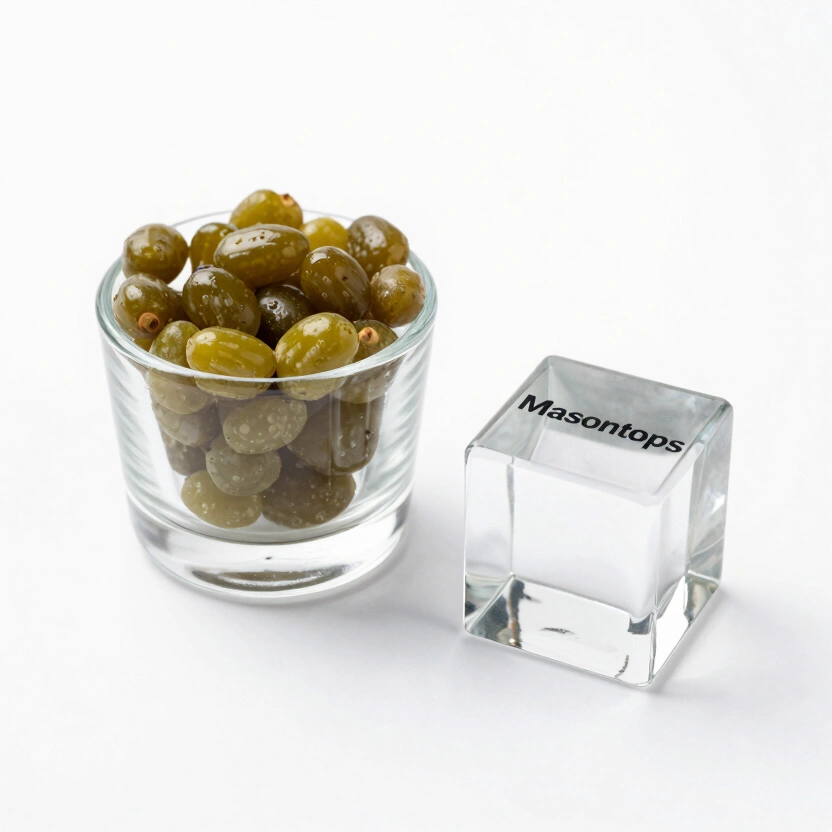
Masontops Pickle Pebbles
The original wide-mouth glass fermentation weights. Lab-tested and food-safe.
Check Price on Amazon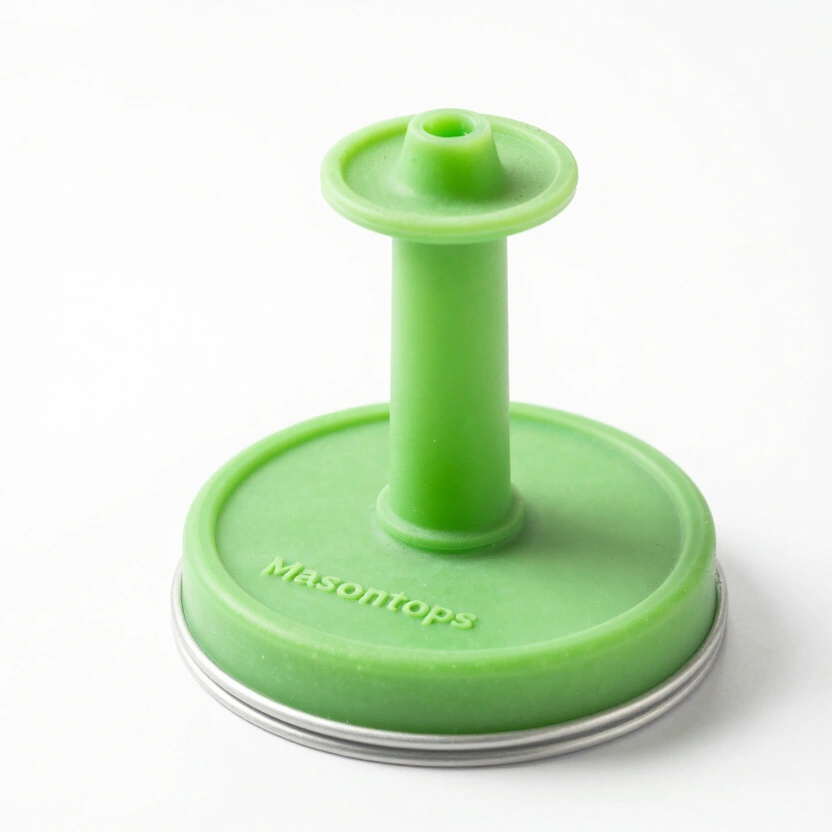
Masontops Pickle Pipe (Airlock Lids)
Waterless silicone airlock lids for easy, low-maintenance mason jar fermentation.
Check Price on Amazon* Affiliate links. Prices last updated March 3, 2026.
Modern designs have solved this with handles. Look for weights with:
- Knob Handles: Easy to grab with two fingers.
- Grooved Edges: Provides texture for your fingertips.
- Recessed Grips: Offers a handle without adding extra height to the weight.
Compatibility: Sizing Your Weights
Size is everything. If a weight is too small, vegetables will simply float up around the sides. If it’s too large, it won’t fit through the mouth of the jar.
- Wide Mouth Mason Jars: Require a weight with a diameter of roughly 2.75 inches (70mm).
- Standard Mouth Jars: Require roughly 2.1 inches (53mm).
- The 1/4 Inch Rule: Always choose a weight that leaves about a 1/4 inch gap between the weight and the glass wall. This allows CO2 bubbles to escape easily without tilting the weight.
Before you drop a glass weight into brine, hold it up to the light and run your thumb along the edge. A chip smaller than a grain of rice is invisible in sauerkraut. Swallowing it is not. Discard any weight with a compromised edge — they cost $8, which is a reasonable price for not sending a glass shard to the dinner table.
Cleaning & Maintenance: Preventing Cross-Contamination
I lost a batch of fermented garlic to mold sourced from an inadequately cleaned ceramic stone. Boiling it in vinegar solution takes 10 minutes — I skipped it once and paid for it with a week’s worth of work.
Maintaining the sterility of your weights is the only way to prevent batch-to-batch failures.
- Glass: Simply toss them in the dishwasher on a high-heat cycle.
- Ceramic Stones: These require a “deep clean.” I recommend boiling them in a mixture of water and 5% vinegar for 10 minutes after every batch. This ensures that any microbes hiding in the pores are neutralized.
- Safety Check: Always inspect glass weights for small chips. A tiny shard of glass in your sauerkraut is a serious safety hazard. If a weight is chipped, discard it immediately.
The Alternatives: What to Use in a Pinch
Counter to what most equipment guides suggest, you don’t need to buy weights before your first batch — good improvised solutions work just as well while you get comfortable with the process.
If you’re starting a batch and realized you don’t have enough weights, don’t panic.
- The Ziploc Method: Fill a food-grade freezer bag with 2.5% brine (never plain water, in case the bag leaks!) and nestle it on top of your vegetables.
- The Cabbage Plug: Use a large, outer cabbage leaf folded into a thick pad to wedge the vegetables down.
- The Jar-in-Jar: If using a wide-mouth crock, a smaller jelly jar filled with water can act as a perfectly functional weight.
The Ziploc bag method has a real failure rate. Standard sandwich bags are not rated for the pressure a fermenting jar develops over seven days, and the seam — not the zipper — is where they split. Use only heavy-duty freezer-grade bags. Fill them with 2.5% salt brine, not water. And check them at day three. A leaking brine bag inside a sauerkraut jar is a manageable problem. A leaking water bag is a dilution event that drops your salinity below the safety margin.
For wide-mouth Mason jar setups, two glass weights with knob handles — sized at 70mm diameter to leave the 1/4 inch wall gap — is the correct configuration. Inspect them for chips before every batch. Boil ceramic stones in 5% vinegar solution after every use. Use freezer-grade bags filled with 2.5% brine if improvising. These are not elaborate precautions. They are the minimum requirements for keeping a ferment clean across multiple batches.
Planning a full Mason jar setup? The Masontops vs. Ball Fermentation Lids review covers the lid systems that pair with these weights to create a complete anaerobic environment.
Frequently Asked Questions
How do I inspect glass weights for safety before use?
Hold the weight up to a light source and rotate it slowly, examining the entire circumference of the edge. Run your thumb around the rim. A chip smaller than 1mm can be invisible in brine and invisible in food. If you feel or see any discontinuity in the edge, discard the weight — replacements cost $6–10 and your safety margin is not negotiable.
Do I need weights for a 2% salt ferment?
More so than at higher salinity. At 2% salt (20g per liter), the brine’s inhibitory effect on surface microbes is moderate. Any exposed vegetable becomes a mold target within 48 hours at room temperature. Weights are not optional at 2%. They are the mechanism that makes a low-salt ferment safe.
How do I clean unglazed ceramic stones without contaminating future batches?
Boil them in a 50/50 water-and-5%-white-vinegar solution for 10 minutes after every single batch. The combination acidifies the pore environment and kills trapped organic matter. Skip the dishwasher — detergent residue absorbs into unglazed ceramic and leaches into your next ferment. The boil-clean takes 12 minutes total. Do not skip it.
What if my weight is not heavy enough to hold down the vegetables?
Stack two weights. Glass disk weights are typically designed to nest. For especially buoyant vegetables — cauliflower florets are the most problematic — a double stack totaling 140–180g in a wide-mouth quart jar holds nearly everything. If you are still losing the battle, switch to the cabbage plug method as a secondary restraint layer.
Are ceramic weights from my crock safe to use in a Mason jar batch?
Only if you have cleaned them between uses and they are made from lead-free, food-safe stoneware. The risk with unglazed ceramic is cross-batch contamination, not the ceramic itself. One batch with a strong garlic ferment will leave odor compounds in the pores that transfer flavor — and potentially live culture — into your next batch.