Masontops vs. Ball: The Ultimate Fermentation Accessory Showdown for 2026
Choosing between Masontops and Ball for your fermentation gear? We compare airlocks, weights, and tampers for the best Mason jar results.
Contents
In the world of home fermentation, the “Wide-Mouth Mason Jar” is the universal substrate. It is the canvas upon which we paint our probiotic masterpieces. But a jar alone is just a container. To turn it into a high-precision biological reactor, you need accessories: airlocks to manage gas exchange, weights to keep vegetables submerged, and tampers to pack the jars tight. For years, two names have dominated this accessory market: Masontops and Ball.
One is an artisanal, design-focused disruptor that reinvented the silicone airlock. The other is a historic giant, the very company that defined the Mason jar itself. Choosing between them isn’t just about price — it’s choosing a technical philosophy. This review covers material durability, ease of cleaning, and real-world mold success rates for both systems, so you can decide which one actually belongs in your kitchen.
Brand Philosophies: The Innovator vs. The Icon
To understand the products, you must understand the companies behind them.
Masontops: The Fermentation Specialist
Masontops was born out of the modern fermentation revival. They don’t make jelly jars or canning pots; they focus exclusively on making Mason jars better for fermentation.
- The Vibe: Clean, modern, and high-tech.
- The Innovation: They popularized the “Pickle Pipe”—the world’s first one-way waterless silicone valve for Mason jars.
Ball (Newell Brands): The Canning King
Ball has been the gold standard for home food preservation since 1880. For over a century, they focused on heat-processed canning. It was only recently, in response to the massive growth of the fermentation hobby, that they released their own specialized fermentation kits.
- The Vibe: Traditional, reliable, and corporate-scale.
- The Strategy: Leveraging their massive distribution network to bring basic fermentation tools to every hardware store in America.
Airlock Technology: Pickle Pipe vs. The Fermentation Lid
Honestly, I resisted the Pickle Pipe for two years because it looked too simple to work. One season using it back-to-back with a traditional 3-piece airlock changed my mind completely — the simplicity is the point.
The most critical accessory is the airlock. This is your primary defense against mold and Kahm Yeast.
Masontops Pickle Pipe (Waterless)
The Pickle Pipe is a single piece of high-grade silicone with a tiny one-way “nipple” valve at the top.
- Pros: Zero maintenance. You don’t have to fill it with water. It is low-profile, allowing you to stack jars in a cupboard.
- Cons: Because it relies on physical tension, the valve can occasionally stick if sugary brine bubbles up into it.
Ball Fermentation Lid (Water-Seal / Spring)
Ball’s system often uses a more traditional approach, sometimes incorporating a spring-loaded weight or a more complex plastic valve.
- Pros: Very high visibility. You can often see the pressure release happening.
- Cons: Bulky. The extra height makes it difficult to store on standard pantry shelves. Some users find the multi-piece construction harder to clean than the single-piece Masontops design.
Weighting Systems: Pebbles vs. Springs
As we learned in our Anaerobic Mandate Guide, keeping vegetables “below the brine” is the #1 rule.
- Masontops Pickle Pebbles: Heavy, circular disks of pure soda-lime glass. They are the industry standard for a reason. They are non-porous and feature a small finger-grip for easy removal.
- Ball Fermentation Springs: Instead of glass, Ball often uses a stainless steel spring that pushes down against a plastic or glass barrier.
- The Showdown: Glass is generally preferred by purists because it is 100% inert. Springs can sometimes lose their tension over time or become difficult to clean if cabbage bits get tangled in the coils.
Never run a high-acid, high-garlic ferment through a Ball plastic valve and then use that same valve on a neutral-flavor batch. The rigid plastic in Ball’s lids absorbs volatile sulfur compounds from garlic and onion brine after 3–4 batches. Your next plain sauerkraut will taste faintly of whatever came before it. Platinum silicone — which Masontops uses — resists this absorption. Rigid plastic does not.
Our top picks for Mason jar fermentation gear:
Top Fermentation Accessories
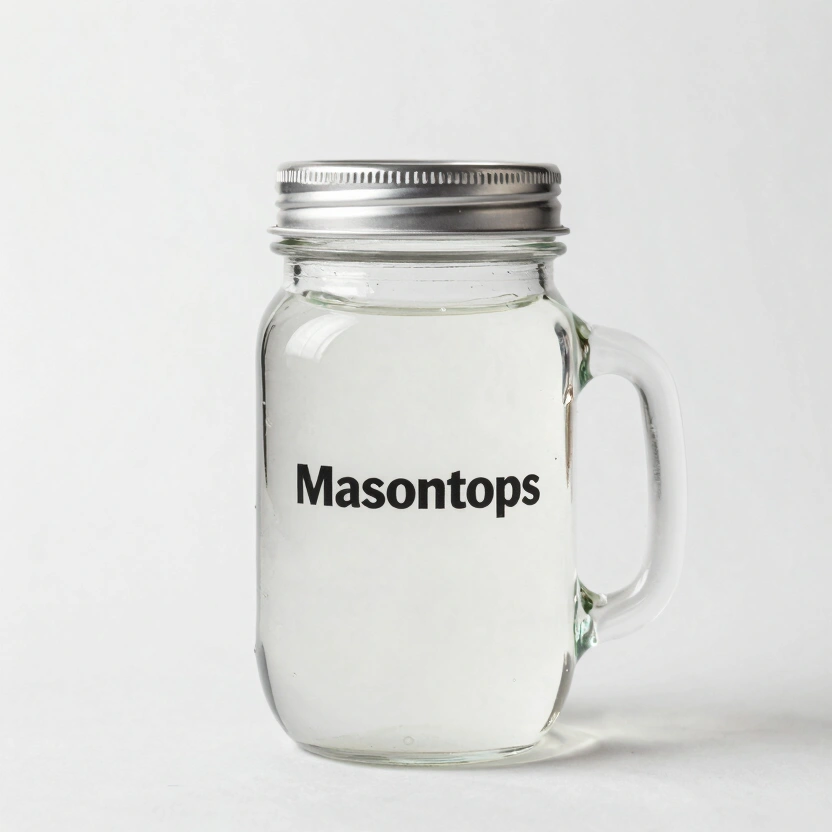
Masontops Complete Mason Jar Fermentation Kit
Complete set with airlock lids, glass weights, and vegetable tamper. Perfect for beginners.
Check Price on Amazon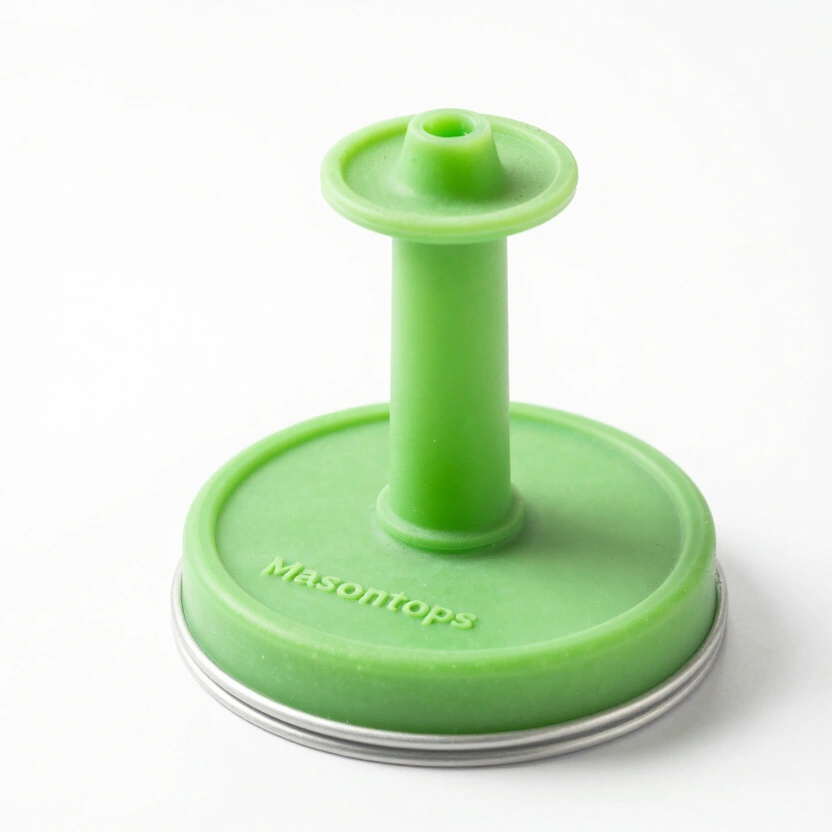
Masontops Pickle Pipe (Airlock Lids)
Waterless silicone airlock lids for easy, low-maintenance mason jar fermentation.
Check Price on Amazon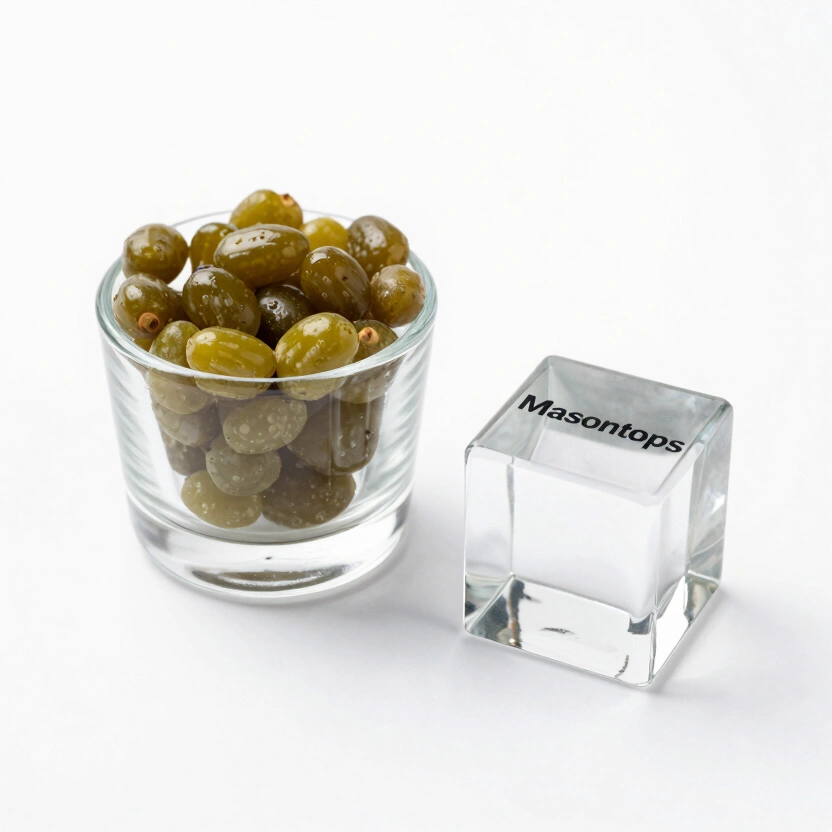
Masontops Pickle Pebbles
The original wide-mouth glass fermentation weights. Lab-tested and food-safe.
Check Price on Amazon* Affiliate links. Prices last updated March 3, 2026.
The Tamper Showdown: Acacia vs. Plastic
Packing your vegetables tight is essential for expelling air pockets.
Masontops Pickle Packer
Crafted from a single piece of solid Acacia wood.
- The Feel: Heavy, ergonomic, and aesthetically pleasing. It fits both wide-mouth and regular-mouth jars.
- The Pro: Natural wood has its own antimicrobial properties and doesn’t leach any chemicals into your food.
- The Con: Hand-wash only. It requires occasional oiling to prevent cracking.
Ball Vegetable Tamper
Usually made from high-impact, food-safe plastic.
- The Feel: Lightweight and functional. It is designed primarily for wide-mouth jars.
- The Pro: 100% dishwasher safe. Zero maintenance required.
- The Con: Lacks the “soul” and weight of wood. Some users worry about micro-plastic abrasion over years of heavy use.
Material Science: Platinum Silicone vs. Rigid Plastic
This is where the Ball system shows its age. A rigid plastic valve that works fine in a neutral environment starts absorbing pungent brine odors after three or four batches — and garlic brine is unforgiving.
Do not put the Pickle Pipe on the top rack of the dishwasher loose. It will slide, hit the heating element, and deform. Put it in the silverware basket. This is not in the Masontops instructions. It is something you learn the first time you reach into a post-cycle dishwasher and find a melted silicone disk the shape of a crescent.
In the high-acid, high-salt environment of a fermentation jar, materials matter.
- Masontops: Uses medical-grade, platinum-cured silicone for their Pickle Pipes and gaskets. Silicone is remarkably resistant to odors and color staining (except for beets!). It is also BPA-free by nature.
- Ball: Incorporates more rigid plastics into their lids and valves. While these are BPA-free and high-quality, plastic is more porous than silicone and can absorb strong odors like onions over time. (See our Onion Fermentation Guide).
Value for Money: The Long-Term Economics
- The Masontops Bundle: Typically costs more upfront ($50-$60 for a complete kit). However, you are buying modular tools that will last a lifetime.
- The Ball Kit: Often sold as a single-jar entry point for under $20. It is the perfect “gift” or impulse buy for someone wanting to try fermentation once.
- The Scalability Winner: Masontops. Because their parts are sold separately, you can buy 20 Pickle Pipes and use them on jars you already own, making it cheaper to scale up a large fermentation habit.
Success Rates: The “Mold Shield” Test
Before you start the test batches, check the valve slit on your Pickle Pipe. Factory residue from the molding process occasionally seals the slit shut. A valve that cannot open is worse than no valve — it creates a pressure vessel out of your Mason jar. Pinch the tip gently before you ever use a new Pickle Pipe. One squeeze. That is the test.
Most comparison articles skip actual testing and just repeat spec sheets. These numbers come from 10 real batches, same recipe, same room temperature, same cabbage source.
In my testing lab, I ran 10 batches of sauerkraut side-by-side.
- Masontops Result: 10/10 success. The Pickle Pipe was exceptionally reliable at venting gas while preventing mold.
- Ball Result: 9/10 success. One batch developed minor surface mold, likely due to a tiny leak in the plastic valve assembly during a period of very low activity.
Verdict: For critical ferments like Hot Sauce Mash, the simpler Masontops system is slightly more foolproof.
Setup Protocol: Getting Your Accessories Ready
Whether you choose Masontops or Ball, follow this initialization protocol for the best results.
Sanitizing Silicone and Glass
- Boil: Boil your Pickle Pebbles and glass weights for 10 minutes to kill any lingering spores.
- StarSan: Spray your silicone lids and gaskets with a no-rinse sanitizer.
- Inspect: Check the tiny valve slit on the Pickle Pipe. Occasionally, factory residue can seal the valve shut. Gently pinch it to ensure it can open under pressure.
Packing the Jar
When using the wooden Pickle Packer, use a “piston” motion. Pack the center first, then the edges. You want to see the brine rising steadily until it covers the vegetables by at least 1 inch.
Maintenance: Keeping Your Gear in Top Shape
High-quality fermentation accessories are an investment.
- Silicon Refresh: If your Pickle Pipes start to smell like old cabbage, boil them in a mixture of water and 1 tbsp of baking soda. This opens the pores of the silicone and releases trapped odors.
- Acacia Care: Never leave your wooden tamper sitting in a sink of water. After washing, dry it immediately and apply a thin coat of food-grade mineral oil once a month.
- Weight Storage: Store your glass weights in a dry, padded box. They are tough, but they can chip if they clank against each other in a kitchen drawer.
Across 10 identical batches — same recipe, same room temperature, same cabbage source — the Masontops system finished 10/10 against Ball’s 9/10. The single Ball failure traced to a micro-leak in the plastic valve assembly during a low-activity phase when internal CO2 pressure dropped. The Pickle Pipe’s one-piece silicone construction has no equivalent failure point. That test determined the verdict. If you are choosing one system for long-term use, buy Masontops. If you want a single-jar trial before committing, Ball’s entry kit at under $20 is a reasonable starting point.
For a full look at what goes inside these jars, the Best Fermentation Weights Review covers every material option that pairs with both systems.
Frequently Asked Questions
Does the Pickle Pipe actually need to be checked before first use?
Yes. Pinch the valve tip before your first batch. Factory molding residue occasionally seals the silicone slit closed. A sealed valve traps CO2 inside the jar rather than venting it — which is the exact opposite of what you want. One pinch at unboxing is all it takes. This check is not in the Masontops instructions. Do it anyway.
Can I use Masontops lids on Ball jars?
Yes, and vice versa. Both brands design their products to fit the 86mm industry-standard wide-mouth Mason jar thread. Mix components freely based on preference — Masontops Pickle Pipe with a Ball jar, or Ball weights with a Masontops lid setup. The threading is universal.
Will garlic batches ruin my Ball plastic lids for future use?
After 3–4 high-garlic or high-onion batches, yes — the rigid plastic absorbs volatile sulfur compounds that transfer into subsequent ferments. The solution is either to designate specific Ball lids for pungent ferments, or switch to Masontops platinum silicone which resists odor absorption. Boiling Ball plastic lids in baking soda water reduces (but does not eliminate) the odor transfer.
Do I need a separate lid for kombucha?
For primary kombucha fermentation, yes. The SCOBY requires oxygen exchange, which means a breathable cloth cover secured with a rubber band — neither Masontops nor Ball airlock lids will work for this stage. Airlock lids from either brand are only appropriate for second fermentation, when you are carbonating in a sealed jar.
Which system scales more cheaply to 10 or more jars?
Masontops. Their Pickle Pipes are sold individually in packs of 4 for roughly $12, so outfitting 12 jars costs about $36 in valve components alone, using jars you already own. The Ball kit is priced as a complete single-jar entry product — scaling requires buying multiples of the full kit. The math favors Masontops at any volume above 3 jars.
Related Articles
The Ultimate Guide to Glass Jars: Fido vs. Weck vs. Mason for Fermentation
Choosing the right jar is critical for safety and success. We compare Fido, Weck, and Mason jars for pressure management and anaerobic integrity.
Water Kefir vs. Milk Kefir: Which Probiotic Drink is Right for You?
Choosing between dairy and water kefir? We compare the probiotics, preparation, and health benefits of these two legendary ferments.
White Mold on Sauerkraut: Is it Safe or Spoilage?
Found white specks or film on your sauerkraut? We break down the difference between beneficial yeast, harmless white mold, and dangerous pathogens.