Black Garlic Masterclass: Mastering the 60-Day Transformation
Master the science of Black Garlic. Learn the Maillard reaction and how to age garlic for 60 days to achieve that perfect balsamic-umami flavor.
Contents
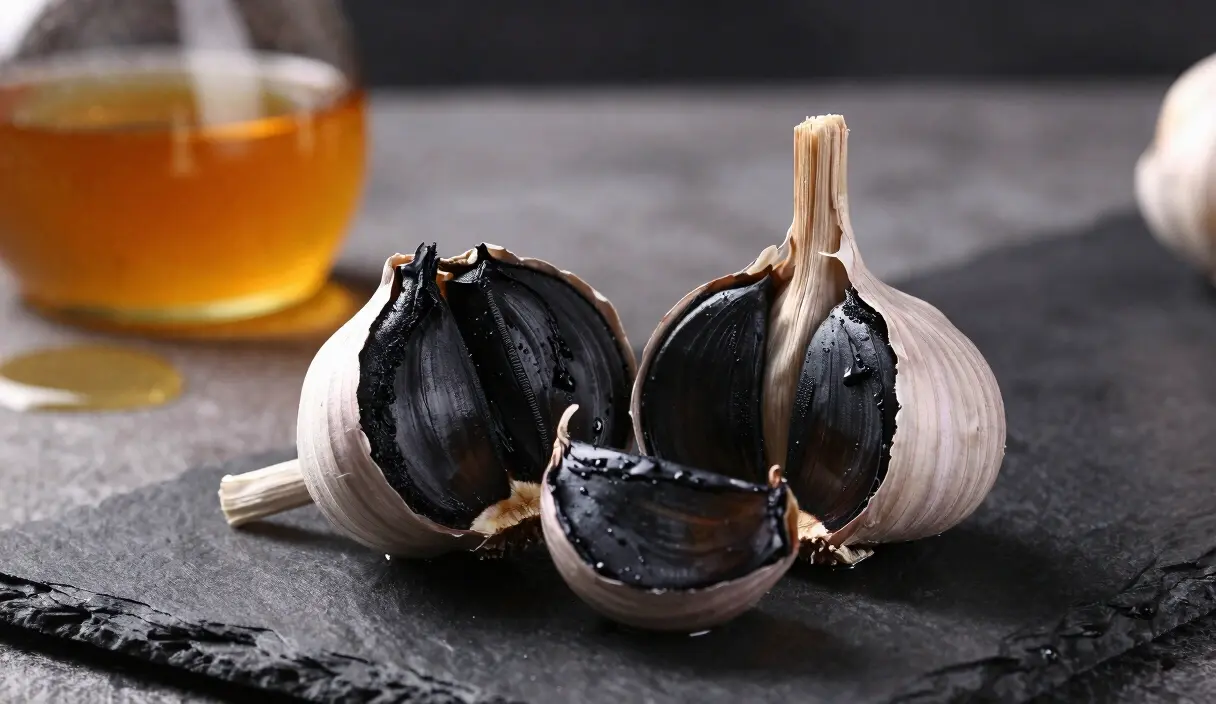
Joseon Dynasty Korea, 1894. Royal physician Yi Je-ma published his Dongui Suse Bowon — a classification of human constitutional types into four categories, each requiring different foods and medicines. For the “Taeeumin” constitution — the earth-type body, prone to lung weakness and respiratory vulnerability — Yi Je-ma prescribed 흑마늘, aged black garlic: not as a flavoring but as a targeted therapeutic food for a specific biological profile. This was functional fermentation with a precision logic that predated the word “nutraceutical” by a century. Yi Je-ma’s Sasang Constitutional Medicine is still practiced in Korean traditional medicine. His black garlic recommendation, it turns out, was pointing at something real: the conversion of raw allicin to S-Allylcysteine (SAC) during the aging process produces an antioxidant compound with documented bioavailability advantages that fresh garlic cannot match.
How to make black garlic is, on the surface, a simple question: heat, time, patience. But the details between “dried garlic rock” and “fudgy balsamic-umami clove” are the entire recipe. This is not lacto-fermentation. No microbes. Pure Maillard reaction chemistry running at 60°C (140°F) for 21 days, followed by a 30-40 day ambient cure that most guides never mention — and that most batches never reach.
The Science: Maillard Reaction vs. Fermentation
In standard fermentation, microbes eat sugars and produce acids or alcohol. In black garlic production, the heat (usually between 60°C and 70°C) is too high for most beneficial microbes to survive. No bacteria. No yeast. Pure chemistry.
Instead, the heat triggers a chemical reaction between amino acids and reducing sugars — the same Enzymatic Browning cascade that occurs when a sliced apple turns brown, but here driven by heat rather than oxidase enzymes. This produces melanoidins—the compounds responsible for the brown crust on bread or the sear on a steak. Because this happens so slowly (over hundreds of hours), the garlic doesn’t burn; it caramelizes and ages.
The health benefits also shift: the harsh allicin in raw garlic is converted into S-Allylcysteine (SAC), a far more bioavailable antioxidant that survives digestion far better than allicin alone.
Equipment: Choosing Your Vessel
The biggest challenge in making black garlic is maintaining a constant temperature for 2 to 4 weeks without burning the house down or drying out the garlic.
1. The Rice Cooker Method
The most common DIY approach. By leaving a rice cooker on the “Keep Warm” setting, you maintain a temperature of roughly 60-65°C.
- Pros: Cheap. Easy to set up. Most people already own one.
- Cons: Lack of humidity control. You often have to wrap garlic in multiple layers of foil to prevent it from turning into “garlic rocks.”
Open a rice cooker on day 3 of the garlic run. The smell hits before you get the lid fully up — a dense, almost medicinal garlic wave that fills the room in seconds. It’s not unpleasant exactly; it’s just total and unavoidable. Your kitchen will smell this way for a week. Neighbors will ask questions.
2. Professional Black Garlic Fermenters
This is the one case in home fermentation where I recommend buying specialized equipment rather than improvising. The temperature window (55-70°C) is narrow enough that a fluctuating slow cooker can dip below 55°C at night — and below that threshold, C. botulinum can theoretically produce toxins. (For a full breakdown of how temperature intersects with pathogen risk across fermentation methods, see the pH and Safety in Fermentation guide.) A dedicated machine is not a luxury; it is a safety investment.
These devices feature multi-tier racks and intelligent programs that modulate heat and humidity cycles.
Top-Rated Black Garlic Fermenters
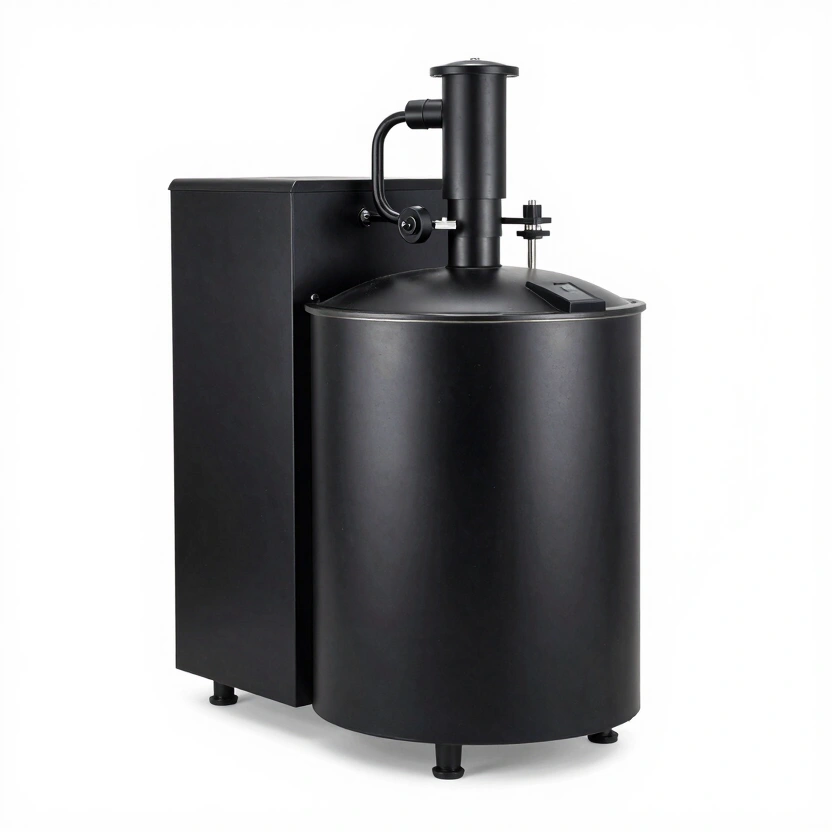
Automatic Black Garlic Fermenter (6L)
Fully automatic machine with intelligent temperature and humidity control for perfect black garlic.
Check Price on Amazon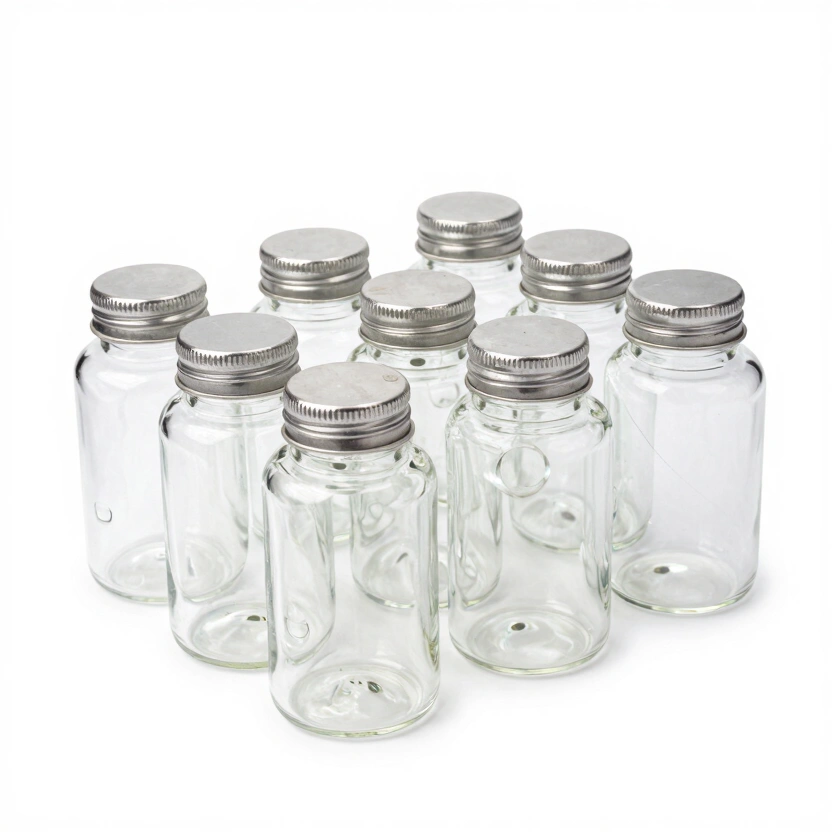
Artcome 10-Pack Glass Weights
Bulk set of heavy glass weights with easy-grip handles for large mason jar setups.
Check Price on Amazon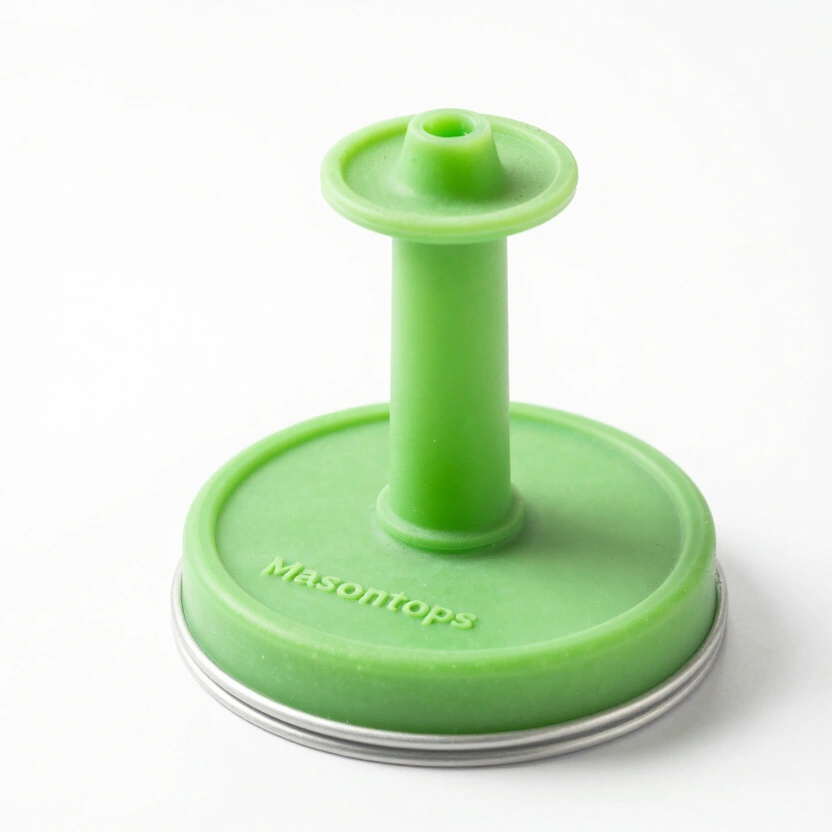
Masontops Pickle Pipe (Airlock Lids)
Waterless silicone airlock lids for easy, low-maintenance mason jar fermentation.
Check Price on Amazon* Affiliate links. Prices last updated March 3, 2026.
Selection: Best Garlic for Aging
Not all garlic is created equal. For the best black garlic, look for:
- Freshness: Use the freshest bulbs possible. Older bulbs have less moisture and are prone to becoming bitter or hard.
- Size: Choose bulbs of uniform size so they all finish at the same time.
- Elephant Garlic: If you want “black garlic steaks,” elephant garlic delivers — though its flavor is slightly milder than standard hardneck varieties. Worth the experiment.
The 60-Day Transformation: Step-by-Step
Phase 1: The Heat Cycle (Days 1–21)
Place your whole, unpeeled bulbs into your fermenter or rice cooker. If using a rice cooker, wrap each bulb tightly in foil. Set the machine to 60°C (140°F). Verify with a probe thermometer — not the machine’s dial, an actual probe inserted near the bulbs.
- The Smell: For the first 3–5 days, your house will smell like a garlic factory. No way around it. Put your machine in a garage, basement, or a well-ventilated balcony.
- Monitoring: Check one bulb at day 14. It should be deep brown. By day 21, it should be pitch black and soft.
Phase 2: The Cure (Days 22–60)
Peel a clove on day 21 and taste it. Soft. Black. Faintly bitter at the edges. Nothing like the marketing photos. Then peel one at day 50. The difference is total — the same clove, transformed into something with actual balsamic depth. That 29-day gap is the entire point of the cure phase.
I skipped this phase on my first two batches. Both tasted metallic and sharp — nowhere near the balsamic depth I was expecting. The cure is not optional. It is half the recipe.
This is the step most people skip, and it’s why their black garlic never reaches masterclass quality. Once the heat cycle is done, the garlic is black but often tastes “sharp” or metallic.
- The Air-Dry: Remove the garlic from the machine and peel off any foil. Place the bulbs on a wire rack at room temperature in a dry spot.
- Development: Over the next 30–40 days, the moisture levels equalize and the residual enzymatic browning reactions finish their work — the same cascade that began on day one, still running at ambient temperature. The complex sugars develop their full “balsamic” depth. The texture shifts from “squishy” to “fudgy.”
Critical Factors: Temperature & Humidity
A probe thermometer reading 61°C at the vessel wall and 54°C at the garlic core means your setup has a 7-degree thermal gradient. The garlic at center is sitting in the danger zone. Two bulbs at the back of the rice cooker will finish correctly; the four at the front will not.
Fair warning: cheap rice cookers on “keep warm” mode can vary by 10-15°C. Temperature drift is the silent killer of black garlic batches. Test yours with a probe thermometer before committing 20 bulbs to a 21-day run. Measure the actual temperature inside the vessel, not the ambient kitchen air.
- Temperature Sweet Spot: 60°C (140°F). If you go below 55°C, you risk the growth of dangerous bacteria like Clostridium botulinum. If you go above 80°C, the garlic will turn bitter and scorched.
- Humidity: You want around 70–80% humidity inside the vessel. Professional machines handle this automatically. In a rice cooker, the foil wrapping creates a micro-climate to hold the bulb’s natural moisture.
Storage & Culinary Uses
After 60 days (21 days heat cycle + 30-40 days cure), peel the cloves and store them in an airtight glass jar.
- Shelf Life: They will last 6 months in the pantry or up to a year in the refrigerator.
- In the Kitchen: Smear a clove onto toasted sourdough, blend it into a vinaigrette, or fold it into a mushroom risotto. The melanoidin compounds add a depth of umami that no fresh or roasted garlic can replicate. If you want to push that umami further, pairing black garlic with koji-aged proteins is a natural next step — both processes produce glutamic acid through different chemistry.
Twenty-one days of heat produces black garlic. Forty days of cure produces the thing Yi Je-ma was actually prescribing: fudgy, complex, balsamic-deep cloves with peak SAC concentration and a flavor profile that has no equivalent in fresh or roasted garlic. The Maillard reaction doesn’t negotiate on time. The chemistry runs at its pace, not yours. A dedicated fermenter, a verified probe thermometer, and the willingness to leave the wire rack undisturbed for six weeks — that is the whole protocol.
Temperature precision matters differently in microbial fermentation than in Maillard chemistry, but the stakes are comparable. The Fermentation Temperature Control Guide covers both contexts — and explains why a 5-degree drift that barely affects a lacto-ferment can ruin a black garlic batch entirely.
Frequently Asked Questions
My garlic finished the heat cycle perfectly black but tastes flat. Why?
Flat flavor after day 21 is normal — and expected. The heat cycle converts the sugars and amino acids into melanoidin compounds, but those compounds need time to equilibrate and develop their full complexity. Day 21 is a chemical intermediate, not a finished product. Flat, slightly metallic black garlic is the cue to begin the cure phase, not an indication that the heat cycle failed. Move to a wire rack at room temperature for 30-40 days. Taste again. The difference is not subtle.
Why do professional black garlic fermenters cost so much more than a rice cooker setup?
Three engineering differences: active humidity regulation (rice cookers have none), multi-zone temperature uniformity (rice cookers have significant gradient variance), and programmable heat cycling that adjusts automatically between the high-humidity initial phase and the lower-humidity finishing phase. For a casual batch of 6-8 bulbs, a rice cooker with careful foil wrapping and a probe thermometer is workable. For consistent results across 20+ bulbs, the gradient problem alone justifies a dedicated machine. LONWIN and NutriChef both make reliable mid-range units in the $80-120 range.
Can I make black garlic with elephant garlic instead of standard hardneck varieties?
Yes. Elephant garlic produces large, easy-to-handle individual cloves that are slightly milder in raw allicin content — which translates to a less pungent black garlic with more pronounced sweetness and less of the sharp edge. The Maillard chemistry is identical; the flavor outcome is slightly different. Worth making alongside standard hardneck varieties to compare directly. The texture is firmer throughout the cure phase due to the higher water content of elephant garlic cloves.
Is the SAC content in commercial black garlic supplements comparable to home-made?
Probably not. S-Allylcysteine concentration in black garlic is directly related to the duration and consistency of the aging process — both the heat cycle and the cure phase. Commercial supplement production often uses shorter processing times with higher temperatures to accelerate output. Home-made black garlic aged correctly for 60 days (21 days heat + 40 days cure) should produce higher SAC concentrations than most supplement capsule equivalents. Yi Je-ma prescribed the whole food specifically — not an extract.
What is the shelf life of finished black garlic, and can I tell when it has gone bad?
Properly cured black garlic in an airtight glass jar lasts 6 months at room temperature, up to 12 months refrigerated. Spoilage is obvious: mold growth (any color), a fermented or off-chemical smell distinct from the normal balsamic-umami aroma, or a slimy texture instead of the fudgy consistency. The water activity (aw) after 60 days typically drops below 0.70 — a level at which most bacterial spoilage cannot occur. The primary failure mode is drying out rather than rotting — cloves that become hard and leathery rather than soft. That’s quality degradation, not safety failure.