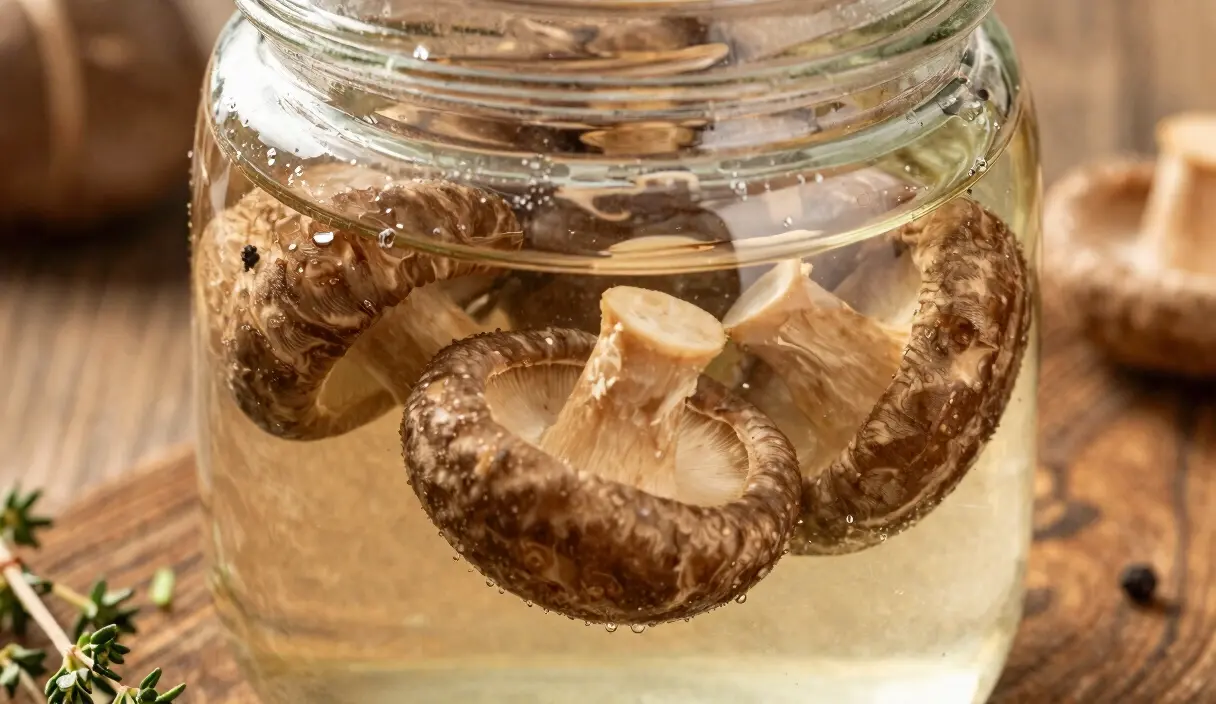
Fermented Mushrooms: Unlocking Deep Umami with Lactic Acid
Discover the umami powerhouse of fermented mushrooms. Learn the technical nuances of lacto-fermentation, safety protocols, and the famous Noma-style vacuum method.
Contents
Shiitake mushrooms already rank among the highest natural sources of glutamate — the amino acid your tongue registers as umami. Put them in a 2% salt brine for seven days and that glutamate concentration explodes. How to ferment mushrooms is, at its core, a question of controlled enzymatic breakdown: lactic acid bacteria acidify the environment, chitin walls soften, and the mushroom’s own enzymes do the rest. The result is something far more complex than a lacto-fermented mushroom from a jar. This guide covers the safety protocol, both fermentation methods, and what to do with the liquid gold your jar produces.
Biology & Safety: The “Mushroom Rule”
Mushrooms present a unique microbial challenge. Unlike cabbage or carrots, mushrooms have a very low natural sugar content. Lactic acid bacteria (LAB) need sugar to produce the acid that preserves the food. Without enough sugar, the pH might not drop fast enough, leaving the door open for spoilage organisms or, in rare cases, Clostridium botulinum.
To ferment mushrooms safely, you must follow the Mushroom Rule:
- Precision Salinity: Use a minimum of 2% salt by total weight.
- pH Monitoring: Ensure the batch reaches a pH of 4.6 or lower within the first 48–72 hours. Learn more about pH safety here.
- Sugar Boost (Optional): Many professional fermenters add a tiny pinch of raw sugar (0.5% by weight) to provide the LAB with an immediate fuel source.
Methods: Brine vs. Vacuum (Noma Style)
There are two primary ways to ferment mushrooms, each offering a different culinary outcome.
1. The Brine Method
This involves submerging whole or sliced mushrooms in a 2.5% salt-water solution.
- Best for: Snacking, salads, and preserving the physical shape of the mushroom.
- Result: A plump, juicy mushroom with a clean, tart finish.
2. The Vacuum-Sealed Method (The “Noma” Technique)
This is the preferred method for flavor purists. You weigh the mushrooms, add 2% salt, and vacuum-seal them in a BPA-free bag.
Top Vacuum Sealers for Precision Fermentation
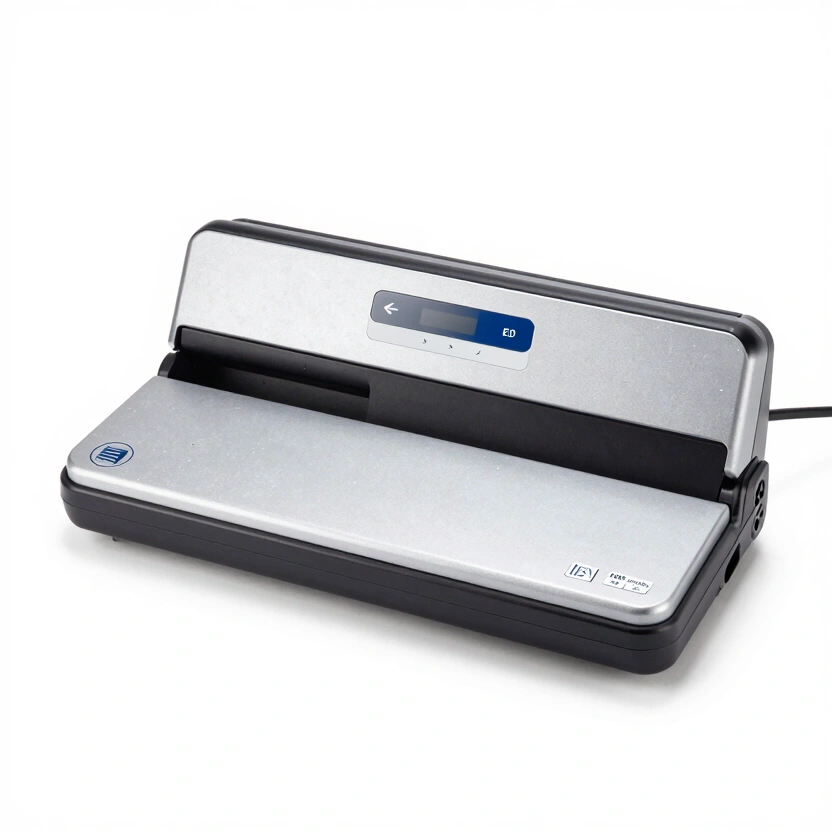
Bonsenkitchen Silver Vacuum Sealer
Affordable and powerful vacuum sealer, perfect for Noma-style bag fermentation and tempeh.
Check Price on Amazon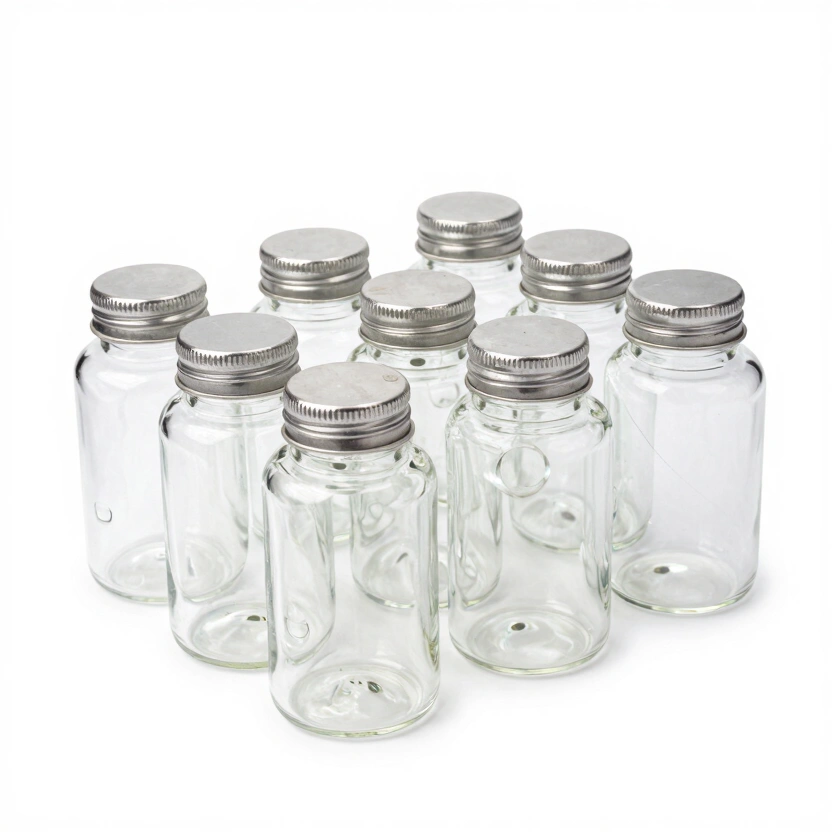
Artcome 10-Pack Glass Weights
Bulk set of heavy glass weights with easy-grip handles for large mason jar setups.
Check Price on Amazon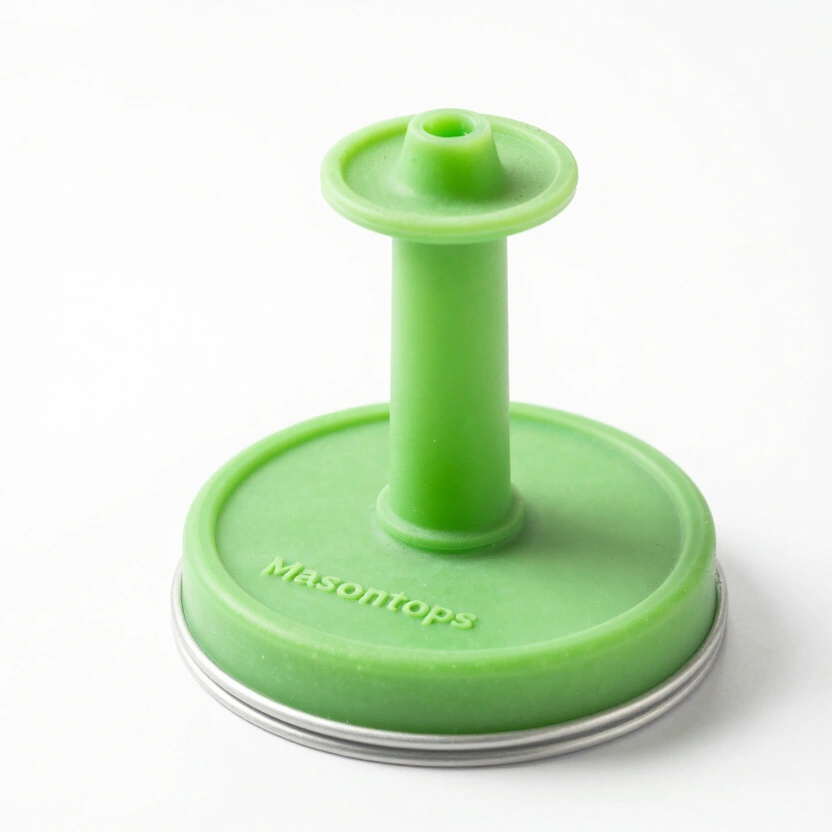
Masontops Pickle Pipe (Airlock Lids)
Waterless silicone airlock lids for easy, low-maintenance mason jar fermentation.
Check Price on Amazon* Affiliate links. Prices last updated March 3, 2026.
- Best for: Extracting the “Mushroom Liquor” (the liquid gold) and creating intense flavor concentrates.
- Result: The mushrooms ferment in their own concentrated juices, resulting in an explosive umami profile.
Selection: Which Mushrooms Ferment Best?
Not all mushrooms respond the same way to the “funk.”
This is the step most people skip — choosing the right species. Starting with Button mushrooms for your first batch isn’t playing it safe; it’s playing it smart. Understand the texture changes first, then move to Shiitake.
A small kitchen in Berlin, late evening. A jar of vacuum-sealed Shiitake sits on the counter. Day 3. Nothing looks different from the outside. But the bag has tightened, just slightly, with CO2 pressure — and that’s when you know it’s working.
- Button & Cremini: The best entry point. They are sturdy, hold their shape, and take on acid beautifully.
- Shiitake: The umami king. Fermenting shiitakes creates a flavor so deep it borders on balsamic.
- Oyster Mushrooms: These become very soft and delicate. Excellent for blending into fermented mushroom butters.
- Wild Mushrooms: Foragers love fermenting Chanterelles or Porcini, but ensure they are meticulously cleaned of all soil to minimize microbial contamination.
Step-by-Step: The Fermentation Cycle
1. Preparation
Clean your mushrooms with a damp cloth. Avoid soaking them in water beforehand, as they are like sponges and will dilute your brine. Slice them into uniform pieces or leave small buttons whole.
2. Salting & Packing
If using the vacuum method, toss the mushrooms with 2% of their weight in sea salt and seal immediately. If using the brine method, pack them tightly into a jar and cover with a 2.5% brine. Use a weight to keep them submerged.
3. The Wait
Let the mushrooms sit at room temperature (20°C / 68°F) for 5 to 7 days. You will notice the brine turning a cloudy yellow-brown and small bubbles of CO2 forming. This is the sound of success.
4. The Harvest
Taste a mushroom at Day 5. It should be bright, salty, and savory. Once you reach the desired acidity, move the jar or bag to the refrigerator.
Moment of truth: you open the jar at Day 5 and the smell hits you before you can think. Sour. Earthy. A trace of something almost meaty. Your instinct says “wrong.” Your palate says “keep going.”
Culinary Masterclass: Using the Liquid Gold
The greatest crime in fermentation is throwing away the mushroom brine.
Most guides treat the brine as an afterthought. I’d argue it’s the whole point. A Shiitake vacuum ferment at Day 7 produces a dark, intensely savory liquid that makes commercial soy sauce seem one-dimensional. Don’t discard a single drop.
- The Brine: Use it as a salt replacement in soups, deglaze a pan for a pan-sauce, or use it in a “Mushroom Martini For a fruit-forward fermentation in the same spirit, the fermented fruit shrub guide applies the same acid-concentration principle to stone fruits and berries..”
- The Mushrooms: Sear them in a hot pan with butter and thyme. The residual sugars and acids will create a crust that is impossible to achieve with raw mushrooms.
- The Powder: Dehydrate your fermented mushrooms and grind them into a powder for the ultimate “Umami Dust” seasoning.
Picture this at a dinner table: you pass a small bowl of seared fermented Shiitakes. A guest asks what the sauce is. You say it’s the brine from the jar, reduced by half. They don’t believe you.
The first time you open a Day 7 vacuum bag of Shiitake, the smell hits before anything else — a dense, almost meaty wave that stops you mid-kitchen. That’s not the mushroom anymore. That’s a new ingredient.
Mastering the 7-day mushroom fermentation gives you a condiment toolkit that most professional kitchens are still figuring out — the liquid, the seared mushroom, the powder. All from one jar. The investment is seven days and one pH strip. The return is a pantry staple that has no commercial equivalent.
Ready to gear up for your first mushroom ferment? The best fermentation starter kits covers the airlocks, weights, and pH strips that make this low-sugar ferment safe and consistent.
For the full safety picture on low-acid ferments, read our guide on pH Safety in Fermentation — the botulism prevention protocols there apply directly to everything in this article.
Frequently Asked Questions
Why are my fermented mushrooms slimy?
A slight slipperiness on the surface is completely normal — it’s protein breakdown, not contamination. The problem is thick, stringy slime with an ammonia smell. That’s spoilage, and the batch needs to go. For next time: verify your brine is at least 2.5% salinity before packing, and check the troubleshooting guide on slimy fermentation for the specific bacteria involved.
Can I ferment frozen mushrooms?
Yes, but expect significantly softer texture. Frozen mushrooms are best suited for the vacuum method where your goal is extracting liquid rather than serving whole mushrooms. The freeze-thaw cycle ruptures cell walls, which actually accelerates juice release and speeds up the fermentation slightly.
Is there a real botulism risk with fermented mushrooms?
The risk exists if you skip the salinity and pH steps. Mushrooms are low-acid and low-sugar, which is exactly why those two checks are non-negotiable. Hit 2% salt and confirm the pH reaches 4.6 within 72 hours, and you’ve closed that door. A cheap pH strip or digital meter is worth every cent for mushroom ferments.
How long do fermented mushrooms last in the fridge?
Properly acidified (pH below 4.0) and kept submerged in brine, they hold for 3-4 months in cold storage. The flavor continues developing slowly — a two-month-old jar of fermented Cremini is noticeably more complex than a fresh one. Keep the mushrooms below the brine surface at all times.
Which mushroom produces the best “liquid gold”?
Shiitake. Not even close. The glutamate concentration in fermented Shiitake brine is high enough to register as a full flavor category — somewhere between fish sauce and soy sauce but cleaner than both. Cremini brine is milder and makes an excellent all-purpose cooking liquid. Oyster mushroom brine is thin and delicate; use it in vinaigrettes rather than as a pan sauce.
Related Articles
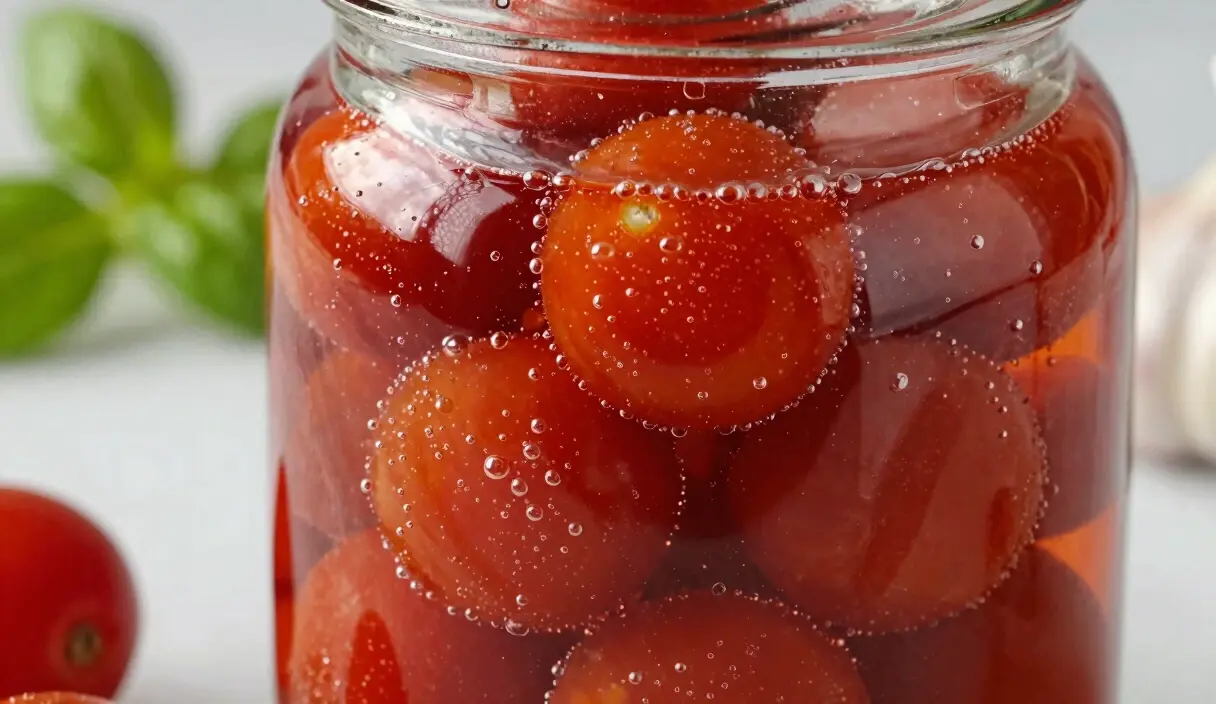
Lacto-Fermented Tomatoes: The Ultimate Guide to 'Umami Bombs'
Turn your tomatoes into probiotic flavor bombs. Learn the technical techniques for lacto-fermenting tomatoes, maintaining texture, and unlocking intense umami.
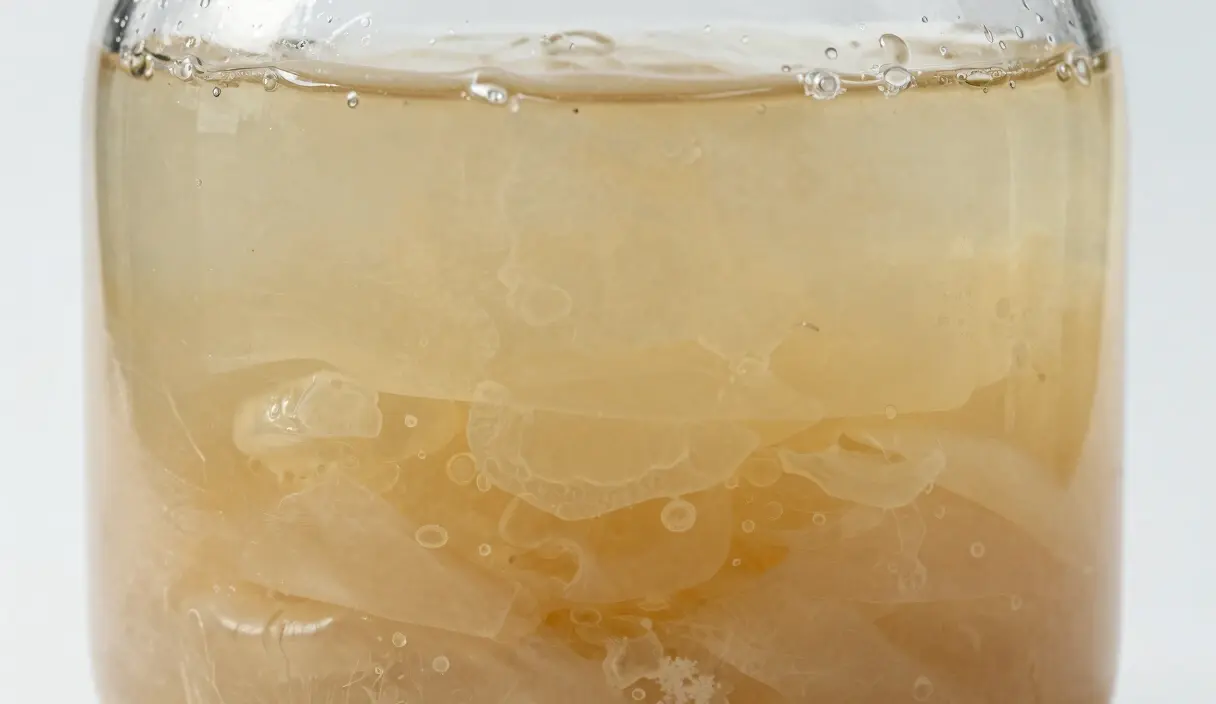
The Symbiotic Engine: A Comprehensive Guide to SCOBY Health and Maintenance
Master the art of kombucha brewing. Learn how to care for your SCOBY and create the perfect fizzy probiotic drink.
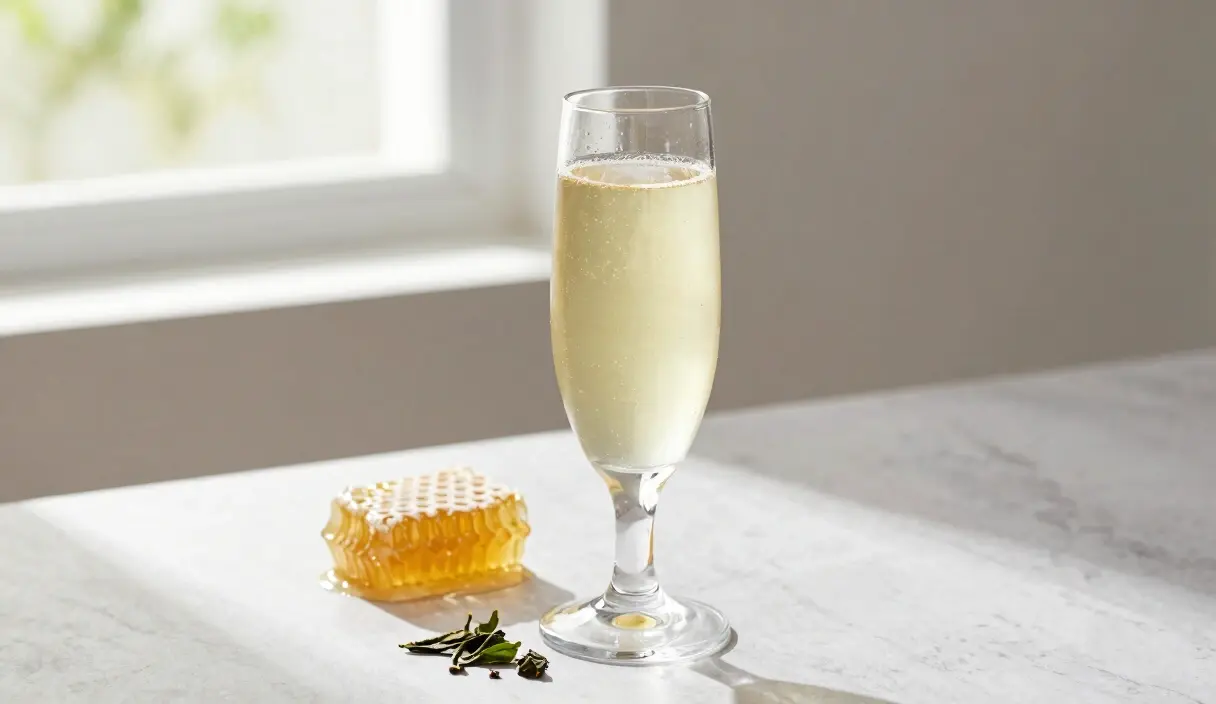
Jun Kombucha: The Complete Honey-Based Fermentation Guide
Discover Jun Kombucha, the 'Champagne of Kombuchas.' Learn how to ferment green tea and raw honey into a delicate, probiotic elixir with this master guide.