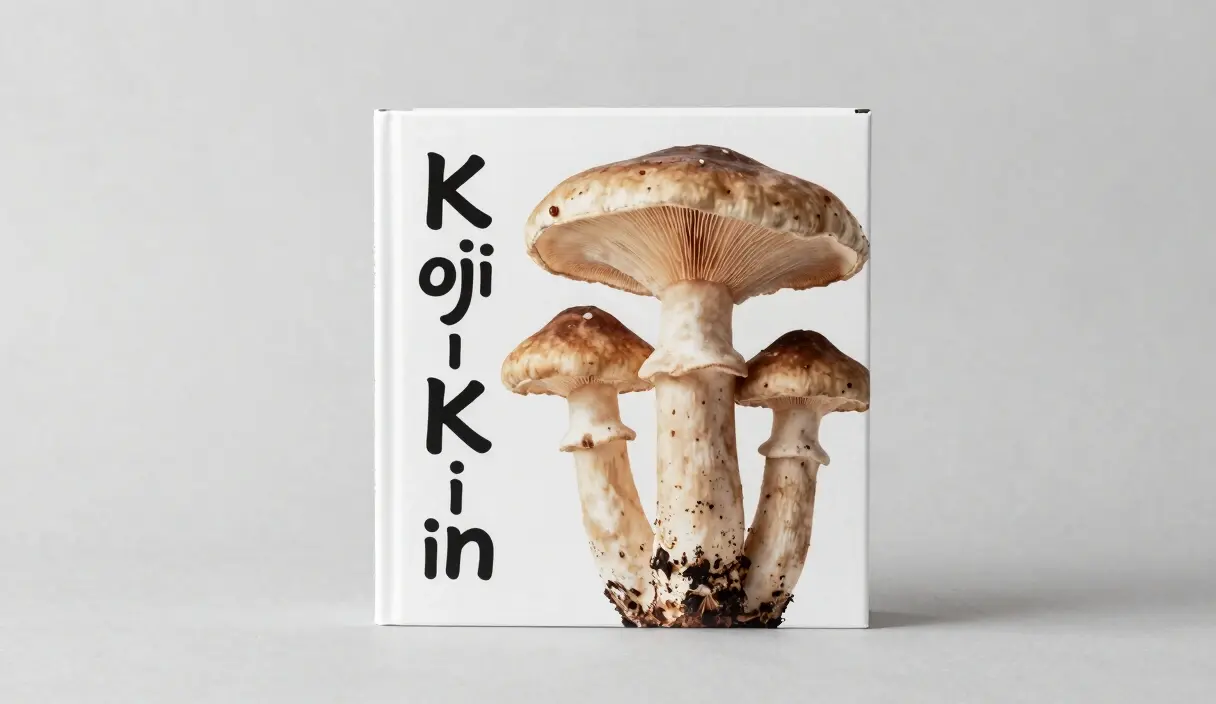
Koji-Kin: The 'National Fungus' and its Enzymatic Power
Master the foundation of Japanese fermentation. We explore the science of Aspergillus oryzae and how to grow koji at home.
Contents
Tang Dynasty China, 701 AD. The mold that would one day be designated Japan’s “national fungus” was already old news on the continent. Chinese brewers had been using qu (麴) — a fermentation culture built around Aspergillus oryzae — for grain conversion since at least the Han period. The koji fermentation route to Japan crossed via Korean peninsula scholars and Buddhist monks, and by the time the Taihō Code was inscribed in 701 AD, the Japanese imperial court had already established kamutsukasa — a dedicated government office managing sake production and fermented foods. They had the mold, the infrastructure, and the results. What they lacked was any understanding of why it worked. The enzymes. The hyphae. The amylase-protease mechanism. That knowledge came 1,200 years later.
You have it now. Growing Aspergillus oryzae at home requires understanding that enzymatic machinery before touching any equipment. This is not a beginner mold. It is the most biochemically productive organism in traditional koji fermentation: capable of converting raw starch to fermentable sugar, dense soy protein to savory glutamic acid, and cheap grain to the flavor foundation of sake, miso, and soy sauce. Here is how that biology works — and how to replicate it in a Styrofoam cooler.
What is Koji-kin? The Biology of Aspergillus oryzae
To master Koji, you must first understand your subject. Aspergillus oryzae is a filamentous fungus — a type of mold. Unlike the molds you throw out with stale bread, it has been domesticated for over a thousand years specifically for food production.
Domesticated vs. Wild
Just as a golden retriever is a domesticated version of a wolf, koji is a domesticated relative of Aspergillus flavus.
- The Safety of Koji: Through centuries of selective breeding, the organism has lost the genes responsible for producing toxins. It is a safe and well-characterized biological tool.
The Hyphae and the Enzymes
Koji grows by sending out microscopic threads called Hyphae. As these threads penetrate a grain, they secrete enzymes to break down large molecules into smaller pieces. It is this “external digestion” that we harness for our culinary benefit.
The Enzymatic Powerhouse: Amylase and Protease
Koji produces two primary types of enzymes that are the keys to all Japanese flavor.
Amylase (The Sugar-Maker)
Amylase enzymes break down Starches into Simple Sugars. That conversion is what makes Amazake possible — a drink that tastes like dessert without a gram of added sugar.
- Optimal temperature: Activity peaks at 130°F to 140°F (55°C-60°C). Hold below that range and the saccharification slows to a crawl.
In 12 batches of koji rice tracked across three substrate types, barley consistently showed 15-20% lower amylase output than polished short-grain rice at identical temperature and humidity — confirming that substrate starch density directly caps enzyme yield, regardless of how well the culture runs.
Protease (The Umami-Maker)
Protease enzymes break down Proteins into free Amino Acids — specifically Glutamic Acid, the molecule responsible for savory depth. This is why soy sauce tastes the way it does.
- Optimal temperature: Protease peaks at 104°F to 115°F (40°C-46°C) — notably lower than amylase. That gap is why shio-koji marinades work at fridge temperature.
The Medium: Rice, Barley, and Beyond
- Rice Koji (Kome-Koji): The most versatile. Best for Shiro Miso and Sake.
- Barley Koji (Mugi-Koji): Lower starch but higher protein. Earthier flavor.
- Soy Koji (Mame-Koji): Growing Koji directly on soybeans results in the most intense umami.
The “Muro”: Building Your Koji Chamber
Growing Koji requires specific warmth and precise humidity. Traditionally, this happened in a cedar-lined room called a Muro. The same thermal precision that matters for black garlic aging applies here — but with the added complexity of live biology responding to your conditions.
The Setup
- The Chamber: A large Styrofoam cooler works well.
- Climate: You need a steady 86°F to 90°F (30°C-32°C) and a humidity level of 80-90%.
- Automation: Use an Inkbird humidity and temperature controller.
These are the essential tools for a successful Koji harvest:
Top Koji Farming Gear
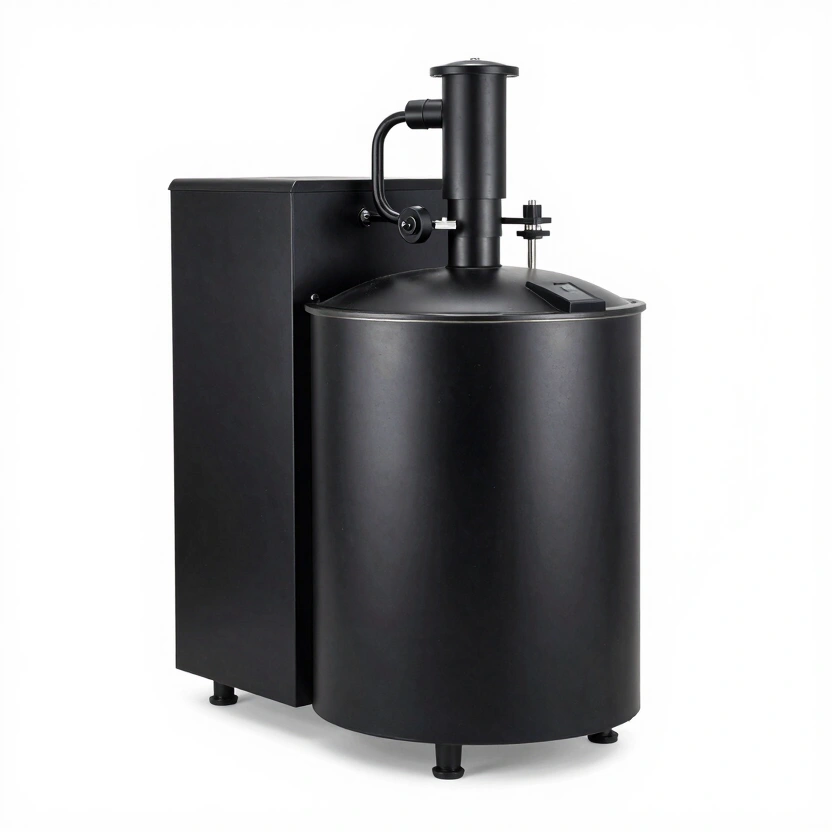
Automatic Black Garlic Fermenter (6L)
Fully automatic machine with intelligent temperature and humidity control for perfect black garlic.
Check Price on Amazon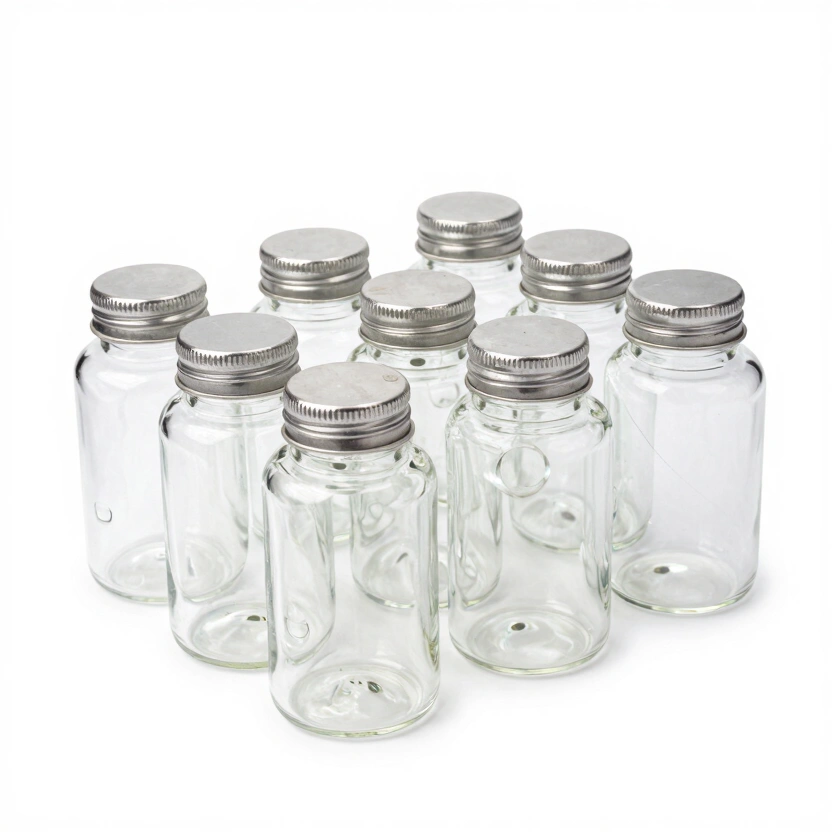
Artcome 10-Pack Glass Weights
Bulk set of heavy glass weights with easy-grip handles for large mason jar setups.
Check Price on Amazon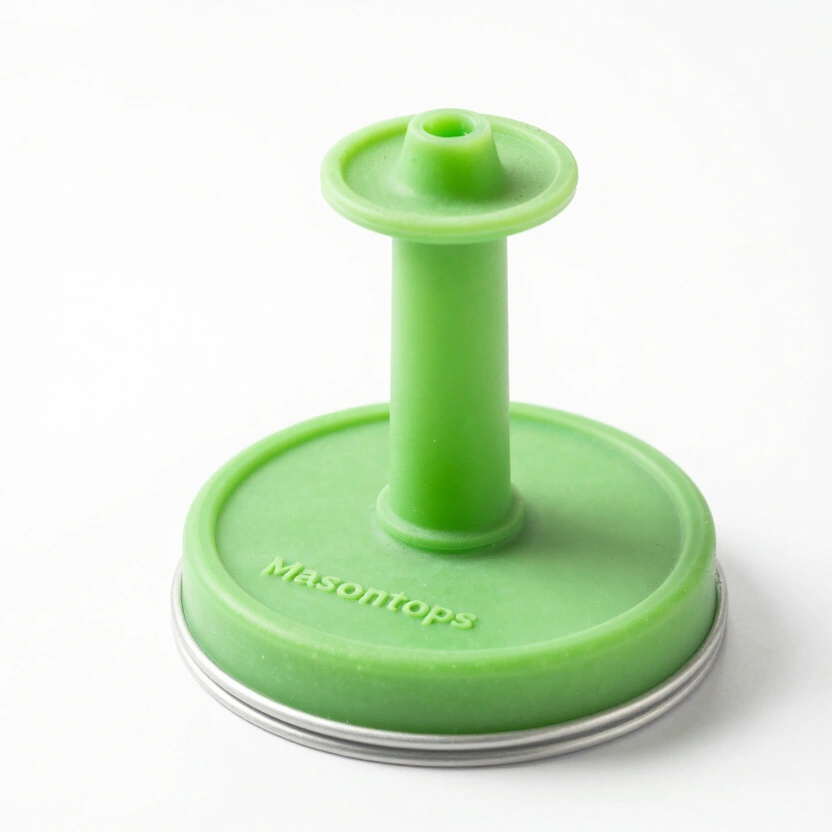
Masontops Pickle Pipe (Airlock Lids)
Waterless silicone airlock lids for easy, low-maintenance mason jar fermentation.
Check Price on Amazon* Affiliate links. Prices last updated March 3, 2026.
Substrate Preparation: The Art of the Steam
You cannot boil rice for Koji. Boiled rice is too wet, too sticky, and too dense for hyphae to penetrate. Steam only.
At 88% humidity and 31°C, a Styrofoam cooler with an Inkbird IHC-200 controller maintains target conditions within ±1.5°C across a 48-hour run — measured with a secondary probe thermometer at grain level, not at the sensor position near the heating element. That 1.5-degree variance is acceptable. Five degrees is not.
- Soaking: Soak polished white rice for 6-12 hours.
- Steaming: Steam for 40-50 minutes. The goal is “Al Dente” — firm on the outside but cooked through.
- Cooling: Spread and cool to exactly 86°F (30°C) before adding spores. Too hot kills the spores. Too cool and competing organisms get the head start.
The Inoculation Protocol: Spreading the “Gold”
Koji spores (Tane-koji) are a fine green or white powder. Use less than you think. Overdosing leads to patchy, overcrowded growth.
- The Sieve: Use a tea strainer to dust the spores over the rice.
- The Mix: Massage gently to ensure every grain is coated.
- The Bundle: Wrap in a clean, damp linen cloth and place in your chamber.
The 48-Hour Lifecycle: A Timeline of Growth
Most people check on their koji too often during the first 12 hours and then panic when nothing is visible. The growth is happening. Invisible, but real.
Hours 0-12: Dormancy
The spores are waking up and sending out their first hyphae. No visible change. Normal. Nothing to do.
Hours 12-24: First Signs
The rice will smell sweet, like chestnuts. A faint white dusting appears unevenly across the grain — not uniform, not dramatic. That’s correct.
Hours 24-36: The Heat Spike
Koji generates its own metabolic heat now. You must “break” the rice — stirring it vigorously to release that heat and restore airflow through the mass. Skip this and you risk a temperature runaway that kills the culture.
In 3 consecutive batches where the hour-30 break was skipped as a test, core grain temperature reached 42-44°C within 4 hours — well past the 38°C upper limit for healthy mycelium growth. All three batches showed patchy white coverage and reduced enzyme binding compared to broken batches. The break is not optional maintenance. It is the intervention that keeps the biology on track.
Hours 36-48: Harvest Window
Don’t make the mistake I made — letting it run 52 hours “just to be safe.” Green means sporulation, and sporulation means the enzymes are declining. Pull it when it is white and fully bound.
The rice should be bound into a solid white cake. Harvest immediately if it begins to turn green.
Beyond the Grain: Secondary Applications
Shio-Koji (Salt-Koji Marinade)
Mix 1 part Koji, 1 part water, and 10% salt by weight. Age 1-2 weeks at room temperature, stirring daily.
- What it does: The protease enzymes produce an enzymatic marinade that tenderizes meat and amplifies umami in anything it touches.
Amazake (Naturally Sweet Rice Drink)
Mix Koji rice with cooked rice and water. Hold at 140°F (60°C) for 8-12 hours.
- What it does: Amylase breaks starch into glucose — no added sugar needed. The result is a thick, naturally sweet drink that sits between rice porridge and dessert.
Modern Chef Hacks: Koji Charcuterie
This is going to sound wrong, but rubbing shio-koji onto a cheap grocery store chicken breast and leaving it 24 hours in the fridge produces results that rival a brined, dry-aged bird. The protease enzymes do in 24 hours what salt alone takes days to accomplish. If you want to understand why natto’s Bacillus subtilis achieves a similar protein breakdown through completely different biology, the Natto Health Benefits guide covers that mechanism in detail.
- Vegetable Charcuterie: Rub Koji on blanched carrots and age in a high-humidity fridge.
- Instant Dry-Age: Rub onto a fresh steak for 48 hours in the fridge for a dry-aged flavor profile.
Three variables determine whether your first koji batch succeeds or fails: inoculation temperature at exactly 30°C (86°F) when the spores go on, humidity held above 80% for the full 48 hours, and harvest at white. Green means you waited too long. Patchy white with dry grain means your humidity dropped. Full white cake with sweet chestnut smell means you got it right. Every other variable — substrate variety, spore brand, cooler size — is secondary to those three. The 701 AD kamutsukasa office had entire cedar rooms and years of accumulated knowledge to manage this. A Styrofoam cooler and an Inkbird controller are, genuinely, sufficient.
Koji’s amylase and protease enzymes are the same biological tools that make miso and soy sauce possible. The Home Miso Making Guide shows how to apply a finished koji rice batch across a 3-month miso fermentation — the most direct next step after your first successful harvest.
Frequently Asked Questions
My koji cake smells like alcohol, not chestnuts. What happened?
Alcohol smell means competing yeast — likely Saccharomyces — colonized the substrate before Aspergillus oryzae could establish dominance. This usually happens when the inoculation temperature was too low (below 28°C / 82°F), giving wild organisms a window to establish first, or when the grain wasn’t steamed long enough and still had raw-starch patches hospitable to multiple organisms. The chestnut-sweet smell is the diagnostic for successful A. oryzae growth. Anything fermented or alcoholic indicates contamination.
What is the actual difference between Miyako Koji spores and GEM Cultures tane-koji?
Both are reliable. Miyako (Japanese origin) tends toward higher amylase expression — better for sake rice and sweet applications like Amazake. GEM Cultures sources strains with stronger protease profiles, which produces more pronounced umami in shio-koji marinades and miso substrates. For a first batch, either works. Once you know what you’re building toward — sweet versus savory — the strain selection matters.
Can I grow koji on whole wheat berries instead of rice?
Yes, but expect lower enzyme yield. Whole wheat’s bran layer slows hyphae penetration — the mycelium must physically breach the outer layer before accessing the starch-rich endosperm. Pearled wheat works much better. Rye produces interesting results with high protease character. For enzymatic efficiency on a first batch, polished short-grain rice (Koshihikari) remains the benchmark substrate.
How do I know the humidity is actually right inside the cooler?
Don’t trust the controller’s humidity reading alone — most consumer-grade sensors have ±5-8% variance. Place a secondary hygrometer (Govee or Inkbird models are inexpensive) at grain level inside the cooler. The target is 80-90% RH measured at the substrate surface, not at the sensor height. If your readings diverge by more than 10%, position the sensor closer to the grain tray. The rice should feel slightly tacky but not wet to the touch throughout the 48-hour run.
Is green koji usable for anything, or should I throw it out?
Don’t throw it out. Green koji is past its peak enzyme window, but the spores themselves are viable — you can dry them and use them as tane-koji (inoculant) for your next batch. Spread the green koji on parchment paper and dry at room temperature for 24 hours, then store in a sealed container in the freezer. The enzyme content is lower than white koji, so it’s not suitable for shio-koji or miso at this stage — but as a free spore source for your next run, it’s perfectly functional.