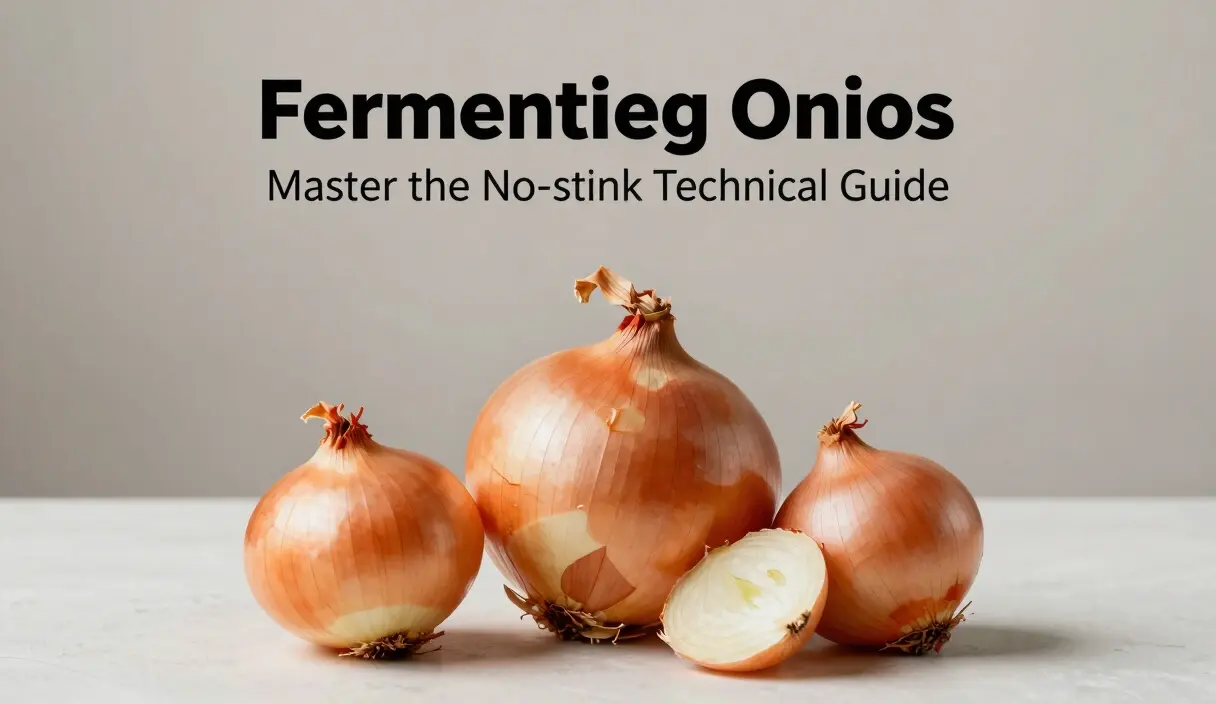
Fermenting Onions: Tips for a No-Stink Preparation
Do you want the probiotic benefits of onions without the kitchen smell? We explore onion chemistry and precision protocols for a no-stink preparation.
Contents
Fermented onions recipe searches usually end the same way: someone tries it without an airlock, clears out the kitchen by Day 3, and swears off the project. The sulfur is real. The hydrogen sulfide smell between Day 2 and Day 7 is genuinely unpleasant. But here’s the thing — it’s temporary, it’s manageable, and the finished product by Day 14 is nothing like that early stage. A properly sealed jar of red onions at 3% salinity produces a magenta, probiotic-rich condiment with complex, floral acidity. This guide covers the sulfur chemistry, the no-stink protocol, and the airlock setup that makes all the difference.
The Chemistry of Alliums: Why Onions Stink
Most onion fermentation guides focus entirely on the recipe and say almost nothing about the sulfur. That’s backwards. Understanding the chemistry is what separates a successful, contained ferment from a domestic incident.
To tame the onion, you must first understand its weapons. Onions belong to the genus Allium, along with garlic and leeks.
The Sulfur Defense
Onions contain organosulfur compounds, evolutionary defenses against pests. When sliced, enzymes create Syn-propanethial-S-oxide—the gas that makes you cry.
The Fermentation Shift
During fermentation, Lactic Acid Bacteria (LAB) break down these sulfur compounds.
- The Intermediate Phase: The process releases volatile sulfides, including hydrogen sulfide (rotten egg smell). This is most intense between Day 2 and Day 7.
- The Result: After the initial “funk,” these sharp notes mellow into a sweet, complex acidity.
The No-Stink Protocol: Strategic Containment
If you want to ferment onions without clearing out the house, you must manage gas exchange.
Rule 1: The Absolute Seal
Traditional “open” methods are the primary cause of odor.
- Solution: Use a high-quality Airlock System. As we learned in our Anaerobic Mandate Guide, a silicone valve (like a Pickle Pipe) allows CO2 to escape while keeping heavy sulfurous gases trapped.
Rule 2: Headspace Management
More air in the jar means more room for odorous gases to accumulate.
- Solution: Pack your jar tightly. Leave only 1 inch of headspace. Less gas volume means a less pervasive smell.
A sealed jar on a high shelf, away from the stove. That’s the setup. Not on the counter next to the coffee maker where someone opens it without warning on Day 3. Location is part of the no-stink protocol — not just the equipment.
Onion Selection: Color and Chemistry
- Red Onions: The most popular. They turn a stunning magenta in the acidic brine and have high sugar for fast fermentation.
- Yellow/Spanish Onions: Highest in sulfur. Pungent during fermentation but result in the sweetest finished product.
- Sweet Onions (Vidalia): High sugar, low sulfur. Minimal smell, but they soften more quickly.
- Shallots: The elite choice. Refined flavor and very clean fermentation.
The Master Recipe: Precision Fermented Red Onions
Follow this protocol for the best balance of color, crunch, and aroma containment.
Ingredients:
- 3 Large Organic Red Onions
- 1 tbsp Peppercorns
- 1 Bay Leaf (for tannins Milder alliums respond differently — the fermenting leeks and scallions guide covers the technique for the softer, sweeter members of the family.)
- The Brine: 3% Salinity (30g sea salt per liter of water).
The Preparation:
- Slice: Use a mandoline for uniform 1/8 inch rings.
- Pack: Pack tightly into a quart jar, eliminating air pockets.
- Brine: Pour 3% brine until fully submerged.
- Weight: Apply a glass weight. Onions are light and love to float.
- Seal: Attach your airlock immediately to contain odors.
These are the tools that make the biggest difference in quality and odor control:
Essential Onion Fermentation Gear
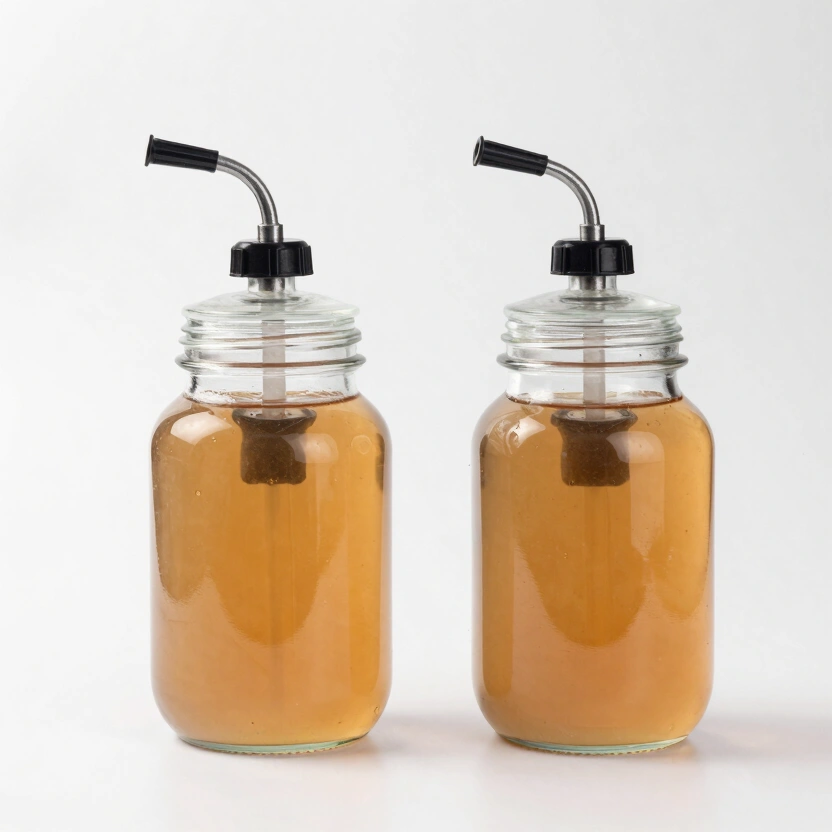
Green Wise Fermentation Jar Set (2 Pack)
Large 1.4L jars with integrated airlock valves. Perfect for sauerkraut, kimchi, or tomatoes.
Check Price on Amazon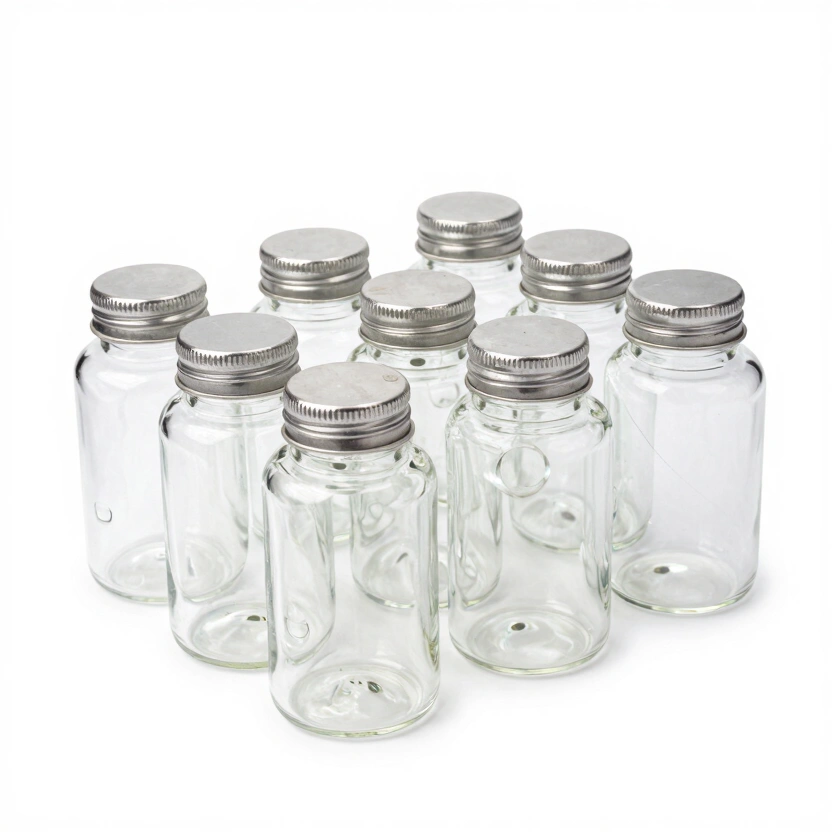
Artcome 10-Pack Glass Weights
Bulk set of heavy glass weights with easy-grip handles for large mason jar setups.
Check Price on Amazon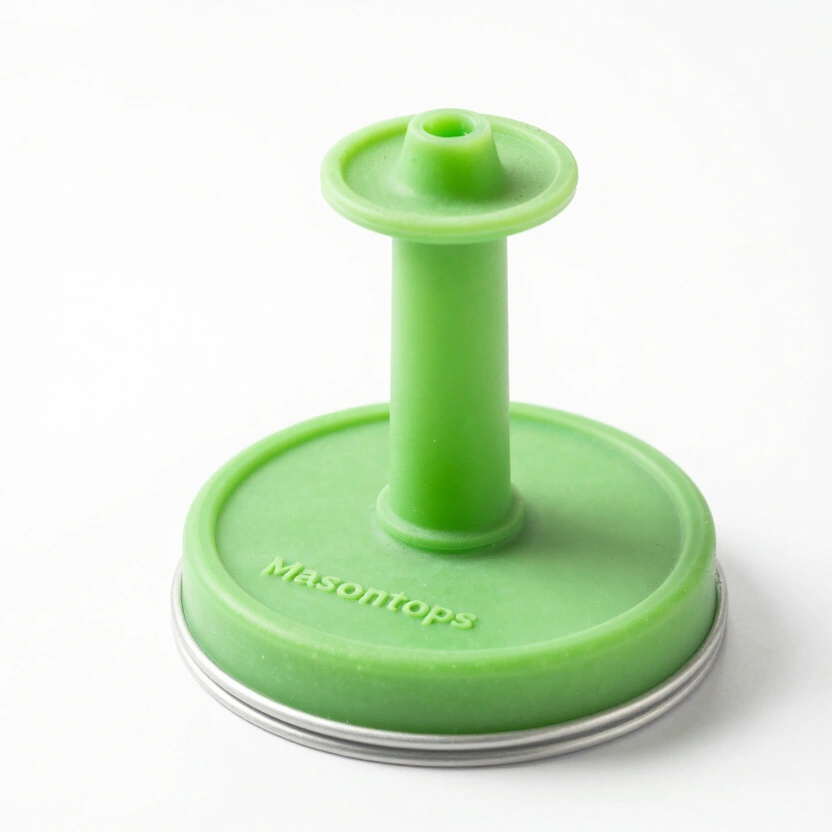
Masontops Pickle Pipe (Airlock Lids)
Waterless silicone airlock lids for easy, low-maintenance mason jar fermentation.
Check Price on Amazon* Affiliate links. Prices last updated March 3, 2026.
The Cold-Temp Advantage: Slowing the Funk
As we learned in our Temperature Control Masterclass, heat is an accelerator for both bacteria and odors.
- The Strategy: Ferment onions at 65°F to 68°F (18°C-20°C).
- The Result: A slower process that produces significantly less immediate odor and results in a crunchier onion.
Texture Mastery: Avoiding the “Onion Mush”
Onions have thinner cell walls than cabbage.
- 3% Salinity: The extra salt provides osmotic support to the cell walls.
- Tannins: A bay leaf or grape leaf locks in the pectin.
- Timing: Start tasting at Day 5. Once the raw bite is gone but the crunch remains, move to the fridge.
That transition — raw bite gone, crunch still present — is a window that lasts about 12 hours at 68°F. Miss it and the onions continue acidifying in a warm jar until they’re soft and sharp at the same time. Day 5 is a check-in, not an endpoint. Taste it, then decide.
Managing the “Prep Tears”
I’ve sliced onions in a cold kitchen, in a warm kitchen, under a fan, near an open window. The only thing that actually works is the freezer step. Fifteen minutes. Non-negotiable.
- Chill first: Place onions in the freezer for 15 minutes before slicing to slow down enzymes.
- Sharp Blade: A sharp mandoline cleanly severs cells rather than crushing them, releasing less gas.
The conventional advice is to cut onions under running water or near an open window. Both are mostly theater. Running water helps slightly — but what’s actually doing the work is temperature. Cold slows the enzyme that creates the lachrymatory compound. The freezer step isn’t a hack; it’s the mechanism. Everything else is just coping.
Culinary Pairings: How to Use Fermented Onions
- Taco Night: Red onions add a vibrant pop and acidic punch to fatty carnitas.
- Probiotic Burger: Sweetness and crunch without the raw “onion breath.”
- Onion Brine Vinaigrette: Use the leftover pink brine as a savory, probiotic-infused vinegar.
Long-Term Storage: The Mellowing Phase
Onions improve significantly with age in the refrigerator.
- The Fridge Transformation: After 2 weeks in the cold, the sulfur compounds further stabilize. The “funk” vanishes, replaced by floral notes.
- Shelf Life: Fermented onions last 6 to 12 months in cold storage.
Fermented onions have a reputation problem. Most people who’ve tried them got them wrong — too warm, too soft, too funky, made without an airlock in a kitchen that suffered for a week. Done correctly, with a sealed jar at 65°F and 3% brine, the result at Day 14 is nothing like that. The sulfur is gone. The raw bite is gone. What’s left is a magenta, acidic, complex condiment that’s genuinely useful in a professional kitchen.
The sulfur phase is not a sign that something went wrong. It’s the process. Get through Day 7 with the jar sealed. Everything after that is the reward.
The right jar makes the airlock seal that contains sulfur odors far easier to maintain — the best fermentation jars covers the airtight wide-mouth options purpose-built for pungent allium ferments like these.
The Fermented Hot Sauce Guide includes fermented onions as a core ingredient in the Solar Flare Habanero recipe — a direct application of this prep at a larger scale.
Frequently Asked Questions
Why is my red onion brine turning bright pink or magenta?
That’s exactly the right outcome. Red onions contain anthocyanins — pigments that shift from purple to vivid pink as pH drops below 4.5. The more intensely magenta the brine, the further acidification has progressed. A pale pink brine at Day 5 means fermentation is moving slowly; check your temperature and salinity. Deep magenta is what you’re building toward.
My fermented onions went soft before Day 7. What failed?
Temperature first, salinity second. Onions at 74°F with standard 3% brine will lose their crunch by Day 4 because bacterial activity — and the enzymes that break down cell walls — accelerates faster than tannins can compensate. Keep the jar at 65-68°F, use a bay leaf, and start tasting at Day 5. The crunch-to-acid ratio is a real-time check. Refrigerate the moment the raw bite disappears.
Can I ferment yellow onions instead of red?
Yes. Yellow onions produce a higher-sulfur, more pungent ferment with a sweeter finish. The brine won’t turn magenta — expect amber to pale gold. The smell during Days 2-7 is more intense than red onions, so the airlock is even more critical. The finished product at Day 14 is arguably more complex in flavor than red onion, though the visual appeal is lower.
There’s a white film on my brine surface. Should I throw it out?
Flat, powdery, white film is Kahm yeast. Skim it completely with a clean spoon, verify that all onions are submerged, and continue fermenting. It’s harmless in small amounts but turns bitter if left for days. Raised, fuzzy patches with any color other than white — discard the batch. The Kahm yeast vs. mold guide has visual identification detail.
Is adding a pinch of sugar safe for fermented onions?
Safe, but track the texture. Extra simple sugars feed opportunistic bacteria (Pediococcus) before Lactobacillus establishes dominance, which causes a temporary slime phase between Day 2 and Day 5. It resolves without intervention as the brine acidifies. Cap at 1 teaspoon of raw cane sugar per quart jar, ferment at the lower end of the temperature range (65°F), and monitor texture daily from Day 2.
Related Articles
Fermenting Leeks and Scallions: The Milder Side of Alliums
Master the art of green allium fermentation. We explore the science of leeks and scallions, texture management, and savory pairings.
The Scoville Scale and Fermentation: Does Heat Level Change Over Time?
Does fermentation make hot sauce hotter or milder? We explore the stability of capsaicin, pH impact on heat perception, and the Scoville scale.
The Ultimate Guide to Glass Jars: Fido vs. Weck vs. Mason for Fermentation
Choosing the right jar is critical for safety and success. We compare Fido, Weck, and Mason jars for pressure management and anaerobic integrity.