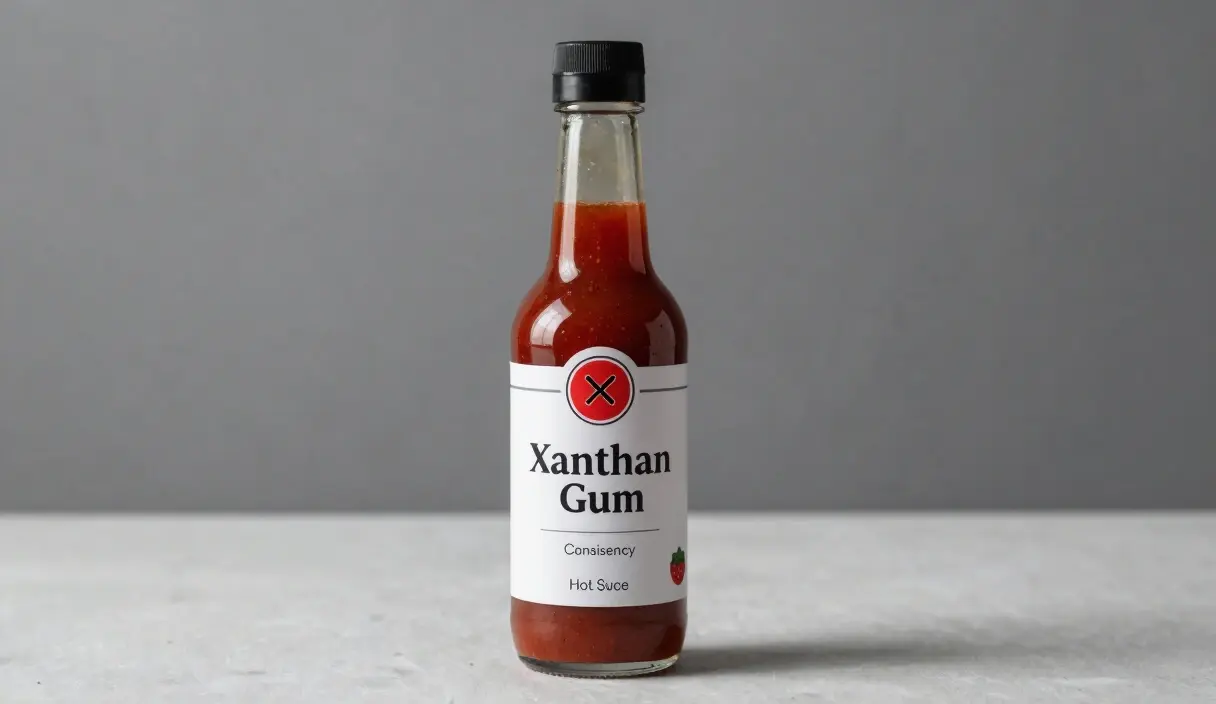
Xanthan Gum and Consistency: The Technical Secret of Hot Sauce
Why does your hot sauce separate? We explore the science of emulsification and how to use xanthan gum for professional, stable results.
Contents
Xanthan gum is itself a fermentation byproduct — produced by Xanthomonas campestris bacteria fermenting glucose. Using it in hot sauce means deploying one fermentation product to stabilize another. That’s either poetic or redundant, depending on your perspective. Either way, the correct xanthan gum hot sauce ratio is 0.1% by weight for a pourable sauce; 0.25% produces a thick, spoonable consistency. Get it wrong by even a fraction and you’ve turned a beautiful habanero sauce into something that oozes like industrial paste. This guide covers the fluid dynamics behind sauce separation, the shear-thinning mechanics that make xanthan work, and the dispersion technique that prevents the lumps — “fish eyes” — that ruin the texture.
The Physics of Separation: Why Sauces Split
Counter to popular advice, you cannot fix a separated sauce by shaking it harder. The particles will just settle again. You need to change the physics of the liquid itself — that’s what xanthan does.
To fix a split sauce, you must first understand the two forces at play: Gravity and Viscosity.
Stokes’ Law and Sedimentation
In a hot sauce, you have solid particles (pepper skins, seeds, spices) suspended in a liquid medium. According to Stokes’ Law, these particles will naturally sink based on their density.
- The Problem: Vinegar and water have low viscosity. They can’t “hold on” to heavy pepper solids.
- The Result: The solids settle into a sediment, a process called Syneresis.
The Solution: Increasing Yield Stress
To keep particles suspended, we need to increase the “Yield Stress”—the amount of force required to make the liquid move. Xanthan gum creates a medium that can support weight even when standing still.
What is Xanthan Gum? The Microbial Miracle
Xanthan Gum is a 100% natural byproduct of fermentation.
The Source: Xanthomonas campestris
It is an Exopolysaccharide (EPS) produced by the bacterium Xanthomonas campestris.
- The Natural Role: Similar to the biofilm in a slimy ferment, bacteria create xanthan to protect themselves.
- The Production: It is grown in vats, purified, and dried into a fine white powder. It is essentially a concentrated biological glue.
Molecular Mechanics: Why Xanthan is Unique
Xanthan gum is a Hydrocolloid with structural properties that separate it from starch or gelatin.
Shear-Thinning (Pseudoplasticity)
- At Rest: Molecules form a tangled network that “locks” the pepper solids in place. This prevents separation.
- Under Force: When you shake or squeeze the bottle, the molecules align and the sauce flows easily.
- Instant Recovery: As soon as the force stops, they re-tangle, preventing drips.
That behavior — fluid under pressure, stable at rest — is exactly what makes xanthan so useful for bottled sauces. Most stabilizers pick one or the other. Xanthan does both.
Stability Factors
Xanthan is remarkably stable. It doesn’t break down in high-acid environments (pH < 3.5) or during pasteurization.
The Master Ratio: Precision vs. Guesswork
I overdosed xanthan on my third batch of habanero sauce. 0.5% instead of 0.2%. The result was a thick, gelatinous paste that oozed out of the bottle like petroleum jelly. Delicious flavor completely ruined by texture. A jeweler’s scale at this stage is not optional.
Overestimation turns your sauce into “pepper jelly.” Precision is non-negotiable.
The Percentages:
- 0.1% (Light Stabilization): Best for thin sauces. Prevents separation while maintaining fluidity.
- 0.2% (Professional Standard): The “Goldilocks” ratio. Ensures 100% suspension with a velvety mouthfeel.
- 0.5%+ (Thickener): For heavy, ketchup-like consistency.
The Math: For 1 liter (1000g) of sauce, 0.2% is exactly 2 grams. Use a jeweler’s scale!
These are the tools that ensure a professional and stable consistency:
Top Emulsification Tools
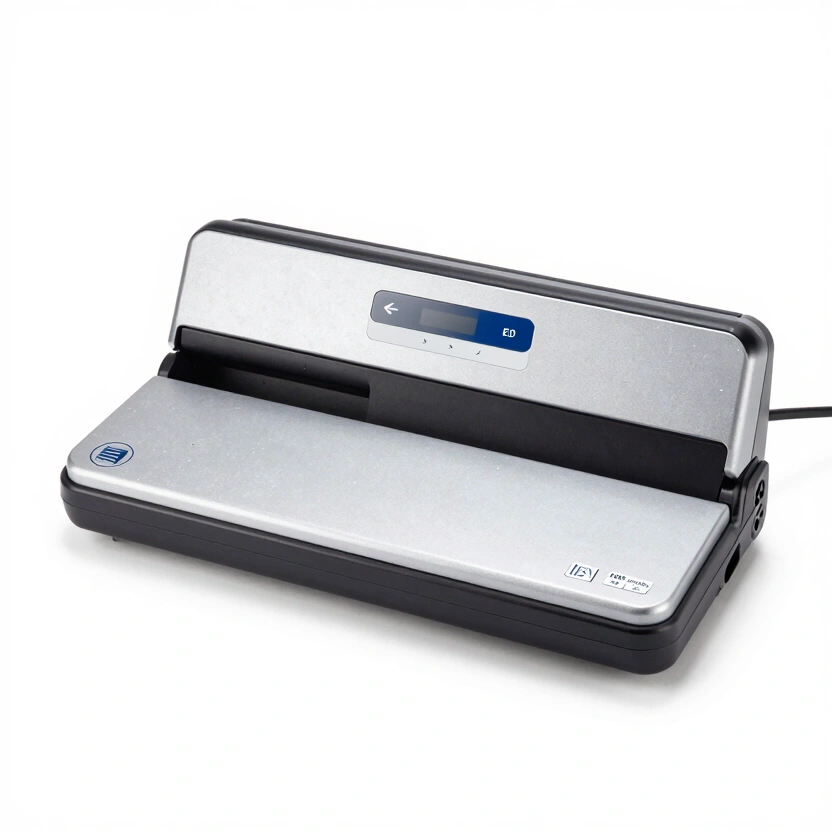
Bonsenkitchen Silver Vacuum Sealer
Affordable and powerful vacuum sealer, perfect for Noma-style bag fermentation and tempeh.
Check Price on Amazon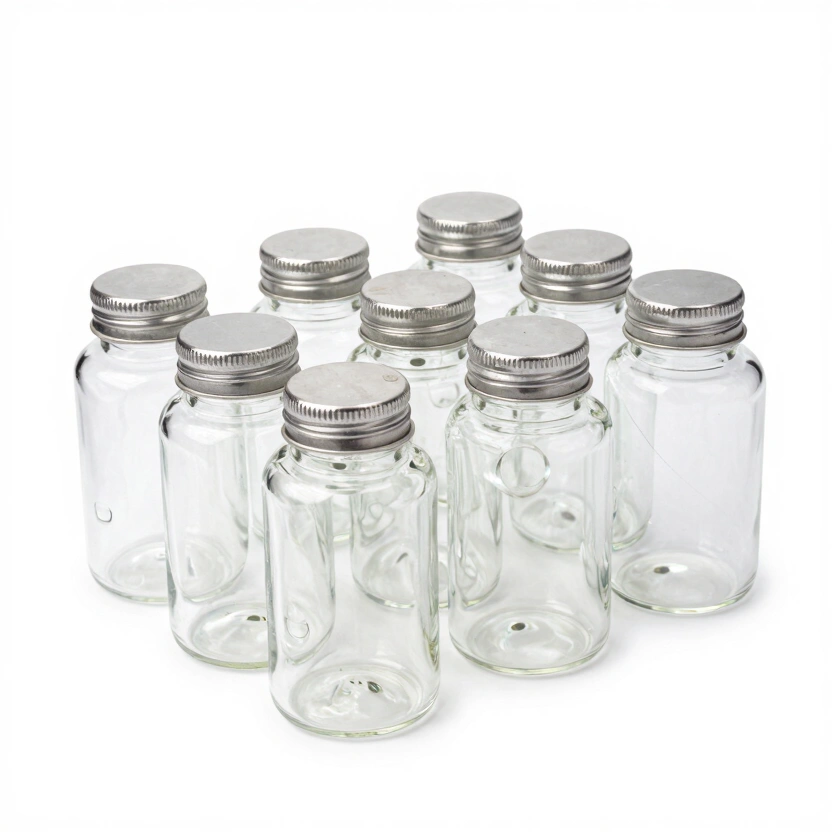
Artcome 10-Pack Glass Weights
Bulk set of heavy glass weights with easy-grip handles for large mason jar setups.
Check Price on Amazon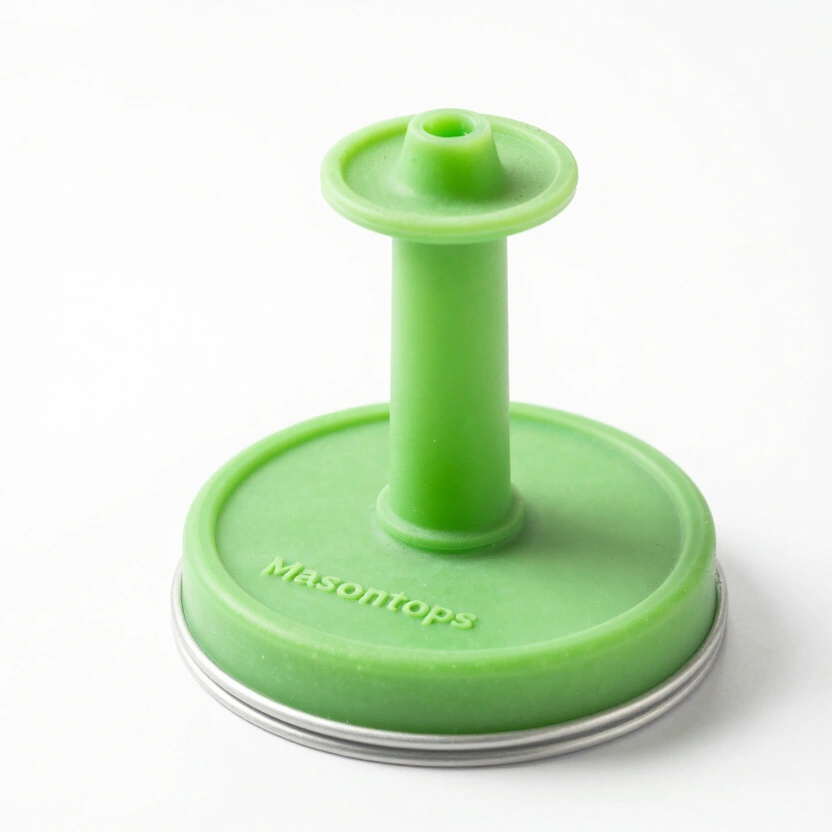
Masontops Pickle Pipe (Airlock Lids)
Waterless silicone airlock lids for easy, low-maintenance mason jar fermentation.
Check Price on Amazon* Affiliate links. Prices last updated March 3, 2026.
Dispersion Techniques: Avoiding “Fish Eyes”
Xanthan gum is hydrophilic. If dropped directly into liquid, it forms waterproof shells around dry centers, creating lumps called “Fish Eyes.”
The Vortex Method (Best for Hot Sauce)
- Blender: Place sauce in a high-speed blender.
- Vortex: Turn on low until a funnel forms in the center.
- Dusting: Slowly sprinkle xanthan directly into the center of the vortex.
- The Blast: Run on high for 30 seconds to fully hydrate the molecules.
Skip step 2 and dump the xanthan directly onto the surface of still liquid. Watch what happens. Lumps instantly, and no amount of subsequent blending fully rescues them. The vortex step is not decorative — it’s mandatory.
The Mouthfeel Factor: Gloss and Glide
Beyond suspension, xanthan improves the sensory quality. The difference between a 0.2% xanthan sauce and one without any stabilizer isn’t just visual — it’s tactile. One feels like it belongs on food; the other feels thin and watery the moment it hits your tongue.
- Gloss: Gives the sauce a professional sheen.
- Glide: Allows the heat to roll across the tongue smoothly, avoiding “dry” spikes.
Comparative Stabilizers: Xanthan vs. The World
| Stabilizer | Origin | Pro | Con |
|---|---|---|---|
| Xanthan Gum | Bacterial | Acid stable, No flavor | Easy to over-use |
| Guar Gum | Bean-based | Cheap | Breaks down in acid |
| Gum Arabic | Tree Sap | Good emulsifier | Weak thickener |
Long-Term Stability: Prevention of Synereis
- Water Migration: Xanthan creates a barrier that keeps water trapped within the solids.
- Oxidation Buffer: The thicker matrix slows oxygen movement, preserving vibrant colors.
Cleaning Pro-Tips: Managing the “Glue”
Xanthan is a high-performance adhesive.
- Rinse Immediately: Wash your blender with hot water the moment you finish.
- Soap Blast: Run the blender on high with hot water and dish soap for 60 seconds.
At 0.2% with the vortex dispersion method, your fermented hot sauce holds suspension for months. No separation. No shaking. That’s achievable with a jeweler’s scale and a standard blender — the technique matters more than the equipment. The common mistake is measuring by volume rather than weight. A half-teaspoon of xanthan gum looks similar regardless of how tightly it’s packed, but the gram weight can vary by 30%. Weigh it every time.
If you’re still deciding which jar and lid system to build your hot sauce ferment in, the Masontops vs Ball fermentation review covers the airlock compatibility and seal quality that determines how well the 4-week pepper mash behaves before this finishing stage.
For the complete fermented sauce workflow from pepper mash to bottling, the Fermented Hot Sauce Guide covers every step that comes before the xanthan goes in.
Frequently Asked Questions
Is xanthan gum natural, or is it a chemical additive?
It’s natural and FDA-classified as GRAS — Generally Recognized as Safe. Xanthomonas campestris bacteria produce it by fermenting glucose, which is then purified and dried into a fine powder. The same fermentation logic that produces your hot sauce produces xanthan. It’s concentrated biology, not a synthetic compound.
Can I add xanthan to a cold sauce, or does it need heat?
Cold works fine. Unlike gelatin or some starches, xanthan hydrates at any temperature. Use the vortex dispersion method regardless of sauce temperature — sprinkle into the moving vortex slowly, then blast on high for 30 seconds. Temperature doesn’t matter. Technique does.
Does xanthan gum contain gluten?
Check the brand label. Most commercial xanthan is fermented on corn or soy substrate and is gluten-free, but some manufacturers use wheat. Bob’s Red Mill certifies theirs as gluten-free explicitly. If you have celiac disease, that label verification isn’t optional.
My sauce went lumpy after I added xanthan. Can I fix it?
Not fully, but you can reduce it. The lumps form because xanthan is hydrophilic — it seals waterproof shells around dry powder clusters that can’t hydrate internally. Blend on high for 2 minutes and then pass the sauce through a fine-mesh strainer. That removes the worst lumps. To prevent it next time: always use the vortex method. Running blender, small funnel in the center, dust the powder directly into that funnel, then immediately blast on high for 30 seconds. No shortcuts.
What happens if I use too much?
Texture collapse. At 0.5% and above, xanthan creates a thick, gelatinous paste that doesn’t pour — it oozes. There’s no practical way to fix an overdose. The only solution is diluting with more sauce base, which changes your pH and flavor profile. Weigh it every time. The difference between 0.2% and 0.3% in a 1-liter batch is one gram — one gram that determines whether your sauce pours cleanly or embarrasses you at the table.
Related Articles
The Scoville Scale and Fermentation: Does Heat Level Change Over Time?
Does fermentation make hot sauce hotter or milder? We explore the stability of capsaicin, pH impact on heat perception, and the Scoville scale.
The Science of Slime: Troubleshooting Pediococcus and Texture Issues in Fermentation
Is your sauerkraut brine thick and stringy? Learn about Pediococcus and how to fix slimy fermentation without throwing it away.
The Visual Masterclass: Distinguishing Kahm Yeast, Mold, and Biofilms
Found white spots in your jar? We provide a complete visual catalog to help you distinguish between harmless yeast, beneficial sediment, and dangerous mold.