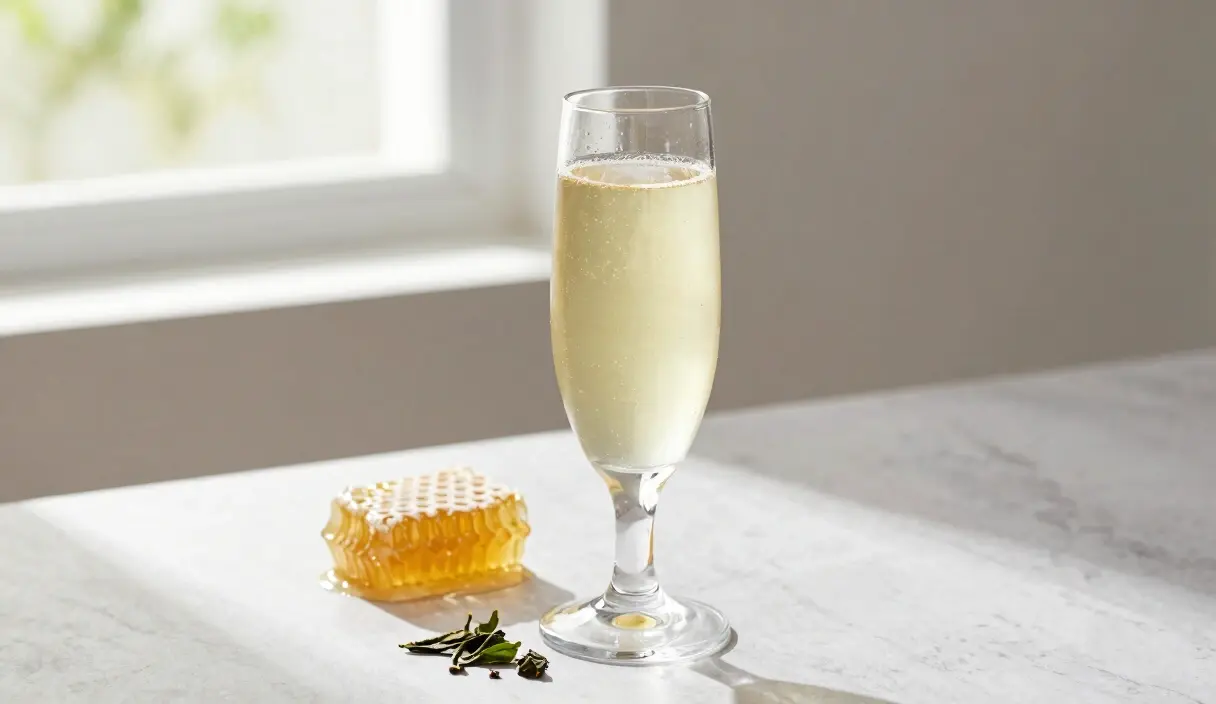
Jun Kombucha: The Complete Honey-Based Fermentation Guide
Discover Jun Kombucha, the 'Champagne of Kombuchas.' Learn how to ferment green tea and raw honey into a delicate, probiotic elixir with this master guide.
Contents
Jun SCOBY is a separate culture from standard kombucha SCOBY — not interchangeable, not adaptable, and not sold in most homebrew shops. Start with that distinction because most guides bury it.
Where regular kombucha ferments black tea with cane sugar into something sharp and bracing, Jun takes green tea and raw honey — two substances with their own antimicrobial properties — and produces something floral, almost delicate, that tastes nothing like what you expect from a fermented drink. But that result depends on three non-negotiable conditions: an authentic Jun culture, genuinely raw honey, and tea cool enough not to kill the enzymes before the SCOBY ever sees them. Fail any one of those and you’ve got an expensive jar of mediocre tea. Most first attempts fail the honey condition. The label says raw; the honey pours out perfectly clear at room temperature, which almost always means it was heat-processed.
Jun vs. Regular Kombucha: The Technical Battle
The primary difference isn’t just the ingredients; it’s the microbial culture itself. A Jun SCOBY (Symbiotic Culture of Bacteria and Yeast) has evolved to thrive on the complex sugars and antimicrobial properties of raw honey.
| Feature | Regular Kombucha | Jun Kombucha |
|---|---|---|
| Primary Sugar | Cane Sugar (Sucrose) | Raw Honey (Fructose/Glucose) |
| Tea Type | Black Tea | Green Tea |
| Fermentation Time | 7–14 Days | 5–7 Days |
| Ideal Temp | 24–28°C (75–82°F) | 18–22°C (64–72°F) |
| Alcohol Content | ~0.5% | up to 2.0% |
| Flavor Profile | Sharp, vinegary | Floral, delicate, mellow |
Because honey is easier for yeast to break down than sucrose, Jun ferments significantly faster. This shorter cycle makes it a great choice for brewers who want a quicker turnaround.
The Ingredients: Honey is King
In Jun brewing, you cannot compromise on quality. Since the honey is the primary fuel for your culture, its composition matters.
1. Raw Honey vs. Pasteurized
Always use raw honey. Raw honey contains active enzymes and natural wild yeasts that complement the Jun SCOBY. Pasteurized honey has been heated, which kills these beneficial components and can lead to a “flat” tasting ferment.
This is the step most people skip — checking whether their honey is actually raw. Most grocery store honey labeled “natural” or “pure” has been heat-processed. Look for crystallization as a sign of genuine raw honey; fluid, clear honey at room temperature usually means it’s been heated.
2. The Tea Selection
Green tea is the traditional base. For the best results, use:
- Sencha: Provides a grassy, fresh base.
- Dragonwell (Longjing): Adds a nutty, toasted complexity.
- Jasmine Green: Perfect if you want an intensely floral Jun. Avoid flavored teas with oils (like Earl Grey), as these can damage the SCOBY over time.
Equipment & Starter Cultures
You cannot simply toss a regular kombucha SCOBY into honey and call it Jun. While some people “train” their cultures over several batches, it is much more effective to start with an authentic Jun culture.
Authentic Jun Kombucha Cultures
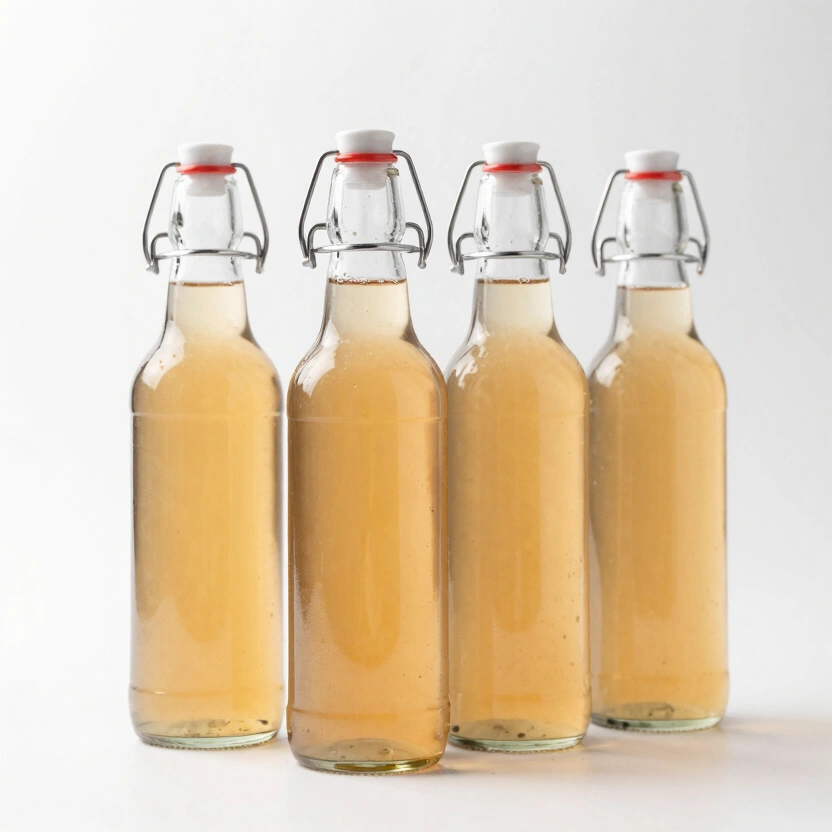
myFERMENTS Kombucha Starter Set
Large 4.25L jar set with swing-top bottles — ideal for first kombucha or kefir batches.
Check Price on Amazon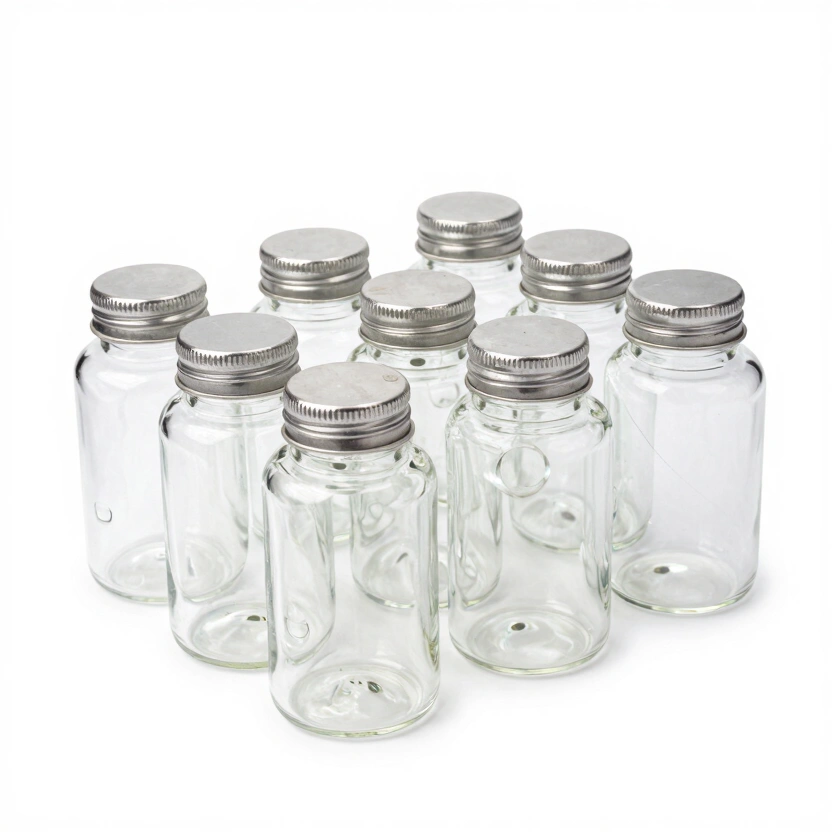
Artcome 10-Pack Glass Weights
Bulk set of heavy glass weights with easy-grip handles for large mason jar setups.
Check Price on Amazon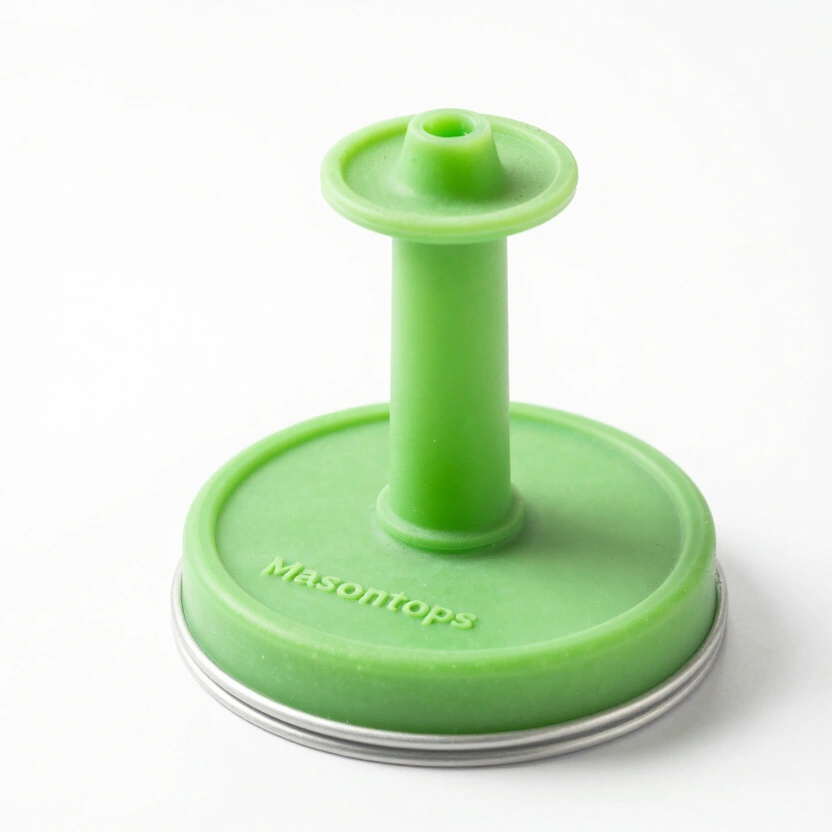
Masontops Pickle Pipe (Airlock Lids)
Waterless silicone airlock lids for easy, low-maintenance mason jar fermentation.
Check Price on Amazon* Affiliate links. Prices last updated March 3, 2026.
Jun SCOBYs are typically paler and more translucent than regular ones. They are also notoriously particular about their environment, so having the right starter liquid is crucial for success.
Picture your Jun jar on day five: the pale disk has grown a new translucent layer overnight, the liquid smells like a meadow crossed with sourdough, and the foam at the edges tells you the culture is exactly where it needs to be. That moment — that specific combination of signs — is what you’re trying to engineer.
Step-by-Step: The First Batch
1. Brewing the Tea
Boil 1 liter of filtered water. Let it cool to about 80°C (175°F) before adding 2 tablespoons of green tea leaves. Steeping green tea in boiling water releases excess tannins, making your Jun bitter. Steep for only 2-3 minutes.
2. Melting the Honey
Strain the tea and let it cool further to below 40°C (104°F). This is the “Goldilocks Zone.” If the tea is too hot, you will destroy the medicinal properties of the raw honey. Stir in 1/2 cup of raw honey until fully dissolved.
I ruined my first Jun batch by adding honey to tea that was still at 55°C. It smelled beautiful for about 48 hours and then went completely flat. Heat kills the enzymes and native yeasts in raw honey — those are the exact compounds that make Jun different from regular kombucha.
3. The Primary Ferment (F1)
Pour your tea-honey mixture into a glass jar. Add your Jun SCOBY and at least 1 cup of starter liquid. Cover with a breathable cloth and secure with a rubber band.
4. The Waiting Game
Place the jar in a spot out of direct sunlight. Unlike regular kombucha, Jun prefers a cooler room (around 20°C). Check your ferment after 5 days. It should be fizzy, slightly tart, and still have a hint of honey sweetness. Use a pH strip to confirm it is between 3.0 and 3.5 for safety.
The temptation to open the jar and check on day two is real. And annoying to resist. But every disturbance disrupts the forming pellicle and can introduce contamination at exactly the wrong moment — when the pH hasn’t dropped far enough yet to protect itself.
Carbonation & Flavoring (The Second Ferment)
If you want those champagne-like bubbles, you need a second fermentation (F2) in airtight bottles.
- Honey-Prime: Add a tiny teaspoon of honey to each bottle to give the yeast a final boost.
- Fruit Pairings: Jun pairs beautifully with light fruits. Try strawberry-mint, elderflower, or a sliver of fresh ginger.
- Pressure Management: Jun carbonates very quickly. Check your bottles after 24 hours to ensure they don’t become “bottle bombs.”
Jun’s higher potential alcohol content — up to 2% during a long F2 — is something most guides gloss over. There is an uncomfortable gap between “probiotic wellness drink” and “accidentally alcoholic honey tea,” and the gap is narrower with Jun than with any other kombucha variant. Know where you are on that spectrum before you serve it. At 20°C, a Jun with honey-primed bottles can hit unexpectedly high carbonation in under 36 hours. Check them early.
Jun rewards precision in a way that most fermented beverages don’t. The honey temperature matters. The SCOBY source matters. The fermentation temperature matters. None of these are difficult — they just require actually reading the variables instead of guessing. Get those three things right and you get a probiotic drink with a complexity that standard kombucha genuinely cannot match. Get them wrong and you get an expensive jar of cloudy tea. The gap between those two outcomes is smaller than it sounds.
One thing worth knowing before you scale up: Jun’s delicacy is not a weakness. It’s a constraint that forces you to pay attention. Brewers who find regular kombucha “too easy” almost always find Jun interesting for exactly that reason.
Ready to gear up properly? The complete fermentation starter kit review covers every jar, airlock, and weight you need to run Jun and any other culture with confidence.
If your SCOBY is showing unusual growth or color shifts, the Kombucha SCOBY Health Guide covers every diagnostic you need — including the difference between healthy yeast strands and actual contamination.
Frequently Asked Questions
What actually makes Jun different from regular kombucha — isn’t it just honey instead of sugar?
No. The swap isn’t cosmetic. A Jun SCOBY has adapted over many generations to raw honey’s specific sugar profile — fructose and glucose in roughly equal measure, with active enzymes and native yeasts still present. A regular kombucha SCOBY expects sucrose and the particular tannin-nitrogen ratio of black tea. Put a standard SCOBY into honey-green tea and you’ll get a ferment, but it won’t have the depth, the carbonation profile, or the floral finish of actual Jun. The culture itself is the product. The honey is just what feeds it.
Can I use maple syrup or agave to feed my Jun SCOBY?
You can, but you’ll lose what makes Jun worth making. Maple syrup and agave have different sugar ratios, no native yeasts, and no active enzymes. Your culture will survive for a batch or two and then slowly drift toward ordinary kombucha behavior. If you want to avoid honey for ethical or dietary reasons, regular kombucha with cane sugar is the honest choice — rather than a Jun approximation that produces neither result well.
My Jun SCOBY sank to the bottom and won’t float. Should I be worried?
No. Jun SCOBYs are paler, more translucent, and less dense than regular kombucha SCOBYs. They sink. That’s normal. What you’re watching for is a new pellicle forming at the liquid surface within 3–5 days — that thin, rubbery film tells you the culture is active and building. The mother SCOBY at the bottom is still contributing organisms to the ferment. Don’t fish it out.
Why is my Jun so much more alcoholic than the label on my regular kombucha says it should be?
Fructose and glucose are both directly fermentable by yeast — no enzymatic breakdown step required, unlike sucrose. This means Jun yeast works faster and with less energy cost. A long F2 at room temperature with honey priming can push Jun past 2% ABV, sometimes reaching 3% if you push a second fermentation hard. Reduce priming honey to 1/4 teaspoon per 500ml bottle, shorten F2 to 18–24 hours maximum, and refrigerate immediately once carbonated.
What temperature range does Jun actually need — can I ferment it at the same temperature as my regular kombucha?
Jun prefers 18–22°C (64–72°F). Regular kombucha runs best at 24–28°C. That 6°C gap isn’t trivial. Too warm and Jun ferments too fast, producing a sharp result with less floral complexity and higher alcohol than intended. Jun’s cooler operating range is one reason it’s genuinely harder to manage in a warm kitchen during summer months — and one reason it tastes like it’s worth the trouble.
Related Articles
Water Kefir vs. Milk Kefir: Which Probiotic Drink is Right for You?
Choosing between dairy and water kefir? We compare the probiotics, preparation, and health benefits of these two legendary ferments.
Lacto-Fermented Tomatoes: The Ultimate Guide to 'Umami Bombs'
Turn your tomatoes into probiotic flavor bombs. Learn the technical techniques for lacto-fermenting tomatoes, maintaining texture, and unlocking intense umami.
Microbial Architects: The Molecular Science of Probiotics and Gut Health
An investigation into the biological benefits of fermented foods. Learn about the microbiome and how 'live' food transforms your health.