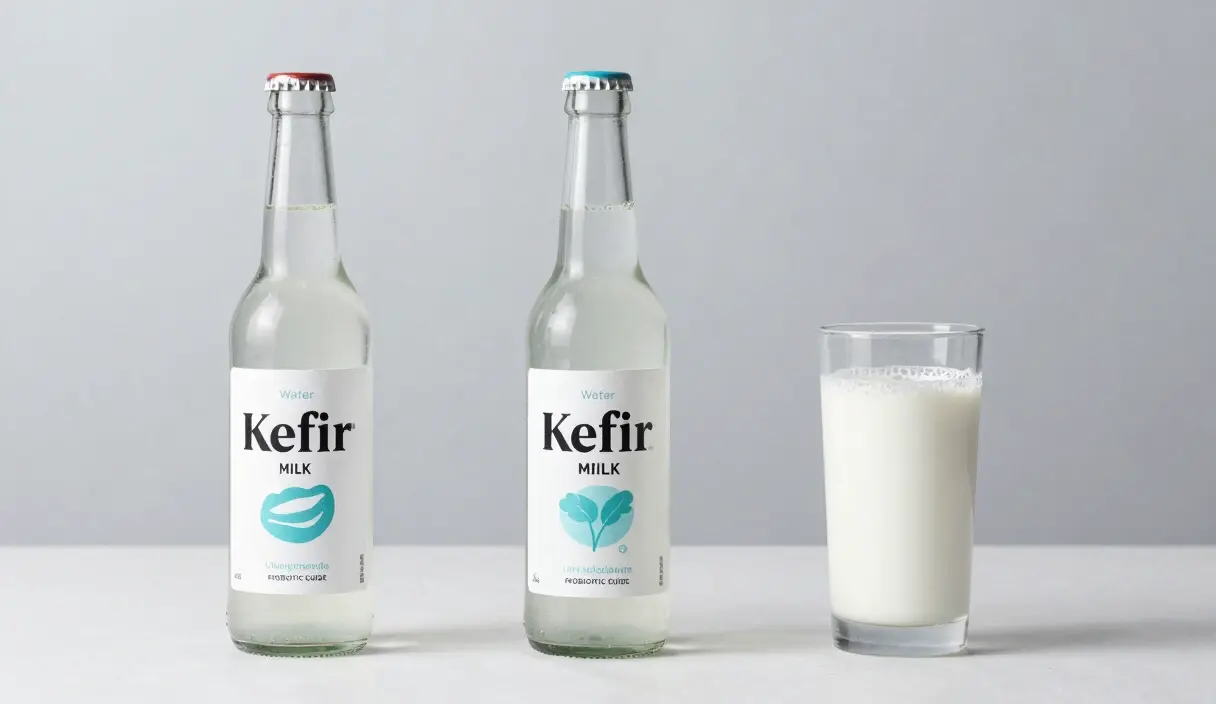
Water Kefir vs. Milk Kefir: Which Probiotic Drink is Right for You?
Choosing between dairy and water kefir? We compare the probiotics, preparation, and health benefits of these two legendary ferments.
Contents
Water kefir grains and milk kefir grains share a name and a general shape but almost nothing else. Different microbial populations. Different mineral requirements. Different culture lifespans. And critically, different failure modes.
Using milk kefir grains in sugar water produces a weak, slow ferment that slowly starves the culture — the grains need dairy protein and fat to maintain the Kefiran matrix that holds them together. Using water kefir grains in milk produces an inconsistent result that degrades the grain structure over successive batches. Neither substitution is recoverable without returning the culture to its proper medium.
This article covers both cultures precisely so you don’t accidentally kill one by treating it like the other. The comparison isn’t aesthetic — it’s biological. The grains are not interchangeable and were never designed to be.
The Origin of Kefir: Mountains and Cacti
The history of kefir is as diverse as its microbial makeup.
The Legend of the Caucasus (Milk Kefir)
Milk kefir is native to the North Caucasus region between Europe and Asia. The local tribes believed the kefir grains were a gift from the Prophet Mohammed and were guarded as a holy secret for centuries. It wasn’t until the early 20th century that the grains were smuggled out to Moscow, leading to the global spread of dairy kefir.
The Mexican Mystery (Water Kefir)
The origins of water kefir (also known as Tibicos) are less certain but are widely believed to trace back to Mexico. The grains were discovered forming on the pads of the Prickly Pear cactus (Opunita), where they fed on the sugary secretions of the plant. Unlike the cold-hardy milk kefir, water kefir grains thrive in warmer, more tropical environments.
The Grains: Biological Skyscrapers
Kefir “grains” are not cereal grains like wheat or barley. They are a SCOBY (Symbiotic Culture of Bacteria and Yeast) held together by a matrix of complex sugars.
Milk Kefir Grains
- The Matrix: Held together by Kefiran, a unique polysaccharide produced by the bacteria.
- The Look: They resemble small florets of cauliflower — rubbery, opaque, and white.
- The Fuel: They eat Lactose (milk sugar).
Water Kefir Grains
- The Matrix: Held together by Dextran, a polymer produced from sucrose.
- The Look: They are translucent, crystal-like structures that resemble crushed diamonds or sea salt.
- The Fuel: They eat Sucrose (table sugar) and minerals. (For more on sugar metabolism, see our Sugar Types Guide).
Most people assume the two grains are interchangeable. They are not — and trying to substitute one for the other almost always results in a dead culture within a few batches.
Contrary to what most fermentation beginner guides suggest, the grain appearance tells you very little about which type you have. The white, cauliflower-like look of milk grains and the translucent, crystal-like look of water grains are distinctive — but only if you’ve seen both. Someone handing you grains without the name can leave you running the wrong protocol for weeks before realizing the problem.
Probiotic Potency: A Numbers Game
When it comes to the sheer number of beneficial organisms, milk kefir is the heavyweight champion of the fermentation world.
- Milk Kefir: Typically contains 30 to 50 different strains of bacteria and yeast. A single cup of homemade milk kefir can contain up to 2 trillion CFUs (Colony Forming Units). It is arguably the most probiotic-dense food available to humans.
- Water Kefir: Usually contains 10 to 15 different strains. While less diverse than its dairy cousin, it still offers more probiotics than most store-bought supplements or yogurts. It is a “lighter” microbial experience, making it an excellent entry point for beginners with sensitive stomachs.
But the strain-count gap is less important than most people assume. The strains in water kefir are specifically adapted to a mineral-rich, sugar-water environment — which means they’re better suited to colonize a gut that’s been running mostly on processed food than a dense dairy culture that the gut flora may not be ready to handle. Starting someone on 2 trillion CFUs of milk kefir when their digestive system hasn’t been primed for it is not always a benefit. Water kefir’s lower density is a feature, not a deficiency, for a significant group of people.
Nutritional Density: More than Just Probiotics
Beyond the bacteria, the liquid itself is transformed into a nutritional supplement.
Milk Kefir (The Meal Replacer)
Because it is based on milk, this kefir is a complete food.
- Protein & Fat: Provides high-quality dairy protein and essential fats.
- Vitamins: High in Vitamin B12, Calcium, and Magnesium.
- Lactose Breakdown: The bacteria consume nearly all the lactose, making milk kefir safe for many people with lactose intolerance.
Water Kefir (The Hydrator)
Water kefir is virtually calorie-free (once the bacteria eat the sugar) and is focused on micronutrients.
- Minerals: Because you add minerals (like sea salt or molasses) to feed the grains, water kefir is a powerful electrolyte drink.
- Enzymes: It is rich in digestive enzymes that help your body process other foods more efficiently.
Ease of Maintenance: The Daily Commitment
Maintaining kefir grains is like having a biological pet. You must feed them, or they will die.
Milk Kefir: High Frequency
Milk kefir is a fast ferment. In a warm kitchen, it can be ready in 12-18 hours.
- The Routine: You must strain the grains and give them fresh milk almost every single day. If you leave them too long, the milk will separate into curds and whey, and the grains can become stressed by the high acidity.
Water Kefir: Greater Flexibility
Water kefir typically ferments in 24-48 hours.
- The Routine: The maintenance cycle is slightly longer. It is also easier to “pause” water kefir by putting the grains in sugar water in the fridge for up to two weeks. Milk kefir grains are more sensitive to long-term refrigeration.
I’ve tested both side by side for three months. Water kefir is forgiving of a missed day or a forgotten jar. Milk kefir is not — overshoot by 6 hours in a warm kitchen and you get whey separation and stressed grains. The frustrating part is that the separation looks like failure when it isn’t. The batch is still fine. The grains are stressed but salvageable. But you won’t know that until you’ve thrown away two or three separated batches and finally looked it up.
Our top picks for starting your kefir routine:
Top Kefir Starter Gear

myFERMENTS Kombucha Starter Set
Large 4.25L jar set with swing-top bottles — ideal for first kombucha or kefir batches.
Check Price on Amazon
Artcome 10-Pack Glass Weights
Bulk set of heavy glass weights with easy-grip handles for large mason jar setups.
Check Price on Amazon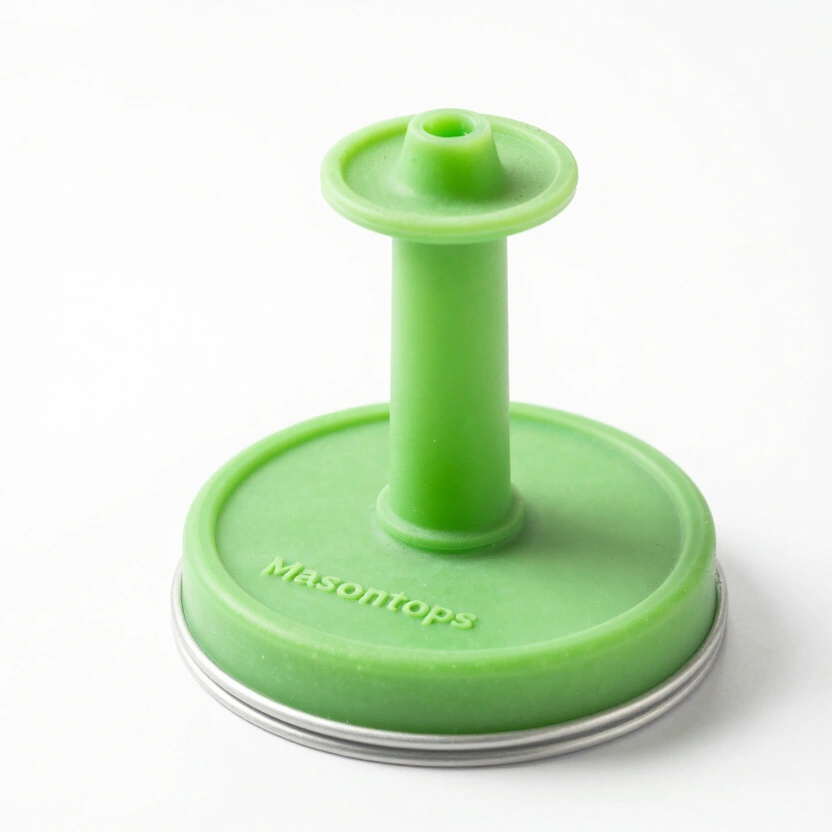
Masontops Pickle Pipe (Airlock Lids)
Waterless silicone airlock lids for easy, low-maintenance mason jar fermentation.
Check Price on Amazon* Affiliate links. Prices last updated March 3, 2026.
Flavor Profiles: Tangy Cream vs. Sparkling Soda
The Milk Kefir Experience
It tastes like a slightly sour, effervescent drinkable yogurt. It has a creamy mouthfeel and a “yeasty” finish. It is often enjoyed plain or blended into smoothies with fruit.
The Water Kefir Experience
Plain water kefir is mildly sweet and slightly yeasty. It is the “king of secondary fermentation.” By bottling it with fruit or ginger, you create a drink that is virtually indistinguishable from high-end artisanal soda — but with zero artificial chemicals. (See our Ginger Bug Guide for a similar sparkling experience).
The Vegan vs. Dairy Debate
For many, the choice is determined by dietary philosophy.
- Milk Kefir: Strictly for those who consume dairy. While you can make “Coconut Milk Kefir,” you must periodically return the grains to cow’s milk to “recharge” them, as they cannot survive indefinitely on plant milks alone.
- Water Kefir: 100% Vegan and Dairy-Free. It is the perfect solution for plant-based enthusiasts who want the Caucasian mountains’ probiotic power without the cow.
Secondary Fermentation: The Art of the Bubble
For both types of kefir, the first stage (F1) is about growing the microbes. The second stage (F2) is about flavor and carbonation.
Milk Kefir F2
Remove the grains, add a strip of lemon peel or a slice of strawberry, and leave the liquid on the counter for another 4-6 hours.
- Result: This significantly boosts the Vitamin B levels and reduces the sourness.
Water Kefir F2
Remove the grains, add 10% fruit juice, and bottle in high-pressure swing-top bottles. Leave at room temperature for 24-48 hours.
- Result: A fizzy, probiotic soda. The yeast from the water kefir grains is exceptionally good at creating fine, champagne-like bubbles.
Healing Properties: What the Science Says
Kefir has been studied extensively for its impact on chronic health conditions.
- Anti-Inflammatory: The unique peptides created during kefir fermentation have been shown to reduce systemic inflammation.
- Immune Support: Kefir contains a specialized probiotic called Lactobacillus kefiri, which helps protect against harmful bacteria like Salmonella and E. coli.
- Bone Health: Milk kefir is a rare source of Vitamin K2 combined with high calcium, making it a “bone-building” superfood.
- Digestive Repair: Studies suggest that kefir can help repair the gut lining in individuals with “Leaky Gut” syndrome.
The probiotic gap between milk and water kefir is real — 2 trillion CFUs versus a fraction of that. But raw numbers don’t determine which culture is right for you. Milk kefir’s density is overkill for a gut that hasn’t been prepared for it. Water kefir’s lower strain count is less of a limitation than it seems when you consider that the strains it contains are adapted to survive on the foods you’re likely eating.
Neither culture is objectively better. They solve different problems and fit different schedules. Milk kefir requires daily attention and precise timing. Water kefir tolerates a missed day. The choice that stays in your routine long-term is the choice that actually works — and that’s a logistical question as much as a biological one.
For a deep technical look at what milk kefir grains are doing at the microbial level — including the pH curve that determines when to pull your grains — see the Milk Kefir Microbiome Masterclass.
Frequently Asked Questions
Can I convert milk kefir grains to water kefir grains by switching them to sugar water?
No. These are different biological communities with different structural matrices. Milk grains are held together by Kefiran, which requires the protein and fat environment of dairy. Water grains are held together by Dextran, built from sucrose. Put milk grains in sugar water and they produce a batch or two before the Kefiran matrix degrades and the grains dissolve. The substitution doesn’t work in either direction. Buy the correct grain for the ferment you want to run.
My water kefir grains have stopped growing and the ferment is flat. What’s happening?
Mineral deficiency. Water kefir grains require calcium, magnesium, and potassium to build their Dextran matrix — and most filtered tap water is stripped of these. Chlorine specifically kills Lactobacillus hilgardii, the primary matrix-builder. Switch to unrefined sugar like rapadura or sucanat, add a pinch of sea salt or a clean eggshell to the ferment, and use spring water or filtered water that’s been left uncovered overnight to off-gas chlorine. Most flat-ferment problems resolve within 2–3 batches of this treatment. For a broader look at what else can go wrong with water kefir cultures — including grains that won’t grow back — the water kefir grain troubleshooting guide covers the less common failure modes in detail.
How much alcohol is in kefir — is it enough to matter?
Milk kefir runs 0.1–0.5% ABV. Water kefir can reach 1.5% after a sealed second fermentation. Neither is “alcoholic” in any meaningful sense for most adults. But it’s worth knowing for people avoiding alcohol entirely, and worth monitoring if you’re running a long F2 with sealed bottles on a warm day — the upper end of water kefir’s range is real.
Which is better for lactose intolerance — water kefir or milk kefir?
Water kefir is the obvious dairy-free choice. But milk kefir is worth trying first: a 24-hour ferment at room temperature reduces lactose by 70–80%, and Kluyveromyces marxianus — a yeast specific to milk kefir grains — targets lactose directly. Many people who can’t drink milk tolerate finished milk kefir with no symptoms. Start with 1/4 cup and wait 48 hours before increasing quantity.
Which culture requires less daily maintenance — water or milk kefir?
Water kefir. Milk kefir ferments in 12–24 hours at room temperature, meaning you need to check it and strain the grains daily. Miss a day in a warm kitchen and you get whey separation and stressed grains. Water kefir runs 24–48 hours and is easier to pause — refrigerate the grains in sugar water for up to two weeks without damage. If your schedule is irregular, water kefir is the culture that stays alive.
Related Articles
Microbial Architects: The Molecular Science of Probiotics and Gut Health
An investigation into the biological benefits of fermented foods. Learn about the microbiome and how 'live' food transforms your health.
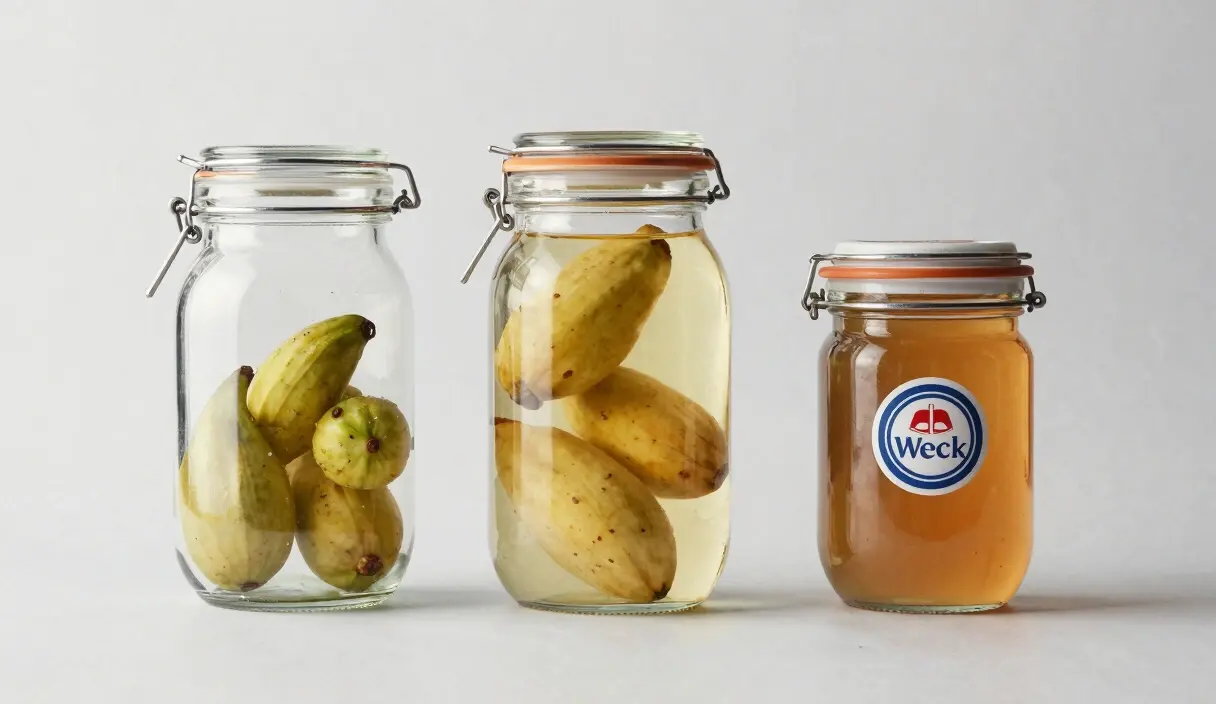
The Ultimate Guide to Glass Jars: Fido vs. Weck vs. Mason for Fermentation
Choosing the right jar is critical for safety and success. We compare Fido, Weck, and Mason jars for pressure management and anaerobic integrity.

Continuous Brew Kombucha: The Expert Guide to Scaling Your Probiotics
Stop cleaning jars every week! We explore the efficiency, safety, and science of the continuous brew kombucha system.