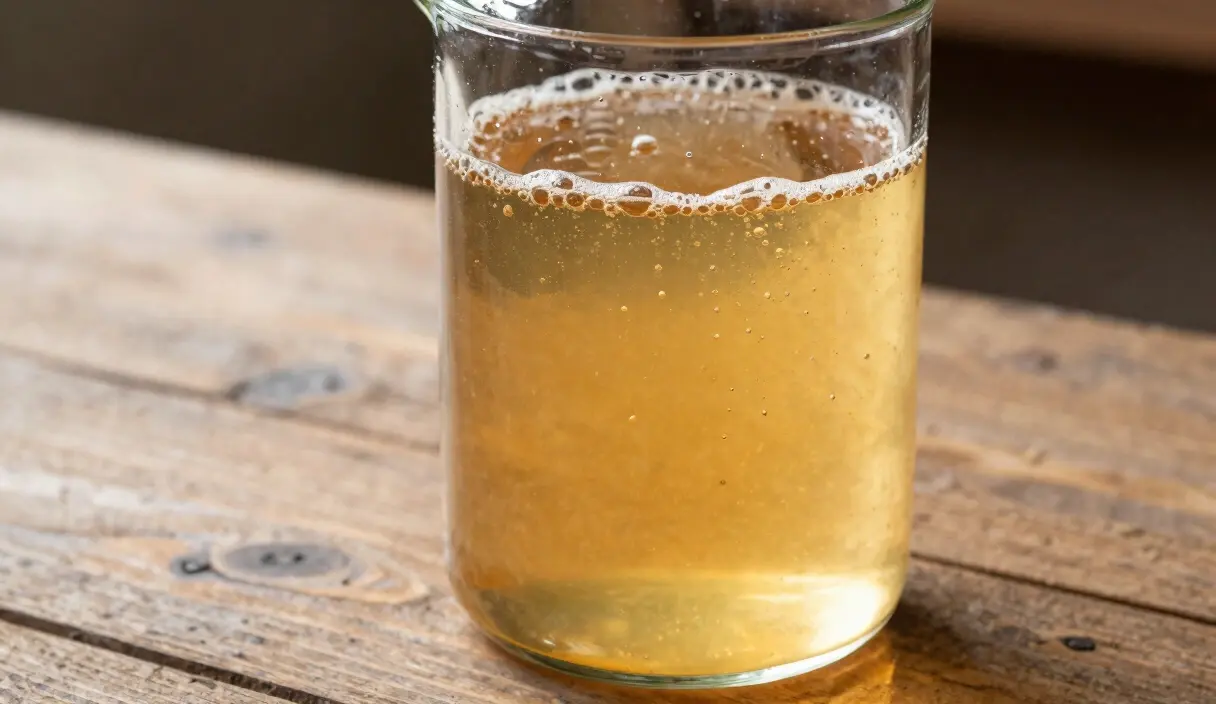
Liquid Gold: The Technical Guide to Brewing Your First Gallon of High-End Mead
Master the ancient art of honey wine. Learn the science of honey, yeast management, and precision brewing for your first gallon of mead.
Contents
Ethiopian t’ej (ትጅ) — honey wine made with gesho (Rhamnus prinoides) leaves. Archaeological evidence from the Axum kingdom (1st–7th century AD) shows continuous t’ej production for over 1,500 years. Unlike European mead, which declined with the spread of wine grapes, t’ej remained Ethiopia’s primary fermented drink through the 21st century. Tej houses (tej bet) still operate in Addis Ababa today. Ethiopia is the only place on earth where mead-making has been an unbroken, continuous tradition for two millennia — and the techniques used in a Lalibela tej house in 2024 are structurally identical to what first-gallon mead makers use in their kitchen.
The Viking tropes are a distraction. What matters is precision: staggered nutrient additions, varietal honey chemistry, and the molecular stability required to brew a mead that rivals a good white wine. This guide covers the complete 1-gallon process from honey selection through racking — no boiling, no shortcuts, no wasted batches.
The Viking Legacy: A Brief History of Mead
Before we talk about gravity readings and sanitizers, we must respect the lineage of the craft. Mead is found in the ancient texts of nearly every major civilization.
The Nectar of the Gods
In Norse mythology, the “Poetic Mead” was created from the blood of the wise being Kvasir. Anyone who drank it would become a scholar or a poet. While we won’t be using blood today, the sentiment remains: mead was seen as a vessel for inspiration.
The Scurvy Stopper
Like sauerkraut, mead was often carried on long journeys. Because honey has natural antimicrobial properties, and fermented mead has a stable alcohol content, it provided a safe alternative to contaminated water sources.
Honey Science: More Than Just Sugar
The quality of your mead is determined 90% by the quality of your honey. Honey is a complex mixture of roughly 80% sugar (glucose and fructose) and 20% water, but it’s the remaining 1% that contains the magic: minerals, enzymes, and aromatic compounds.
Honey Varietals
- Clover Honey: The “blank canvas.” It is mild, light, and perfect for beginners.
- Orange Blossom: Aromatic with citrus notes. This makes an incredible “show mead.”
- Wildflower: Every bottle is different. It reflects the local ecosystem of the bees. This is the most “authentic” mead-making experience.
The Enzyme Factor
Raw honey contains enzymes like glucose oxidase. When diluted with water, this enzyme produces a small amount of hydrogen peroxide, which naturally sanitizes the “must.” This is why ancient makers could succeed without modern chemicals.
Water Chemistry: The Silent Ingredient
Since water makes up about 70-80% of your mead, its quality cannot be ignored.
Fair warning: tap water has ended more first batches than any other single variable. Chlorine doesn’t just “taste off” — it actively suppresses your Lalvin D47 before fermentation even gets started.
You’ve already bought the honey. You’ve already found this guide. Don’t let a $0.00 decision — using the tap — be the reason your first batch smells like a swimming pool.
- Chlorine is the Enemy: Tap water often contains chlorine. These can react with the honey to create “medicinal” off-flavors. Always use filtered water or spring water.
- Minerals Matter: Yeast need minerals like magnesium and calcium to build strong cell walls. Spring water is usually the “Goldilocks” choice for brewing.
Yeast Microbiology: Choosing Your Biological Workers
Yeast are the most important workers in your brewery. For a mead, you cannot use bread yeast. You need a dedicated Wine or Mead Yeast.
Top Strains for Beginners:
- Lalvin D47: The classic choice for traditional meads. It emphasizes the honey aromas.
- Lalvin 71B: Best for “Melomels” (fruit meads). It has the ability to metabolize malic acid, smoothing out the tartness of fruits.
- Kveik (Voss): A Norwegian powerhouse. It can ferment at very high temperatures without creating off-flavors.
Yeast Tolerance and ABV
Every yeast strain has an Alcohol Tolerance. If a yeast has a tolerance of 14%, it will stop fermenting once the mead reaches that level. (Use our ABV Calculator to plan your targets).
Nutrient Management: The SNA Protocol
Honey is nutrient-poor. If you don’t feed your yeast, they get stressed and produce hydrogen sulfide (rotten egg smell) or fusel alcohols.
Staggered Nutrient Addition (SNA)
Instead of adding all the food at once, we use the SNA method:
- Day 1 (Pitch): Add 1/4 of your nutrient.
- Day 2: Add 1/4.
- Day 3: Add 1/4.
- The 1/3 Sugar Break: When 1/3 of the sugar has been consumed, add the final 1/4.
This staggered feeding keeps the yeast healthy and prevents a “hot” alcohol taste.
If you’ve never done SNA before, set phone reminders for each addition. Day 1, Day 2, Day 3, and the 1/3 sugar break. Four alarms. That’s the entire difference between a mead that’s drinkable at month 6 and one that still smells like rocket fuel at month 12.
The “Brew Day” Preparation: Sanitization is Law
Before you touch a single drop of honey, you must sanitize. Sanitization is not the same as cleaning.
- StarSan: The industry standard. It’s an acid-based, “no-rinse” sanitizer.
- Avoid Bleach: It’s too harsh and requires extensive rinsing.
These are the tools that ensure a professional start:
Essential Mead Brewing Gear
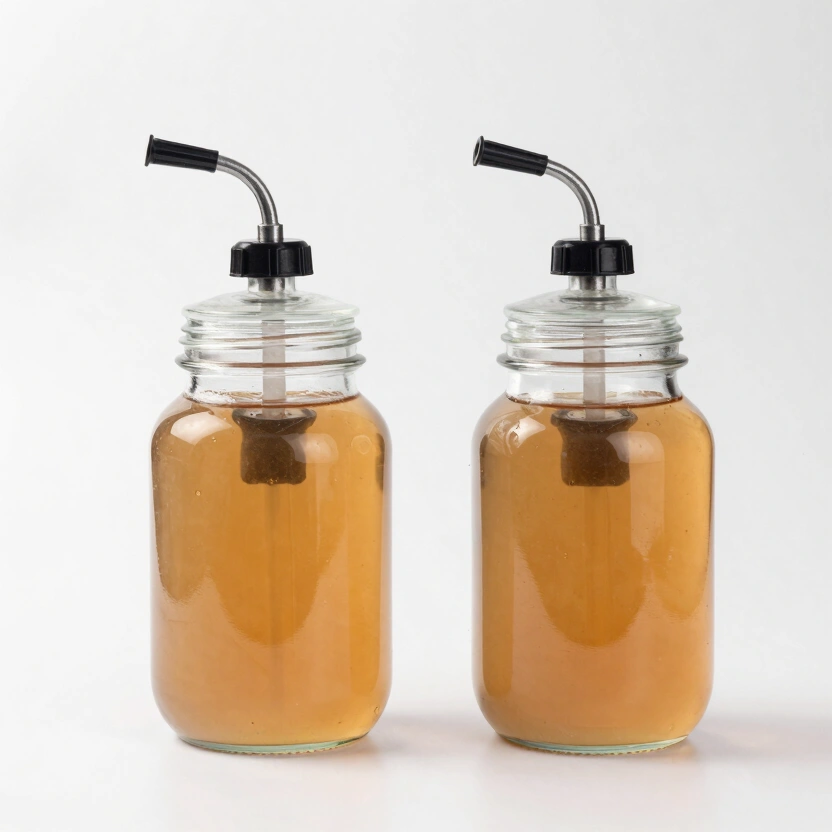
Green Wise Fermentation Jar Set (2 Pack)
Large 1.4L jars with integrated airlock valves. Perfect for sauerkraut, kimchi, or tomatoes.
Check Price on Amazon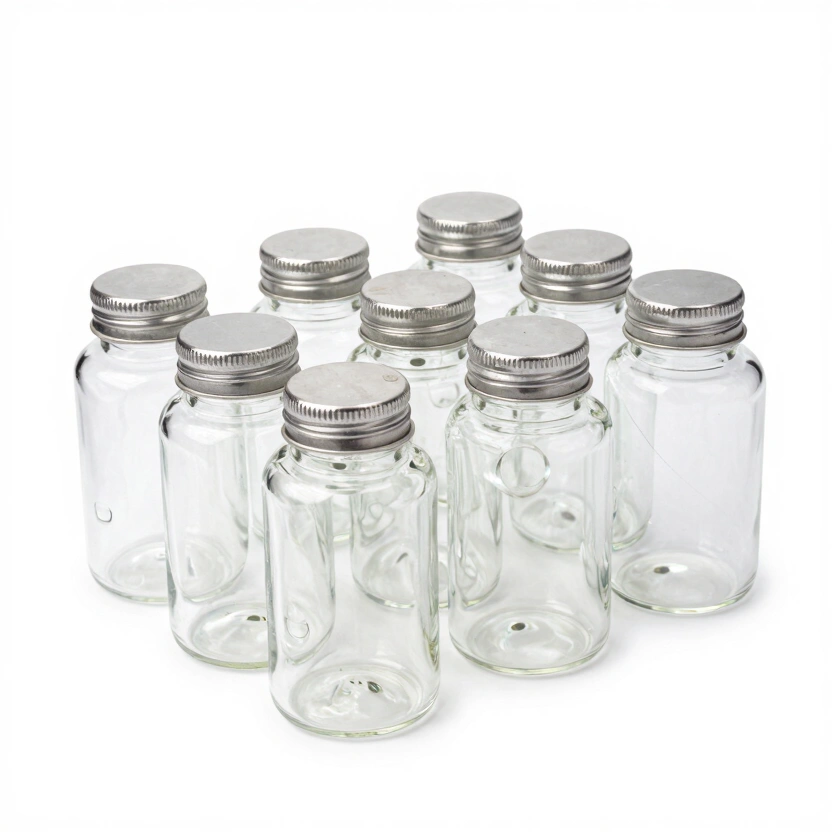
Artcome 10-Pack Glass Weights
Bulk set of heavy glass weights with easy-grip handles for large mason jar setups.
Check Price on Amazon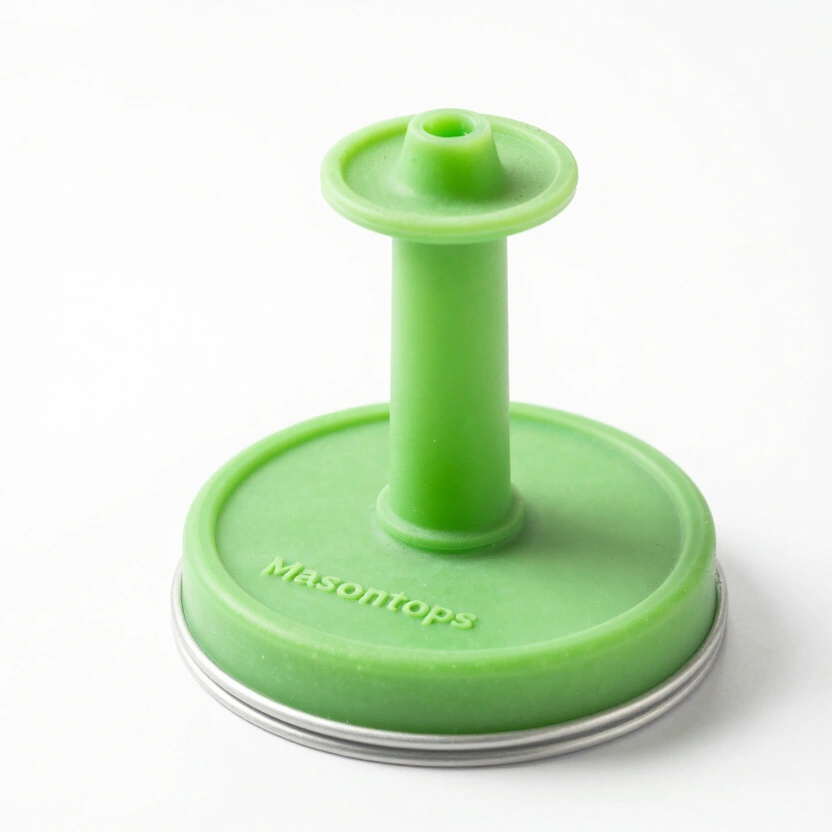
Masontops Pickle Pipe (Airlock Lids)
Waterless silicone airlock lids for easy, low-maintenance mason jar fermentation.
Check Price on Amazon* Affiliate links. Prices last updated March 3, 2026.
The Master Protocol: Brewing Your First Batch
Follow this precise timeline for a 1-gallon batch of high-end traditional mead.
The Ingredients:
- 3 lbs (1.36 kg) Raw Wildflower Honey
- Filtered Spring Water (to reach 1 gallon total volume)
- 5g Lalvin D47 Yeast
- Fermaid O (or similar organic nutrient)
Step 1: Mixing the Must
Pour your honey into the sanitized carboy. Add about 1/2 gallon of lukewarm water. Shake the carboy vigorously for 5 minutes. This is called aeration. Top off with water until you hit the 1-gallon mark.
Step 2: Pitching the Yeast
Rehydrate your yeast in 50ml of warm water (approx. 95°F) for 15 minutes. Pour it into the carboy. Add your first dose of nutrients.
Step 3: The Primary Fermentation
Place the airlock on the jar and store it in a dark spot at 65°F–68°F. For the first 3 days, remove the airlock once a day and stir gently to release CO2 (degassing) and add more nutrients.
Check the temperature in your storage spot with an actual thermometer — not by feel. A spot that seems “room temperature” to you might be 72°F or 60°F. Lalvin D47 above 65°F produces fusel alcohols. You won’t taste them at month 1. You’ll taste them at month 6 and wonder what went wrong.
Primary vs. Secondary: The Art of Racking
After 2-4 weeks, the bubbling will slow down. This is the end of Primary Fermentation.
When to Rack
Use your hydrometer. If the reading is below 1.000, the yeast have finished. Now, you must move the mead to a new carboy. This is called Racking.
- Why? Leaving mead on dead yeast cells (the lees) can create off-flavors.
- Oxygen Warning: Siphon the mead carefully to avoid splashing. Fill the new carboy all the way to the neck.
Aging and Mellowing: The Test of Time
Mead is not a drink for the impatient.
- Month 1-3: The “awkward teenage phase.” It will taste sharp.
- Month 6: The mead clears. The aromatics become defined.
- Month 12: The peak. This is when homebrew rivals professional wine.
Month three is the most discouraging point. Sharp. Harsh. Nothing like what you imagined. Don’t dump it. Every experienced meadmaker has a month-three bottle somewhere in their cellar that they know, intellectually, will be excellent by month 9. The bad taste is not permanent. It’s chemistry in process.
Put a label on it with today’s date, the OG reading, the honey variety, and the yeast strain. Then put it somewhere dark and don’t touch it for three months. Use the ABV Calculator before you pitch to log your starting gravity, so you know exactly what ABV you’re targeting at the finish. And when you’re ready to add fruit to the next batch, the Fruit Melomel Guide covers every technical variable — timing, ratios, Pectic Enzyme, and the double-fruit method that makes the difference.
Knowing when primary is truly done — and what your OG actually was — depends on the right measuring tool: the refractometer vs hydrometer comparison walks through exactly when each instrument gives you reliable numbers.
Ready to add fruit to your next batch? The Fruit Melomel Guide covers every technical nuance of honey-and-berry fermentation.
Frequently Asked Questions
Can I use supermarket honey for my first mead?
Yes, with one condition: the label must say “100% Pure Honey.” No added corn syrup, glucose, or “honey blend.” Cheap store brands are frequently cut with cheaper sugars and lose the aromatic complexity that makes varietal honey worth fermenting. If you can find raw wildflower honey from a local beekeeper, use it. Otherwise, a good-quality clover honey from the grocery store — Kirkland, for instance — works fine as a starting batch.
My mead smells like rotten eggs. What went wrong?
Stressed yeast. Two causes, in order of likelihood. First: nutrient starvation. Lalvin D47 in particular produces hydrogen sulfide when it’s underfed — that’s the rotten egg smell. You needed Fermaid-O on the SNA schedule and didn’t add it, or didn’t add enough. Second: temperature shock at pitch — water above 100°F when you added the yeast. Both are preventable. The good news is that hydrogen sulfide often blows off during racking and early aging. Degas aggressively, move to secondary, and give it 3 months.
Do I need to boil the honey?
No. Boiling destroys the floral esters and aromatic compounds that make varietal honey worth using. A heated wildflower honey loses its character and becomes roughly equivalent to plain sugar water. Modern no-rinse sanitizers like StarSan eliminate any need for heat treatment. Mix honey into lukewarm water at around 90°F, aerate by shaking the carboy for 5 minutes, and pitch.
How do I know when primary fermentation is actually done?
Two hydrometer readings, 48 hours apart, showing the same gravity. That’s the only reliable test. Don’t use airlock activity — CO2 escapes through micro-gaps in the stopper and gives false signals in both directions. For a 1-gallon batch with an OG of 1.090 and Lalvin D47, expect a final gravity between 0.990 and 1.002. Above 1.010 after 4 weeks usually means a fermentation stall — check temperature and consider a yeast nutrient addition.
What’s the difference between a Cyser and a Pyment?
Two fruit-adjacent mead varieties. A Cyser replaces the water base with apple juice or fresh-pressed cider — the result sits between hard cider and mead, with apple character integrated into the honey. A Pyment uses grape juice as the base, pushing the flavor toward wine territory. Both use exactly the same process as a standard mead; you’re just substituting the liquid. Lalvin 71B works well for both because it metabolizes malic acid, which is dominant in both apple and grape juice.
Related Articles
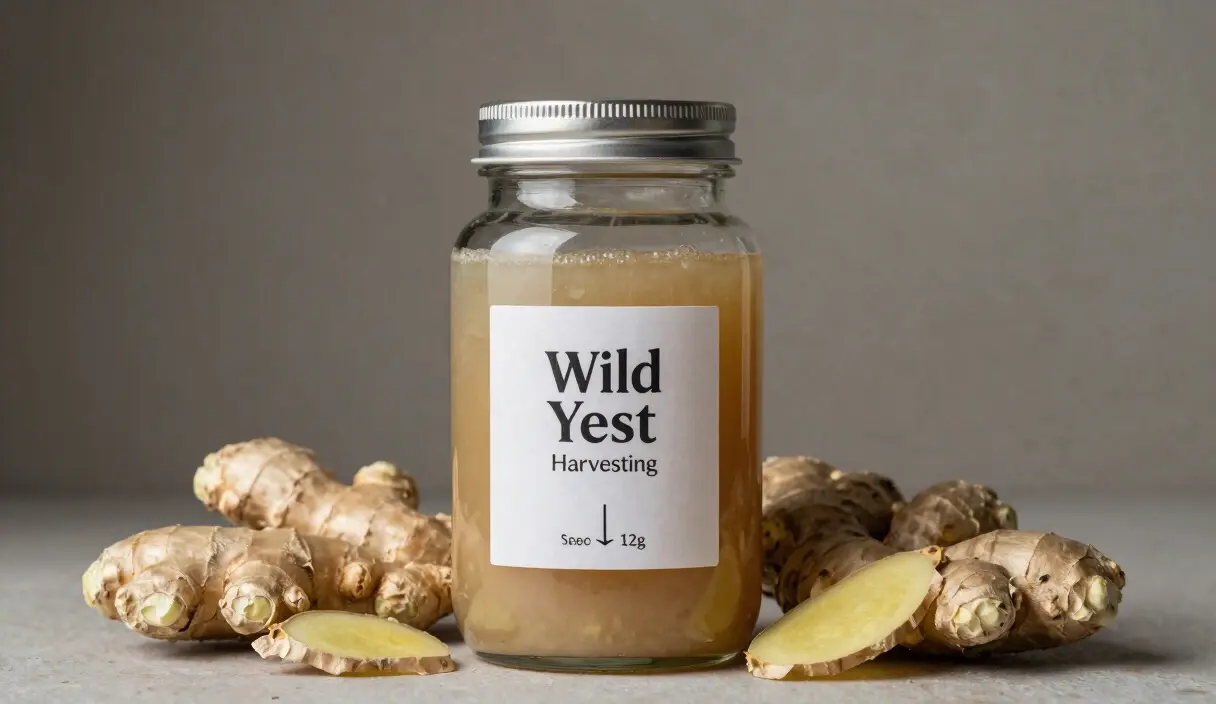
Wild Yeast Harvesting: How to Start a Ginger Bug for Natural Sodas
Ditch the commercial yeast! Learn how to capture wild yeast from ginger to create naturally fizzy, probiotic sodas at home.
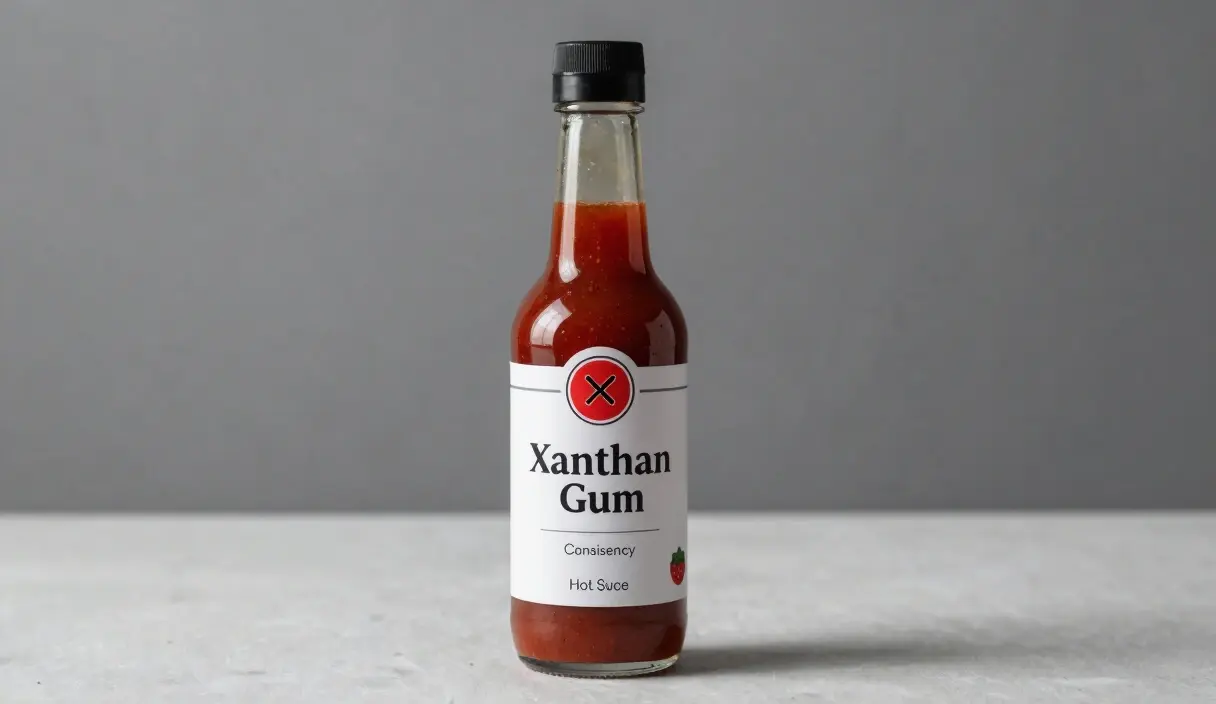
Xanthan Gum and Consistency: The Technical Secret of Hot Sauce
Why does your hot sauce separate? We explore the science of emulsification and how to use xanthan gum for professional, stable results.
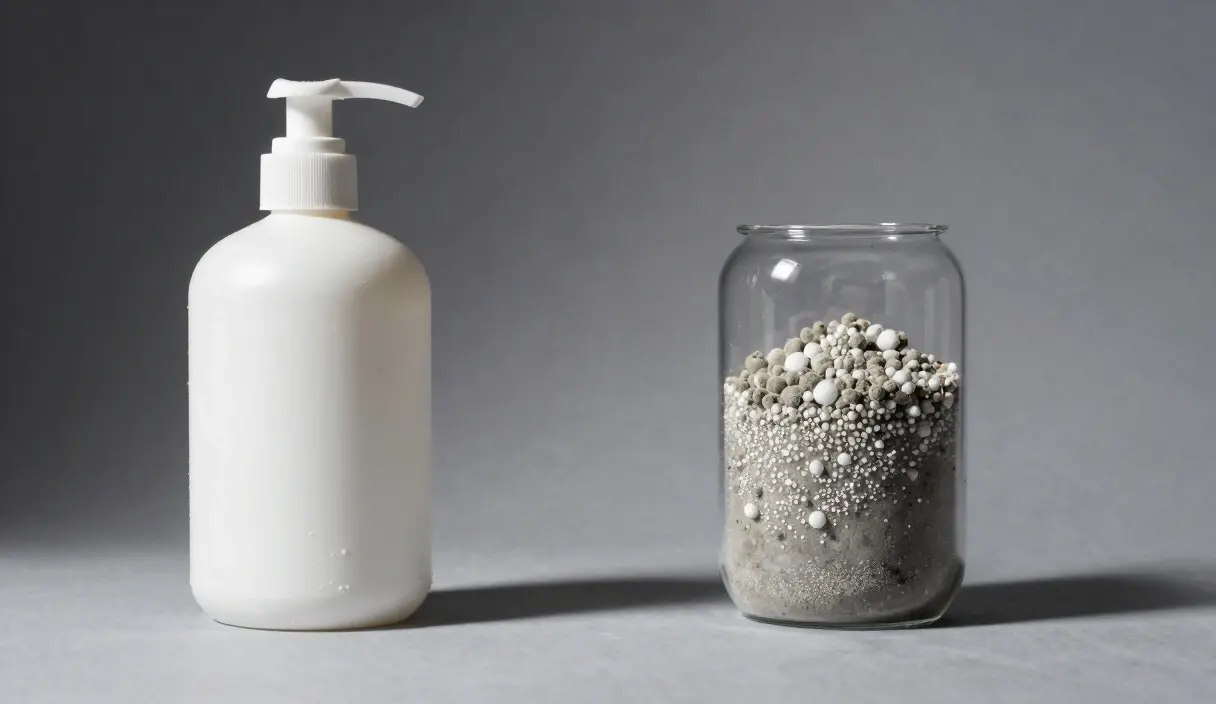
The Visual Masterclass: Distinguishing Kahm Yeast, Mold, and Biofilms
Found white spots in your jar? We provide a complete visual catalog to help you distinguish between harmless yeast, beneficial sediment, and dangerous mold.