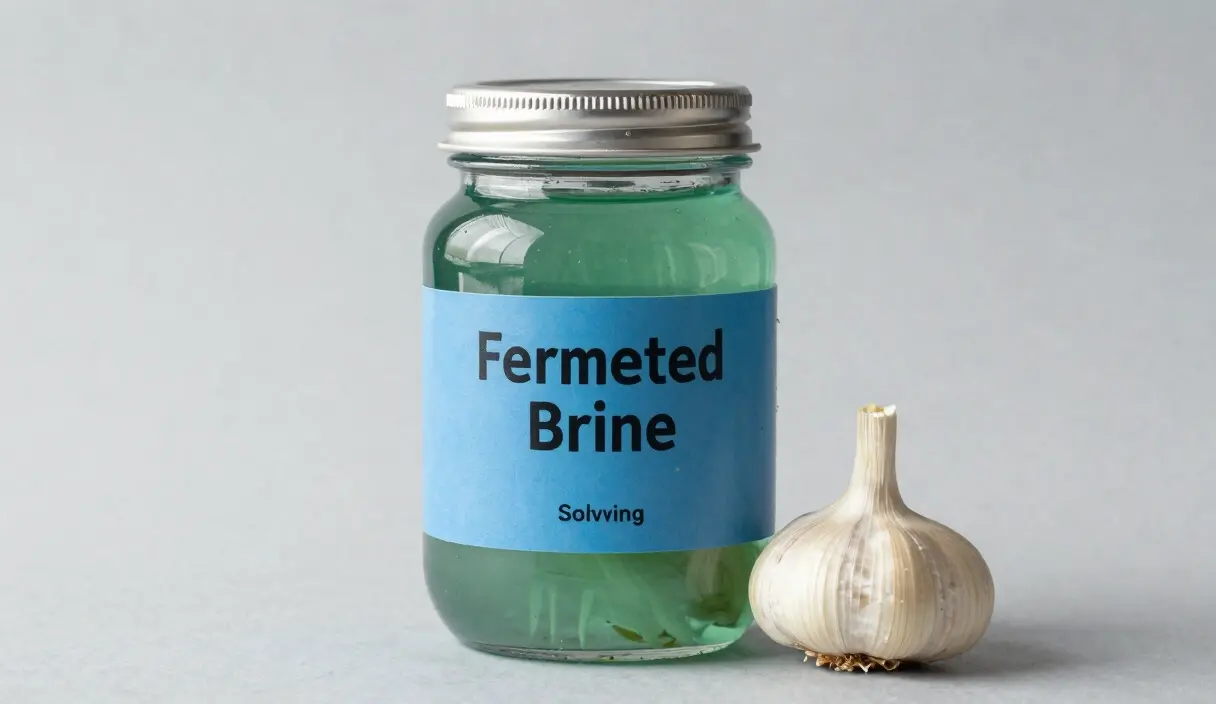
Fermented Garlic in Brine: Solving the Blue and Green Mystery
Why did your garlic turn blue? We explore the science of sulfur-acid reactions and how to ferment the perfect savory garlic cloves.
Contents
When Howard Carter’s excavation team broke the sealed threshold of Tutankhamun’s burial chamber in 1922, they found — among the gold and lapis — alabaster jars packed with garlic cloves. Burial offerings prepared for a king who died in 1323 BC. The cloves had survived 3,245 years without refrigeration, without vacuum sealing, without anything that would look familiar in a modern kitchen. Chemical analysis published in 2019 identified the mechanism: the garlic had been packed in salt and olive oil, creating an anaerobic, high-osmolarity environment that stopped microbial growth in its tracks. The priests who prepared that burial didn’t know what a Lactobacillus was. They knew, from generations of watching, that submersion and salt kept things from rotting. They were right. You are using the same principles today.
Here’s what they couldn’t predict: what salt brine and acid does to garlic’s chemistry. Open a jar three days into fermentation and you may find electric blue or jade-green cloves staring back at you. In any other context, blue food means rot. In fermented garlic, it means chemistry — harmless, predictable, and entirely explainable. This guide covers what triggers the color shift, why it poses no safety risk, and exactly which variables to control if you want your cloves to stay white.
The Chemistry of the Color: The “Blue Reaction”
The transformation of garlic from white to blue is a complex multi-stage chemical reaction that only occurs under very specific conditions.
The Alliinase Catalyst
Inside every garlic clove is an amino acid called Alliin and an enzyme called Alliinase. These stay in separate compartments until the cell wall is damaged. When they meet, they create Allicin—the compound responsible for garlic’s smell and health benefits.
The Acidic Trigger
The color reaction only happens when the pH drops below the 4.6 safety line. As the Lactobacillus bacteria produce lactic acid, they create the environment necessary for the sulfur compounds to react with the amino acids.
- Isoalliin: This specific precursor reacts with the amino acids to form Pyrroles.
- The Chain: When four of these pyrrole rings link together, they create a molecule that reflects light in the blue spectrum. It is chemically similar to the chlorophyll in plants—completely natural and non-toxic.
Why it Happens Accidentally: The Variable Factors
This is going to sound strange, but the blue reaction is more predictable than the absence of it. Most people who claim their garlic never turns blue are using fresh summer garlic with copper-free piping and no cold-shock. Change any one variable, and the color appears.
You: You’ve done everything right. The brine smells clean, the pH is dropping, the bubbles are steady — and the garlic is turning teal. That is not failure. That is exactly what fermentation does to allium chemistry under the right conditions.
Several “stealth” variables determine whether the blue reaction occurs.
Trace Minerals in Water
As we learned in our Water Quality Guide, tap water contains minerals. Trace amounts of Copper act as a catalyst for the blue reaction. If your pipes are copper, your garlic is much more likely to change color.
Temperature Fluctuations
A “cold-shock” followed by warmth is the classic trigger. If you stored your garlic in the refrigerator and then brought it out to ferment on a warm counter, the enzymatic activity spikes, often leading to a rapid color change.
Age of the Garlic
Older garlic that has been in storage for months has higher concentrations of the precursor molecules. If you are fermenting store-bought garlic in the winter, it is almost guaranteed to have some color shift.
Cultural Context: The Prize of Laba Garlic
While Westerners often panic, in Northern China, it is an essential part of the Lunar New Year.
The Laba Tradition
Laba Garlic is prepared by soaking garlic in rice vinegar.
- The Aesthetic: The goal is to achieve an emerald-green color.
- The Symbolism: The color represents prosperity. It is eaten alongside dumplings to cut through the richness of the meal.
Safety and Edibility: Is it Toxic?
I’ve eaten blue fermented garlic more times than I can count, and I’ve never had a batch taste anything other than tangy and savory. The color is irrelevant to the flavor or safety.
Warning: The one scenario that should concern you is blue garlic in oil without brine — no salt, no acid, no active fermentation. That is a botulism risk environment. Blue color in that context is a different situation entirely. Garlic submerged in active salt brine: safe. Garlic stored raw in plain oil: dangerous regardless of color.
Let’s be definitive: Blue or green garlic is 100% safe to eat.
No Toxins, No Mold
The pigments produced are not toxins. They are simple organic compounds that happen to be colorful.
- Taste: The blue pigment itself is tasteless. The flavor is identical to the flavor of fermented white garlic—tangy, savory, and less sharp.
- Nutrition: The health benefits remain intact. The chemical reaction might even slightly increase the bioavailability of certain antioxidants.
How to Prevent Blueing (If You Prefer White)
If the aesthetic bothers you, there are several technical interventions you can take.
You: If a dinner guest picks up a blue clove and raises an eyebrow — tell them about the Egyptian jars. Watch the eyebrow go the other direction.
- Heat Treatment (Blanching): Briefly dipping cloves in boiling water for 30 seconds deactivates the alliinase enzymes. You would need to add a starter culture.
- Use Fresh Garlic: Summer garden garlic has low levels of precursors and usually stays white.
- Filtered Water: Use RO water to remove trace copper ions.
- No Cold-Shock: Keep your garlic at a steady room temperature from purchase to jar.
These are the tools that ensure a clean and controlled garlic ferment:
Top Garlic Prep Gear
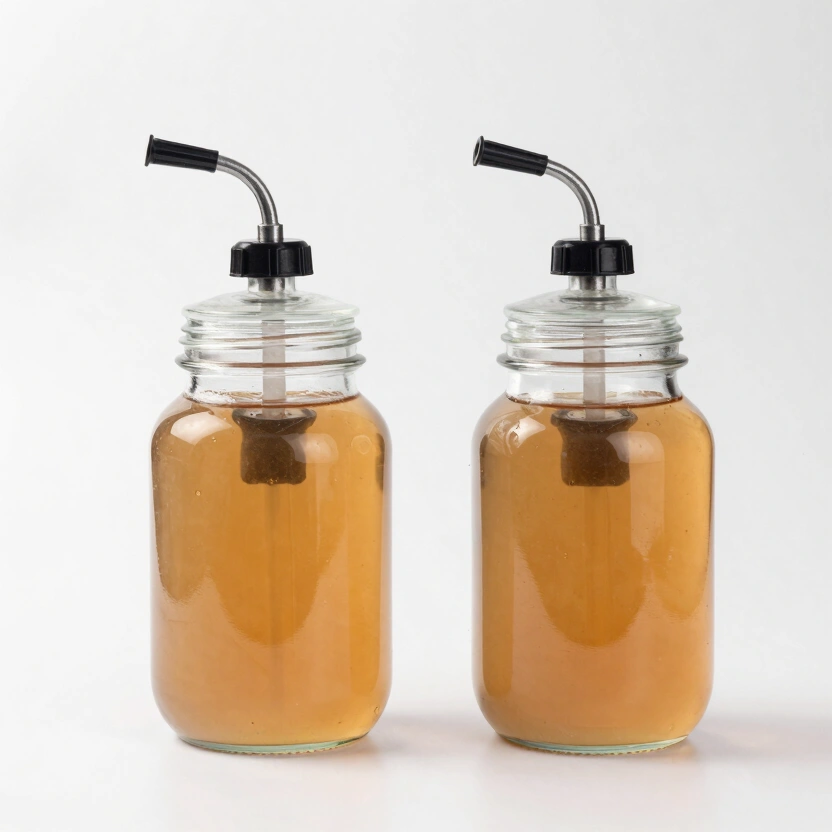
Green Wise Fermentation Jar Set (2 Pack)
Large 1.4L jars with integrated airlock valves. Perfect for sauerkraut, kimchi, or tomatoes.
Check Price on Amazon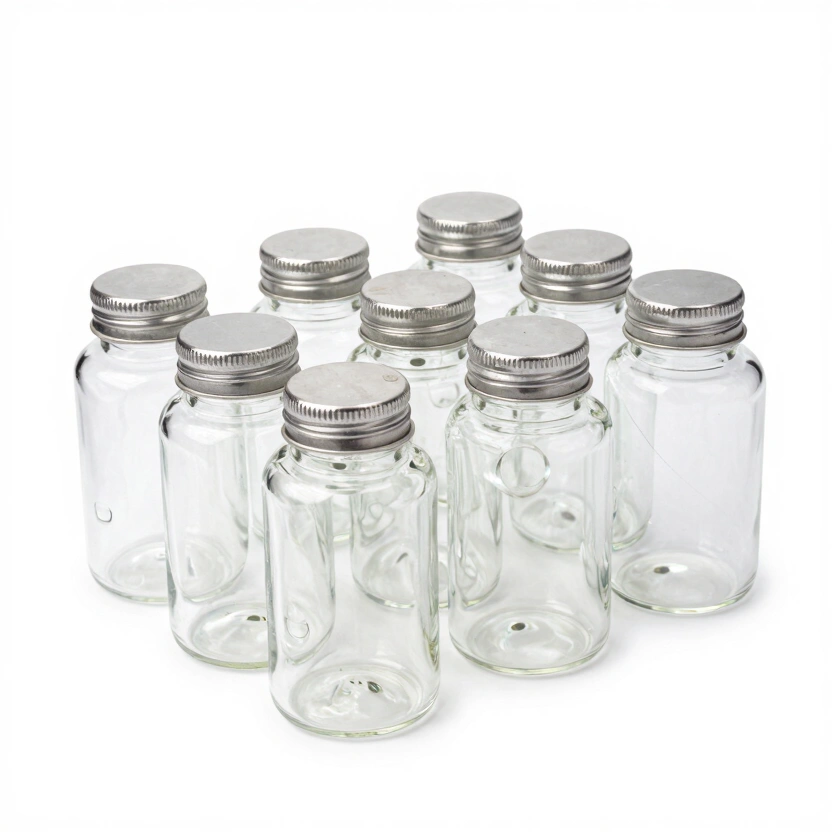
Artcome 10-Pack Glass Weights
Bulk set of heavy glass weights with easy-grip handles for large mason jar setups.
Check Price on Amazon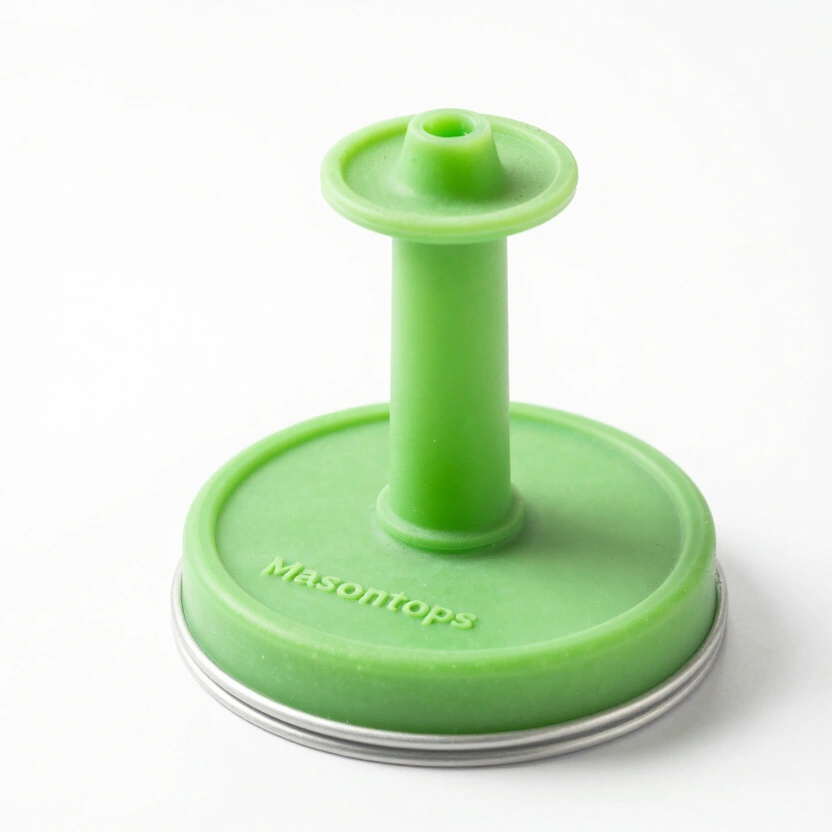
Masontops Pickle Pipe (Airlock Lids)
Waterless silicone airlock lids for easy, low-maintenance mason jar fermentation.
Check Price on Amazon* Affiliate links. Prices last updated March 3, 2026.
The “White Transition”: Does it Stay Blue?
The blue pigment is not always permanent.
- Degradation: After 2 to 3 months in the fridge, the blue pyrrole chains often begin to break down.
- The Fade: Many find that their “electric blue” garlic slowly fades back to a creamy beige over time. This is a normal part of the maturation process.
Culinary Applications: How to Use Blue Garlic
Don’t let the color intimidate you!
- Charcuterie Boards: The vibrant blue cloves are an instant conversation starter. Pair with white cheddar for contrast.
- Mashed Potatoes: Mince blue garlic into your potatoes. The acid helps create a lighter texture.
- Stir-Fries: Add at the very end. The brief heat won’t destroy the color but will release the savory oils.
Reusing the Garlic Brine: Probiotic Seasoning
- Garlic Vinegar: Once the cloves are gone, use the brine as a savory “vinegar” for dressings.
- Back-Slopping: Use 2 tbsp to jumpstart your next batch of fermented carrots.
- Marinades: Use the salty brine for chicken or tofu.
Long-Term Storage: Cold Stability
Don’t make the mistake I made — leaving fermented garlic at room temperature past the 4-week mark. The flavor keeps developing in cold storage. Room temperature just sends it toward over-fermented mush.
Once fermented (3-4 weeks), move it to the fridge.
- Shelf Life: Fermented garlic will last 12 months or longer.
- Flavor Mellowing: It becomes smoother and less pungent the longer it sits in the cold.
After 3-4 weeks at room temperature, move the garlic into cold storage at 35-40°F (2-4°C). The pyrrole pigments responsible for the blue color will degrade slowly over the following months — many batches return to creamy beige by month three. The flavor does the opposite. It deepens. Less pungent, more savory. A longer finish than anything that came out of the ground raw. The ancient Egyptians sealed garlic away and got preservation. You get preservation and something entirely new.
The brine left behind is probiotic seasoning. Two tablespoons will back-slop your next batch of fermented carrots and cut the lag phase down to under 24 hours.
Frequently Asked Questions
Is blue garlic mold?
No. Mold grows on the surface — three-dimensional, fuzzy, rising up from the liquid. Blue garlic is a color change inside the cellular structure of the clove itself, caused by pyrrole chains forming when isoalliin reacts with amino acids in an acidic environment. The clove changes color from within. Clear brine, clean surface, and a blue clove? That is chemistry. If you see white fuzz on the surface and blue cloves below — address the fuzz, not the color.
My fermented garlic brine smells like a gas leak. Should I pour it out?
That smell is hydrogen sulfide and organosulfur compounds releasing from the garlic as bacteria break down its cellular architecture. Alarming? Yes. Dangerous? No. The peak sulfur smell typically hits between days 5 and 10 and then drops off significantly. Keep checking your pH — it should be below 4.0 at the two-week mark. No surface mold, pH dropping, smell easing: the batch is on track.
Can I use pre-peeled garlic from a bag?
Pre-peeled commercial garlic is usually treated with citric acid or preservative coatings to prevent enzymatic browning during packaging. That treatment disrupts fermentation. The bacteria can still work, but the lag phase runs longer and flavor development is flatter. Peel your own garlic from fresh whole bulbs, ideally within an hour of putting it in the jar.
Why did only two cloves turn blue while the rest stayed white?
Each clove in a single bulb has slightly different isoalliin concentrations depending on its position, age, and whether it took any physical damage before brining. A bruised clove has more exposed alliinase activity. Winter garlic from storage shows more color shift than fresh summer garlic. One blue clove surrounded by white ones is not a sign that something went wrong — it is a sign that isoalliin levels varied within the bulb.
My garlic turned pink, not blue. Is that the same reaction?
Pink and purple hues are also organosulfur reactions but driven by slightly different precursor ratios in specific garlic varieties. Red-skinned garlic cultivars and young “spring garlic” are more prone to pink or lavender shifts. All of these — blue, green, pink, purple — fall into the same category: harmless pigment chemistry. The only color that changes the safety calculation is brown or black softening of the clove’s flesh itself, which signals actual tissue breakdown.
Related Articles
The Visual Masterclass: Distinguishing Kahm Yeast, Mold, and Biofilms
Found white spots in your jar? We provide a complete visual catalog to help you distinguish between harmless yeast, beneficial sediment, and dangerous mold.
Fermented Honey Garlic: The Easiest Probiotic Medicine
Is honey garlic safe from botulism? We explore the science of honey fermentation, health benefits, and how to create a potent wellness tonic.
White Mold on Sauerkraut: Is it Safe or Spoilage?
Found white specks or film on your sauerkraut? We break down the difference between beneficial yeast, harmless white mold, and dangerous pathogens.