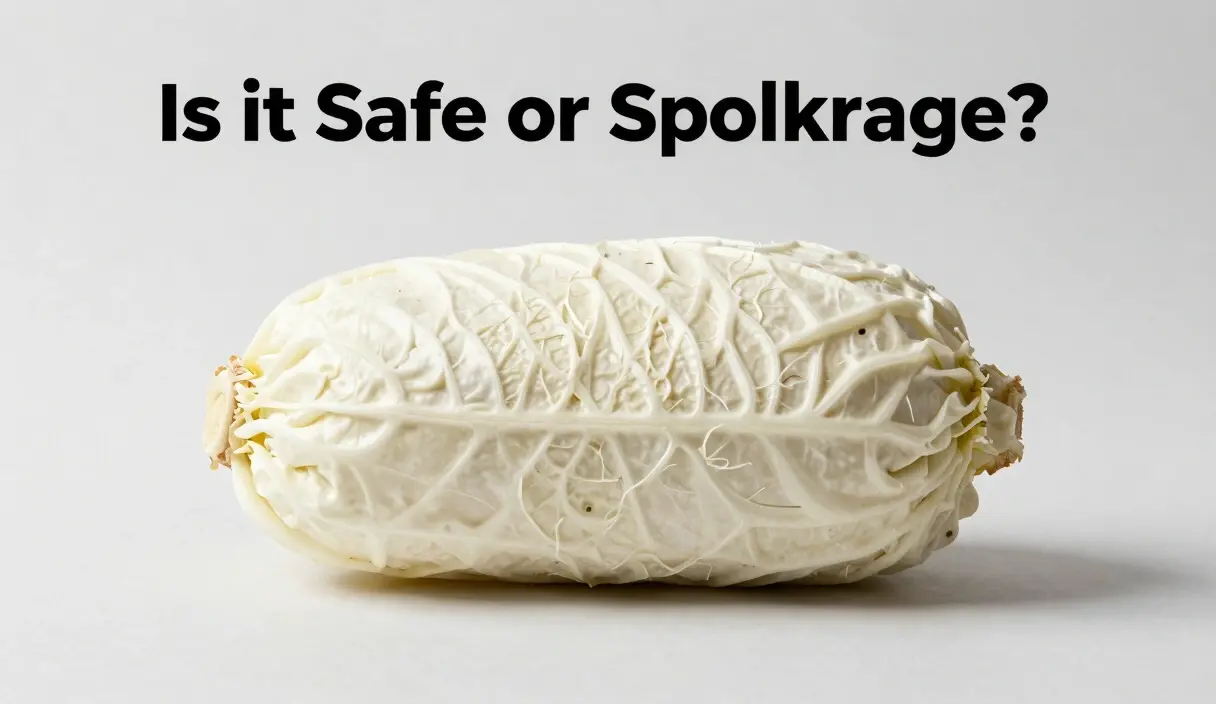
White Mold on Sauerkraut: Is it Safe or Spoilage?
Found white specks or film on your sauerkraut? We break down the difference between beneficial yeast, harmless white mold, and dangerous pathogens.
Contents
In 1782, an Edo-period Japanese cookbook called Tofu Hyakuchin — “One Hundred Preparations of Tofu” — documented something that most fermentation texts still get wrong. The author described a white film that appeared on the surface of tsukemono vegetable crocks during humid summers. His diagnosis: “insufficient pressing.” Inadequate submersion. His instruction was direct — scrape the film and continue. Not scientific. But empirically correct in a way that took another two centuries to explain: surface white growth that hasn’t penetrated the brine is usually harmless kahm yeast, not toxic mold. The fermenters of Edo knew the distinction without the vocabulary for it. You need both.
Four weeks of waiting, and you open the lid to find white on the surface. That moment is awful. The alarm is understandable. But white on sauerkraut is not a single verdict — it covers at least three different phenomena with three different safety outcomes. Kahm yeast, actual mold, and benign sediment all present as “white,” and conflating them costs either a good batch or a bad decision. Here is the chemistry behind each type and the protocol for handling what you find.
The Sauerkraut Surface: A High-Stakes Interface
To understand why white growth appears, we must look at the physics of the cabbage leaf.
The Shredded Surface Area
When you shred cabbage, you create a massive amount of surface area. Each tiny strand is a potential landing pad for airborne spores. Unlike a whole cucumber, shredded cabbage is “open” to the environment.
The Cabbage Microbiome
This is the part most guides gloss over — and it’s why sauerkraut specifically gets more surface growth than cucumbers or carrots. The shredding process opens every cell and creates an enormous surface area for airborne colonization.
Cabbage leaves are naturally home to a diverse array of wild yeasts. While salt and anaerobic conditions suppress most of these, the surface of the brine is a battlefield. If a single shred of cabbage floats to the top, you have created a “bridge” for colonization.
The White Spectrum: Identifying the Growth
Not all white growth is created equal. You must distinguish between three very different phenomena.
A. Kahm Yeast (The Flat Film)
As we discussed in our General Identification Guide, Kahm yeast is a collection of pellicle-forming yeasts.
- Visuals: It looks like a thin, wrinkled veil. It is never “hairy.”
- Safety: Safe to remove, though it can affect flavor.
B. White Mold (The Fuzzy Patch)
This is true mold, often from the Penicillium genus.
- Visuals: It looks like white velvet or cotton balls. It is distinctively 3D and “fuzzy.”
- The Myth: There is a myth that “white mold is always safe.” While often less toxic than black mold, it is still spoilage and can produce spores.
C. Yeast Sediment (The White “Cloud”)
Sometimes beginners see white at the bottom of the jar.
- Visuals: A white, chalky powder that settles at the bottom.
- The Reality: This is not mold! These are dead lactic acid bacteria. It is a sign of a healthy, successful fermentation.
The Chemistry of White Growth: pH and Salinity
Why did the mold grow? It always comes back to two numbers: pH and Percentage.
Contrarian take: Most sauerkraut guides treat any white surface growth as a crisis. The Tofu Hyakuchin author in 1782 treated it as a minor maintenance task. He was closer to correct. The real crisis is not the white film — it’s misidentifying it and making the wrong call.
The pH Vulnerability
Mold cannot grow in an environment with a pH below 4.0. If you see white mold, it is a sign that your acidification curve was too slow.
The Salinity Gap
Salt inhibits mold. If you used less than 2% salt, your “bouncer” was asleep. Mold thrives in low-salinity, high-moisture environments. (Check our Salt Ratios Guide for the correct math).
The “Scrape or Toss” Debate: Can You Save It?
If you find a patch of white fuzz, you are faced with a difficult choice.
The “Purist” View: Toss Everything
I’ve discarded batches I probably could have saved, and I’ve saved batches I probably should have discarded. After years of making this call, I lean purist now — because the cost of being wrong with mold is always higher than the cost of lost kraut.
Contrarian take: The “just scrape it and eat it” advice you’ll find on fermentation forums sounds practical until you understand mycotoxins. Mycotoxins are heat-stable. They don’t neutralize. They don’t care about your pH. If the growth is fuzzy and over 10% of the surface, the pragmatic choice is a clean crock and a new batch.
Molds produce invisible “roots” (mycelium) that can travel deep. They also release mycotoxins which are heat-stable and invisible.
- Recommendation: If the mold is any color other than white, or if it covers more than 10% of the surface, toss it.
The “Pragmatic” View: Scrape and Eat
Many argue that as long as the mold is white and has not reached the vegetables below the brine, it is safe.
- Recommendation: If the growth is strictly white and small, you can carefully remove it.
The White Mold Rescue Protocol
- Do Not Stir: Keep the growth on top.
- Surgical Removal: Use a sterilized stainless steel spoon to lift mold patches off.
- Clean the Rim: Wipe the inside rim with a cloth dipped in white vinegar.
- pH Verification: Use your digital pH meter. The kraut must be below 4.0 for a successful rescue.
- Re-Submerge: Add fresh 2% brine and apply a clean, heavy weight.
These are the tools that maximize your chances of a mold-free ferment:
Mold Prevention Gear
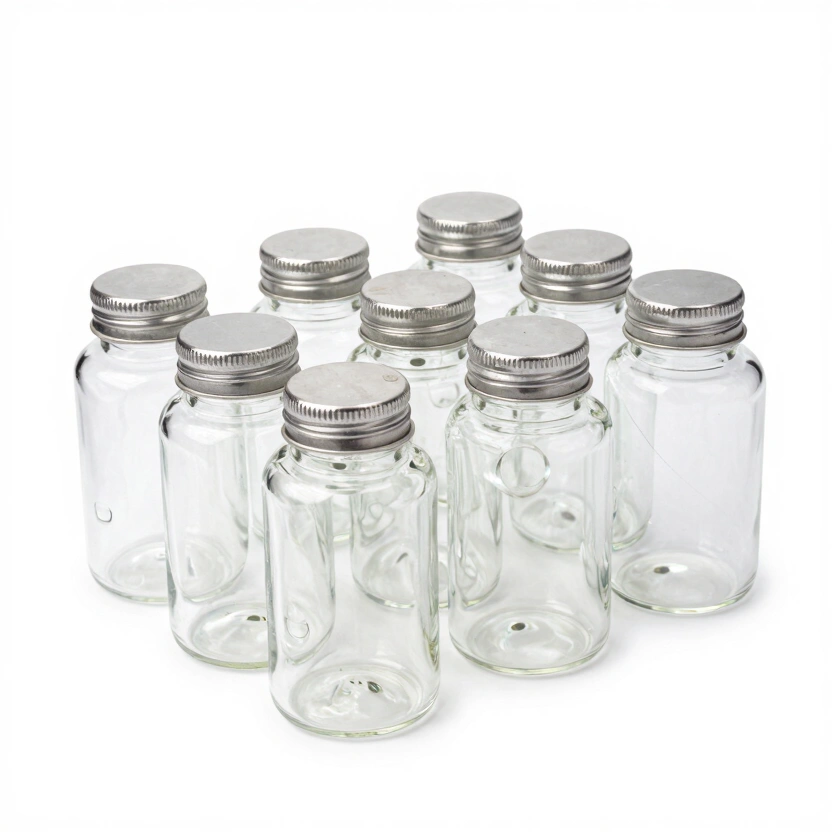
Artcome 10-Pack Glass Weights
Bulk set of heavy glass weights with easy-grip handles for large mason jar setups.
Check Price on Amazon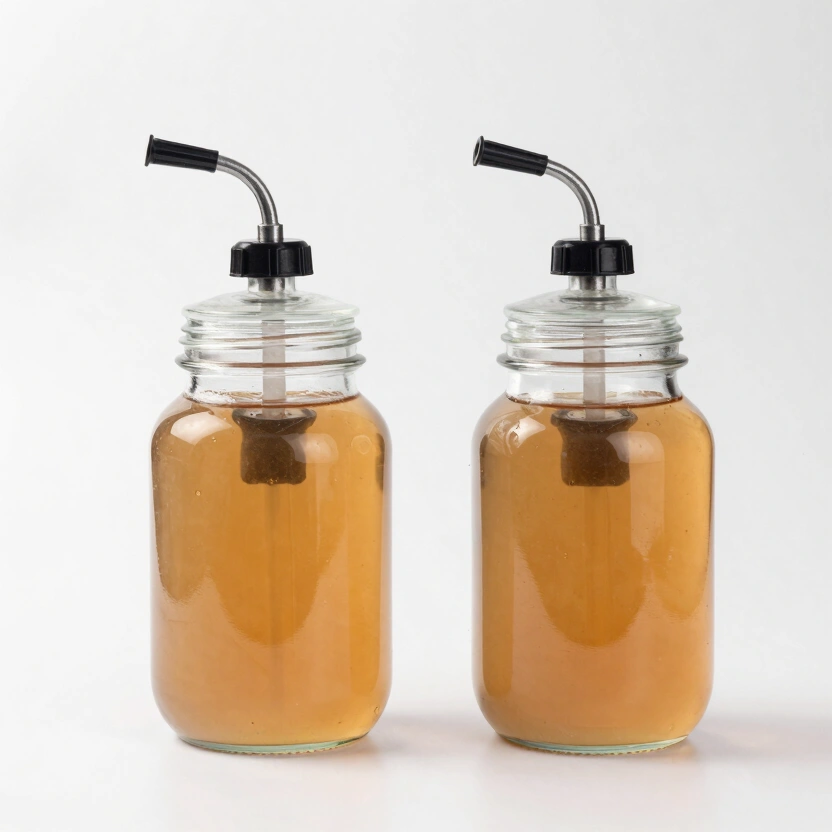
Green Wise Fermentation Jar Set (2 Pack)
Large 1.4L jars with integrated airlock valves. Perfect for sauerkraut, kimchi, or tomatoes.
Check Price on Amazon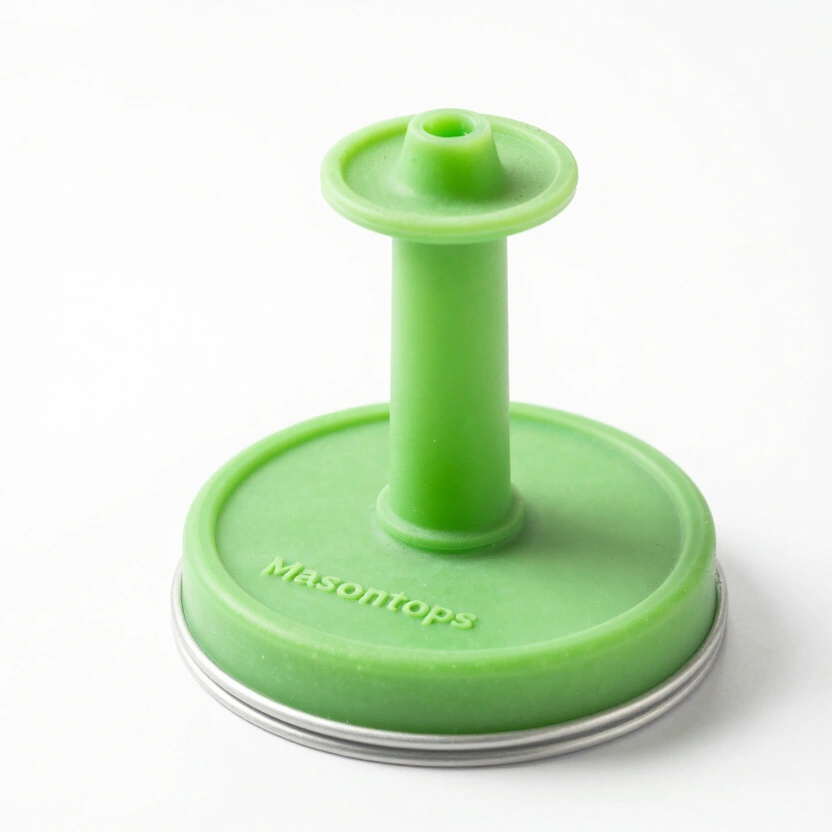
Masontops Pickle Pipe (Airlock Lids)
Waterless silicone airlock lids for easy, low-maintenance mason jar fermentation.
Check Price on Amazon* Affiliate links. Prices last updated March 3, 2026.
Advanced Prevention: Making Kraut “Mold-Proof”
The “Sacrificial Leaf” Technique
Honestly, this changed how I approach every sauerkraut batch. Zero surface drama since I started using it consistently.
Contrarian take: Prevention is not glamorous. Nobody posts photos of fermentation that went exactly as planned. But the sacrificial leaf technique and 1.5 inches of headspace eliminate 90% of the “white mold on sauerkraut” questions entirely. Do the boring thing.
Always save the large, outer leaves of your cabbage. Place a whole leaf over the shredded kraut before adding your weight.
- Why it works: If mold grows, it grows on the sacrificial leaf. You simply lift the leaf out and the kraut below remains clean.
The Headspace Rule
Leave exactly 1 to 1.5 inches of headspace. This allows the CO2 to push out the oxygen efficiently without overflowing.
White Spots vs. White Mold (The “Salt Cloud” Mystery)
- Pectin Clouds: Wispy clouds under the liquid. Harmless.
- Salt Deposits: Non-fuzzy specks that appear if the brine level drops. Harmless.
Cytotoxicity and Mycotoxins: The Science of Risk
Why are we afraid? It’s the Mycotoxins.
- Heat Stability: You cannot “cook away” the danger. Mycotoxins are often heat-stable.
- Visible vs. Invisible: The mycelium (roots) can extend beyond the visible patch. Scraping is only for very small, isolated white patches.
Long-Term Storage: Post-Mold Management
If you rescue a batch:
- Immediate Refrigeration: Stops the mold from reproducing.
- Fast Consumption: Consume within 2-4 weeks.
- No Back-Slopping: Never use brine from a “rescued” batch to start a new one.
A surface rescue — kahm confirmed, pH below 4.0, brine topped to cover — is not a full recovery. It’s a managed situation. That batch lost some of its active LAB buffer the moment mold or yeast got a foothold. Consume it within two weeks. Don’t back-slop from it. And the next batch: sacrificial leaf, correct salt weight, enough headspace. The Edo cookbook author got there in 1782 without a pH meter. You have better tools.
The pH safety curve explains exactly where “slow acidification” becomes dangerous — and how to catch it before mold gets the opportunity. Read the pH Safety in Fermentation guide.
Frequently Asked Questions
My sauerkraut smells like a damp basement. Does that mean mold?
Yes — discard it. Healthy sauerkraut smells sharp, sour, almost aggressive. That tangy assault is lactic acid doing its job. A musty, cellar-like smell is the olfactory signature of fungal mycelium: volatile organic compounds produced as the fungus metabolizes your cabbage. It doesn’t matter whether the surface looks clean. That smell means the mold has already colonized below what you can see.
Can white mold on sauerkraut spread through the brine to the cabbage below?
Yes. The fuzzy surface patch is the fruiting body — the visible tip of a much larger structure. Mycelium threads extend downward from that surface into the brine and into the cabbage strands below. A patch larger than a 50-cent coin in diameter is a discard decision. The mycelium is already in the kraut. You just can’t see it yet.
Is white mold the same as the white bloom on brie or camembert?
No — and this comparison causes real harm when people use it to justify keeping moldy kraut. Cheese blooms are cultivated Penicillium strains introduced deliberately, dosed precisely, and maintained in controlled humidity. Sauerkraut white fuzz is wild contamination of unknown species and unpredictable toxin production. The word “white mold” covers both — but the biology is entirely different.
What salt percentage actually prevents mold?
2% salt by weight is the minimum threshold for reliable LAB dominance. At 2%, Lactobacillus outcompetes most pathogens during normal acidification. At 1.5% or below, the gap between “salt added” and “pH low enough to block mold” is wide enough for surface colonization to begin. Use a kitchen scale. Eyeballing a teaspoon per jar is how batches go wrong.
Why does sauerkraut get more surface growth than fermented cucumbers?
Shredding. A whole cucumber has a smooth outer surface; the interior stays anaerobic. Shredded cabbage exposes cut edges on every strand — enormous surface area for airborne spores, and countless small floating pieces that can breach the brine line and become oxygen bridges. The sacrificial leaf technique exists specifically because of this geometry.
Related Articles
The Visual Masterclass: Distinguishing Kahm Yeast, Mold, and Biofilms
Found white spots in your jar? We provide a complete visual catalog to help you distinguish between harmless yeast, beneficial sediment, and dangerous mold.
The Visual Masterclass: Distinguishing Kahm Yeast, Mold, and Biofilms
Is that white film on your sauerkraut mold or just harmless kahm yeast? Learn how to identify and prevent fermentation failures.
The Science of Slime: Troubleshooting Pediococcus and Texture Issues in Fermentation
Is your sauerkraut brine thick and stringy? Learn about Pediococcus and how to fix slimy fermentation without throwing it away.