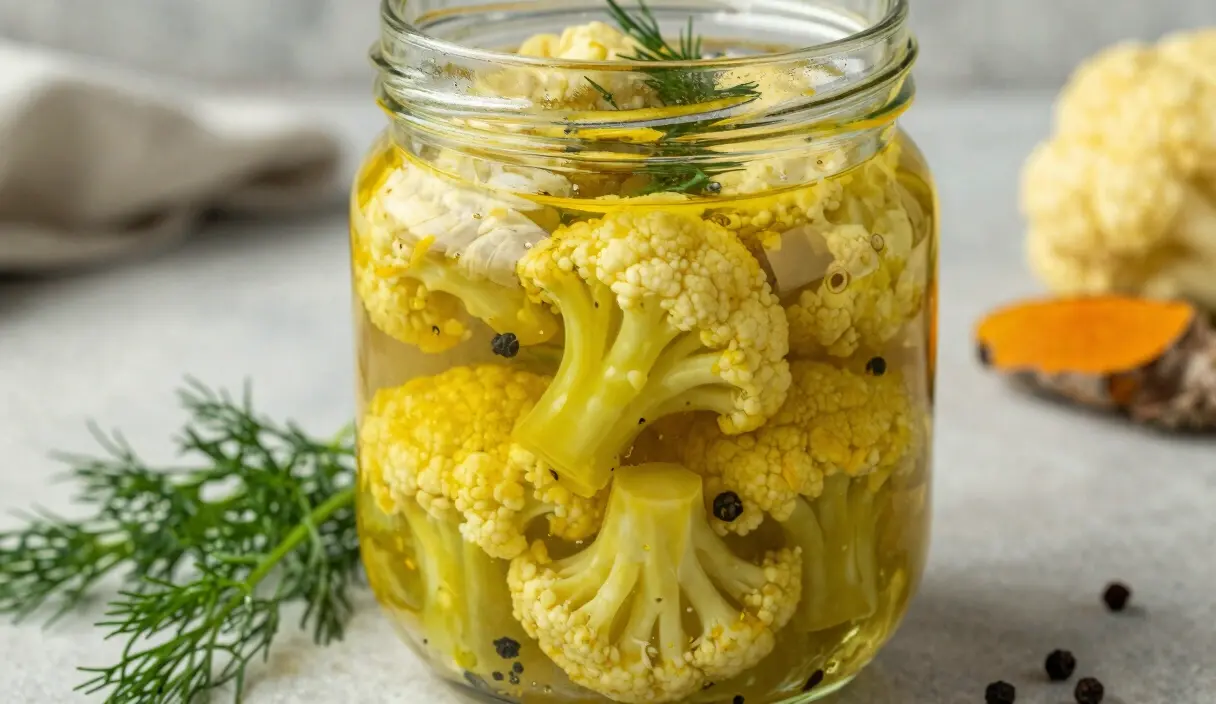
Fermenting Cauliflower & Broccoli: How to Avoid the 'Stink' Factor
Fermented cauliflower is a probiotic delicacy but can have a pungent sulfur smell. Learn the professional techniques to control odor and maintain crunch.
Contents
Cauliflower and broccoli are 90% water and ferment faster than almost any other brassica — usually hitting peak flavor in 4-5 days rather than the 1-2 weeks needed for sauerkraut. That speed is a trap if you’re not watching. They can go from “pleasantly tart” to “aggressively sour” in under 24 hours at room temperature above 72°F (22°C).
The sulfur smell that clears a room isn’t unavoidable. It’s a symptom of fermentation conditions you can control: temperature too high, brine concentration too low, florets sitting in an oxygen pocket at the surface. Fix those variables and you get something remarkable — a probiotic-dense, almost buttery vegetable with a tartness that works in salads, grain bowls, or straight from the jar.
This guide covers the blanching technique that reduces sulfur release by up to 70%, the 3% brine concentration that outperforms the standard 2% for brassicas, and the exact fermentation window that separates peak texture from mush.
The Science of the Stink: Why Does It Smell?
Cauliflower and broccoli belong to the genus Brassica. These plants are naturally rich in sulfur-containing compounds, specifically glucosinolates. When bacteria begin breaking down the vegetables during lactic acid fermentation, enzymes are released that convert these sulfur compounds into volatile gases, such as hydrogen sulfide (H2S).
Here is the good news: the smell is almost always a sign of normal microbial activity, not spoilage. But it can be incredibly pungent. Three factors influence how much your ferment “stinks”:
- Temperature: The warmer it is, the faster the enzymes work and the more gas is released.
- Oxygen: In an aerobic environment (exposed to air), even more unpleasant byproducts can form.
- Time: The longer brassicas ferment, the more the sulfur compounds are broken down into stable forms.
Strategy 1: The “Blanching Secret”
This is the step most online recipes omit entirely — probably because it adds 5 minutes and doesn’t feel like “traditional” lacto-fermentation. Skip it once and you’ll understand exactly why it matters.
If you dip the cauliflower into boiling water for exactly 30 to 45 seconds and then immediately plunge it into an ice bath, you inactivate many of the enzymes responsible for releasing sulfur.
Crucial: Do not blanch for too long! We don’t want to kill all the beneficial lactic acid bacteria on the surface of the vegetable. A quick “scare” is all it takes to stabilize the cell structure and reduce potential odor by up to 70%.
Strategy 2: Flavor Pairing as “Odor Modulators”
You can do more than just mask the sulfur smell; you can actively influence the microbial environment using specific ingredients.
- Ginger & Turmeric: These roots have mild antibacterial properties against certain spoilage-prone microbes and provide a fresh top note that counteracts the sulfur.
- Mustard Seeds: Mustard contains enzymes that steer the breakdown of sulfur compounds in a more pleasant culinary direction. They also help keep the vegetables crunchy.
- Bay Leaves: The tannins in bay leaves protect the texture and help neutralize some of the volatile gases.
Don’t skip the bay leaf because it seems optional. The tannins do structural work — they inhibit the enzymes that degrade pectin. Without them, cauliflower at day six can turn from snappy to spongy overnight.
Equipment: Keep It Deep Under the Brine!
I’ve tested cauliflower ferments with and without glass weights, and the difference in odor intensity is measurable — not just subjective. The batches with florets touching the surface produced noticeably more hydrogen sulfide. Submersion isn’t optional here.
With cauliflower, it is more critical than with almost any other vegetable that no piece touches the surface. Florets have an irregular surface where tiny air bubbles can easily get trapped. These air pockets are breeding grounds for oxidative processes that worsen the odor.
Top Glass Weights for Odor Control
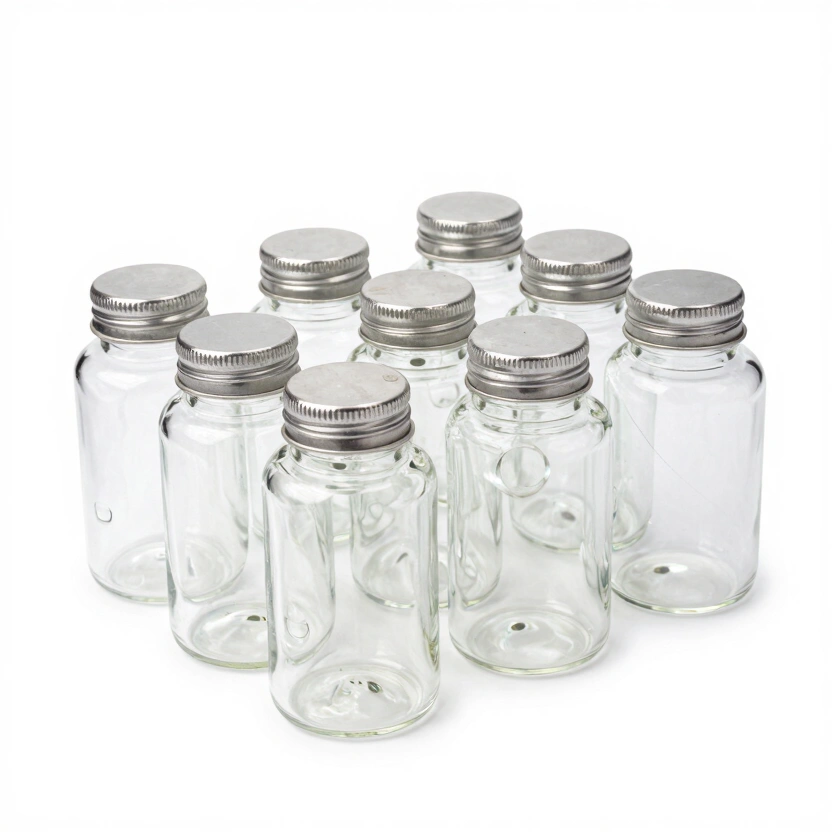
Artcome 10-Pack Glass Weights
Bulk set of heavy glass weights with easy-grip handles for large mason jar setups.
Check Price on Amazon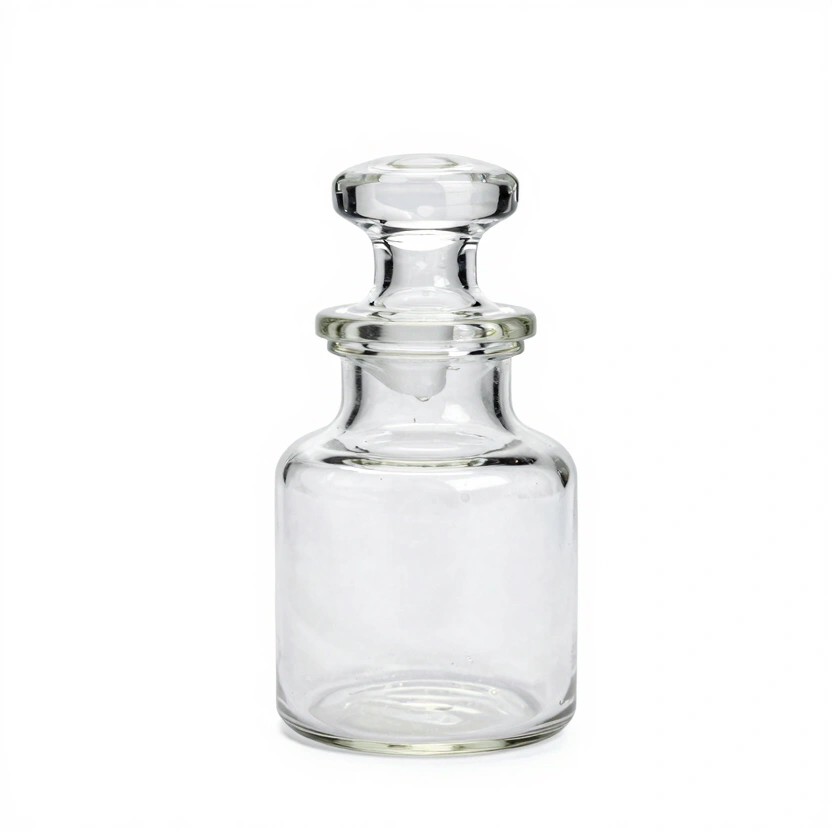
Westmark Glass Fermentation Weights
Heavy-duty glass weights from Westmark to ensure vegetables stay under the brine.
Check Price on Amazon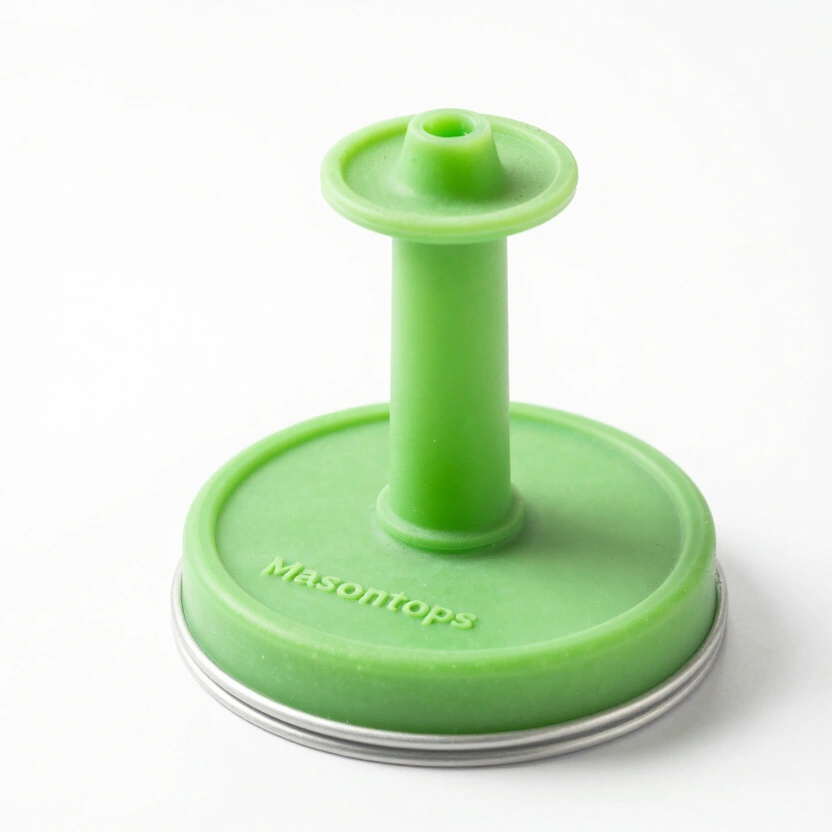
Masontops Pickle Pipe (Airlock Lids)
Waterless silicone airlock lids for easy, low-maintenance mason jar fermentation.
Check Price on Amazon* Affiliate links. Prices last updated March 3, 2026.
Use heavy glass weights to keep the cauliflower pressed deep under the brine. An airtight fermentation system with an S-bubble airlock is invaluable here, as it allows the hydrogen sulfide to escape while preventing oxygen from entering.
Step-by-Step: Your Perfect Cauliflower Ferment
This is going to sound wrong, but smaller florets actually ferment more evenly and smell less than large ones. More surface area means salt penetrates faster, the anaerobic environment establishes quicker, and the enzymes responsible for sulfur release have less time to dominate. Cut everything smaller than you think necessary. Half the diameter is usually right.
1. Preparation
Cut the cauliflower into very small florets. The smaller the florets, the more evenly the salt penetrates and the faster the fermentation completes.
2. The Brine (Salt Concentration)
While we often use a 2% brine for carrots, I recommend a 3% brine for cauliflower (30g salt per 1 liter of water). The higher salinity slows down enzymatic activity and suppresses odor-producing microbial competitors.
3. The Fermentation Timeline
Don’t let brassicas sit for too long. While sauerkraut can age for months, cauliflower reaches its culinary peak in just 5 to 7 days at room temperature (ideally 18-20°C / 64-68°F). Taste it at day 4. If it’s where you want it, move it. Waiting for the “right” day without tasting is how a good batch becomes an over-sour one. Once the taste is pleasantly tart, move the jar to the fridge immediately. The cold stops further sulfur release.
At 5-7 days at 18-20°C with 3% salinity and full submersion, you get peak tartness and manageable odor. Move it to the refrigerator at that point. The cold slows the sulfur-releasing enzymatic activity and locks in the texture before it degrades. Don’t wait for a specific day number — taste at day 4 and let that tell you when you’re done.
The smell on opening is always worse than the smell on eating. Let the jar sit uncovered for five minutes. The hydrogen sulfide dissipates. What’s underneath is usually clean and bright.
Keeping irregular-shaped florets fully submerged is the single biggest challenge in cauliflower ferments — the best glass weights for fermentation reviews which weights are wide enough to cover the full jar diameter without leaving gaps at the edges.
If you’re ever unsure whether a smell signals active fermentation or actual spoilage, the Fermentation Smell Test guide breaks down exactly how to tell the difference.
Frequently Asked Questions
It smells intensely of sulfur when I open the jar but tastes fine. Is it still good?
That’s the classic brassica fermentation profile — hydrogen sulfide builds up inside a sealed jar and hits all at once when you open it. Let the jar sit uncovered for 5 minutes. If the taste is sour, clean, and the pH is below 4.6, the batch is safe. The pH Safety guide explains exactly what that threshold means.
My cauliflower turned pink after a few days. Is that mold?
Almost certainly not. Pink or purple discoloration is usually a reaction between anthocyanin pigments in the vegetable and the acid in the brine — the same chemistry that turns red cabbage bright purple when lacto-fermented. No fuzzy surface growth, no slimy texture: safe to eat.
Can I ferment broccoli the same way as cauliflower?
Yes, with one difference. Broccoli softens considerably faster — at 5 days it’s often already past its texture peak. Cut your timeline to 3-4 days, or mix broccoli with denser vegetables like carrot slices that hold their structure longer. I’ve opened broccoli at day 6 and gotten mush. The tighter timeline isn’t caution, it’s accuracy.
Why does 3% brine work better for brassicas than the standard 2%?
The extra salinity slows enzymatic activity in the vegetable itself — the enzymes that convert glucosinolates into sulfur gases are inhibited at higher salt concentrations. It also suppresses odor-producing competing microbes that thrive at lower salinity, giving Lactobacillus a cleaner environment to dominate. For exact gram measurements by batch size, use the Brine Salinity Calculator.
My airlock stopped bubbling at day 3. Has fermentation stopped?
Not necessarily. Bubbling slows as CO2 production tapers off in the middle fermentation phase — it doesn’t mean the bacterial activity has stopped. Check the pH. If it’s below 4.0 and dropping, fermentation is still progressing. Taste it. A still, quiet jar at day 4 that tastes pleasantly sour is exactly where you want to be.
Related Articles

Tempeh DIY: Mastering the Rhizopus Mycelium at Home
Learn how to make high-protein tempeh from scratch. We explore fungal biology, incubation technology, and the science of the white mycelium.
Koji-Kin: The 'National Fungus' and its Enzymatic Power
Master the foundation of Japanese fermentation. We explore the science of Aspergillus oryzae and how to grow koji at home.