Fermenting Parsnips and Turnips: Mastering the Forgotten Roots
Why are parsnips and turnips the secret weapons of the crock? We explore the science of starchy root fermentation, sweetness, and savory depth.
Contents
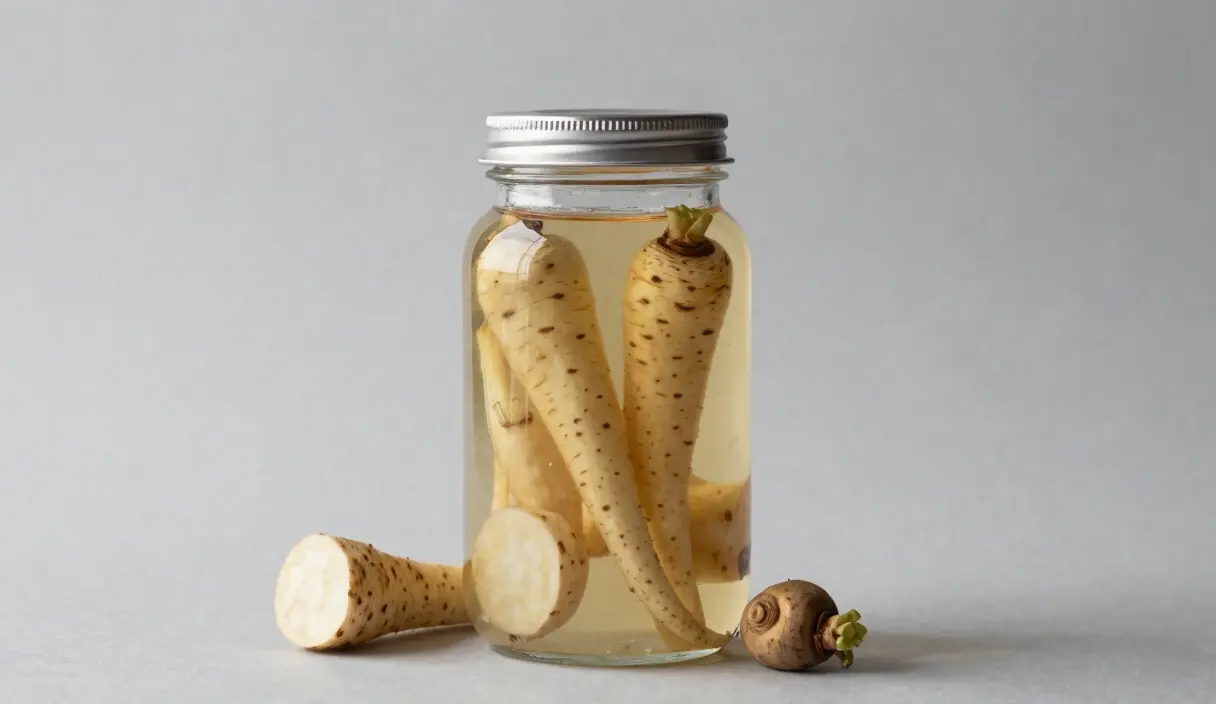
Parsnips and turnips are the most underrated fermentation vegetables. Higher sugar content than carrots, lower water content than cucumbers, and a natural earthiness that deepens rather than fades after fermentation. They also hold texture for months rather than weeks — meaning a jar you forget in the back of the fridge at week three might be the best jar you’ve ever opened.
Fermented turnips turn electric pink within 48 hours of adding a single beet slice. That’s not food coloring — it’s betalain pigment from the beet bleeding into the brine and saturating the turnip tissue. The same jar, served at a Middle Eastern table, is called a Lebanese ferment. At a Northern European table, the parsnip version produces something nutmeg-sweet and clove-spicy. Same technique. Completely different results.
This guide covers the 3% salinity rule for dense roots, the starch-mush prevention techniques, the Lebanese pink transformation, and the 14-28 day timeline that separates a crisp fermented root from a grainy disappointment.
The Biology of the Starchy Root: Fuel for Bacteria
To ferment a root successfully, you must understand what it is made of. Roots are the “storage batteries” of the plant.
Starch to Sugar Conversion
Unlike cabbage, which is mostly cellulose and water, parsnips are dense with starches.
- The Inversion: As the parsnip sits in the cold ground (or your fridge), some of its starches naturally convert to sugars.
- The Microbial Feast: When you add salt and create an anaerobic environment, your Lactic Acid Bacteria (LAB) have an enormous reservoir of fuel. This leads to a very robust, bubbly fermentation that produces high levels of carbonation and acid.
The Turnip’s Sulfur Shield
Turnips belong to the Brassica family, just like Sauerkraut. This means they are rich in glucosinolates.
- The Result: Fermenting turnips releases sulfurous gases. For the first 5 days, your turnip jar will smell intensely “funky.”
- The Transformation: After 14 days, these sharp sulfur notes mellow into a savory, radish-like depth that is incredibly addictive.
Flavor Profiles: The Sweet vs. The Sharp
The Parsnip Profile (Floral & Spicy)
A raw parsnip has a distinctive, earthy sweetness. Fermentation amplifies the spicy notes (reminiscent of cloves or black pepper) while cutting the sugary “heaviness.” Open a three-month-old parsnip jar in a cold kitchen and the smell that comes out is almost floral — not what anyone expects from a root vegetable.
- Best Pairings: Ginger, orange zest, and coriander seeds.
The Turnip Profile (Crisp & Salty)
Turnips are less about sweetness and more about texture and “bite.”
- The Middle Eastern Classic: In Lebanon, turnips are fermented with a single slice of beet to turn them a brilliant neon pink. This is the “Lebanese Pickle” served with falafel and shawarma.
- Best Pairings: Garlic, beets, and peppercorns.
Salinity and Starch: The 2.5% Anchor
Because roots are denser than leafy greens, the way you manage salt is different.
- The Density Problem: Brine penetrates a dense parsnip slower than a shredded cabbage.
- The Ratios: I recommend a 2.5% to 3.0% brine. This ensures the exterior of the root stays firm while the bacteria work their way into the core.
- Precision: Use 25-30g of sea salt per liter of water. (See our Salt Guide for more).
The Master Protocol: Step-by-Step Root Fermentation
Follow this precise schedule for both parsnips and turnips.
Ingredients:
- 1 lb (500g) Fresh Parsnips or Turnips
- 2 Cloves of Garlic (smashed)
- 1 Bay Leaf (for tannins)
- The Brine: 3% Salinity (30g sea salt per liter of water).
The Preparation:
- Wash and Peel: Unlike carrots, parsnip and turnip skins can be quite woody. I recommend peeling them for a smoother mouthfeel.
- The Cut:
- Parsnips: Cut into 1/2-inch thick coins or long batons.
- Turnips: Cut into wedges (like thick-cut fries).
- Pack the Jar: Place spices at the bottom. Pack the roots in as tightly as possible.
- Brine: Pour the 3% brine until the roots are submerged by at least 1 inch.
- Weight: Apply a glass weight. Roots are starchy and love to trap air bubbles; a heavy weight is mandatory.
- Wait: Ferment at 65°F to 70°F for 14 to 28 days.
These are the tools that make the biggest difference:
Essential Root Fermentation Gear
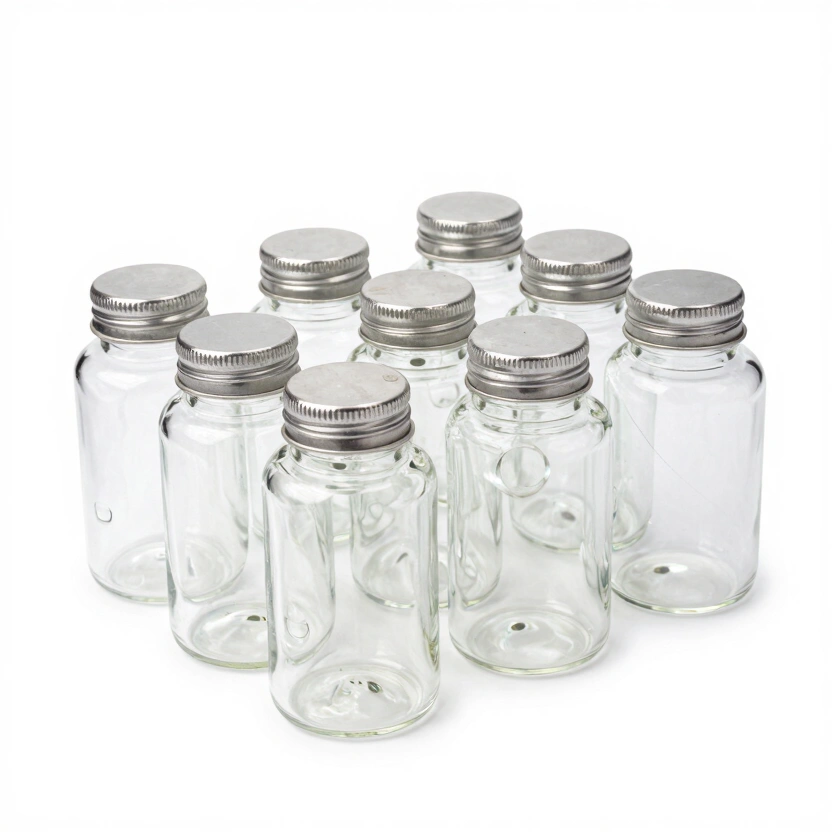
Artcome 10-Pack Glass Weights
Bulk set of heavy glass weights with easy-grip handles for large mason jar setups.
Check Price on Amazon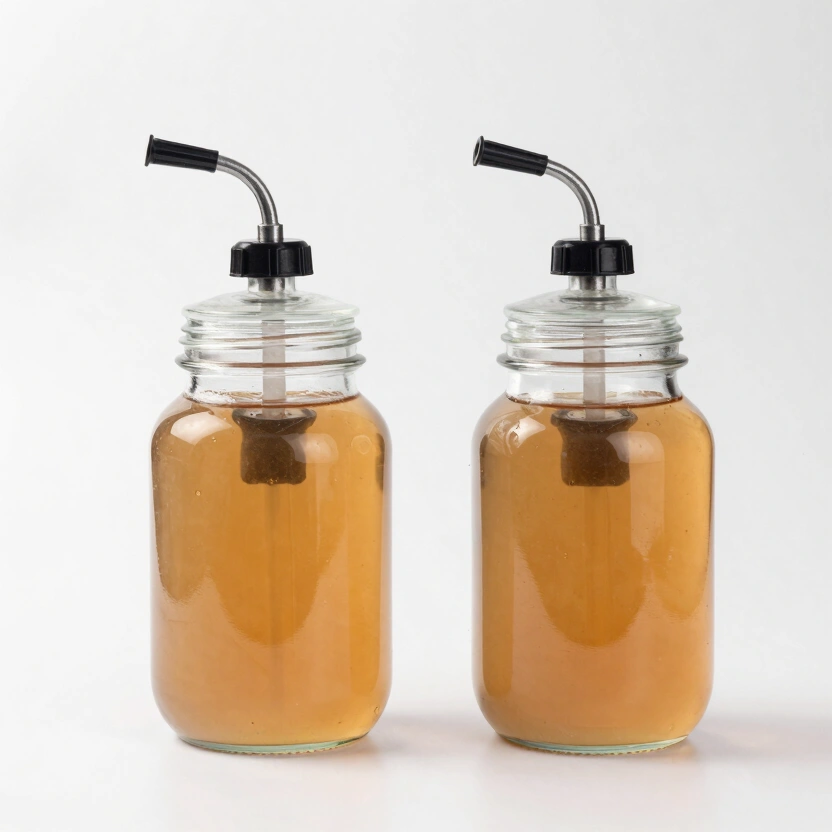
Green Wise Fermentation Jar Set (2 Pack)
Large 1.4L jars with integrated airlock valves. Perfect for sauerkraut, kimchi, or tomatoes.
Check Price on Amazon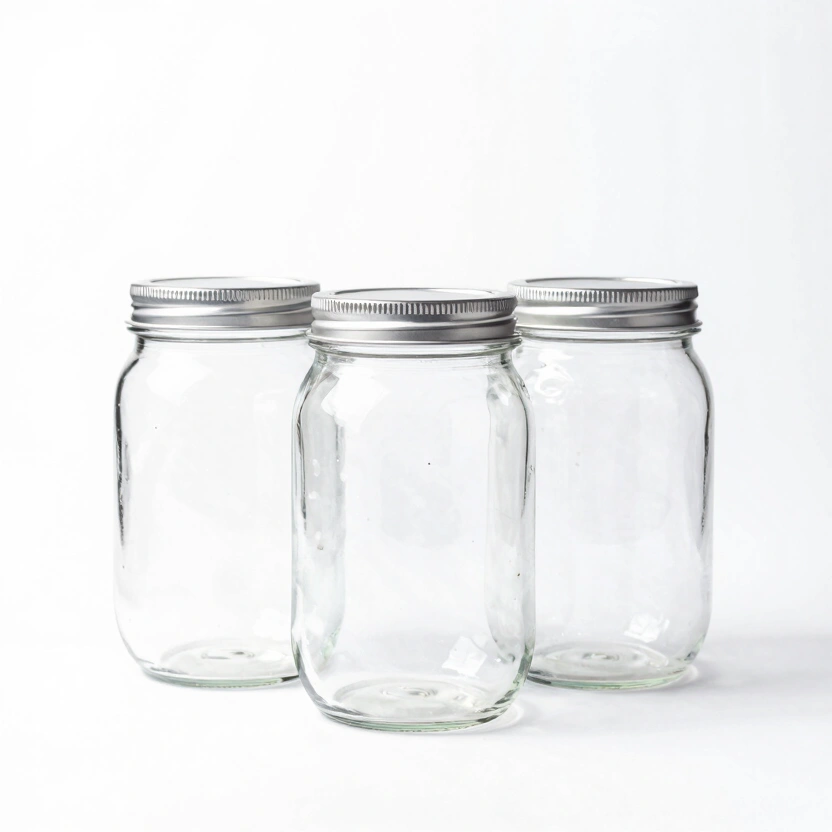
Tebery Wide Mouth Mason Jars (1.9L)
High-capacity glass jars perfect for bulk vegetable fermentation or continuous brew kombucha.
Check Price on Amazon* Affiliate links. Prices last updated March 3, 2026.
The “Lebanese Pink” Secret: Beets and Turnips
This is one of the most visually dramatic things you can do in a fermentation jar, and it costs nothing extra. Two thin beet slices — that’s all. The jar goes in the cabinet white and comes out a week later electric pink. People who see it for the first time always ask if you added food coloring.
If you want the classic Middle Eastern look for your turnips, you need one extra ingredient.
- The Catalyst: Add 2-3 thin slices of raw red beet to your turnip jar.
- The Result: Within 48 hours, the betalain pigments from the beet will bleed into the brine and saturate the turnip wedges. Within a week, the turnips will be a uniform, brilliant “electric pink.”
- Flavor Impact: The small amount of beet does not change the flavor of the turnips, but it adds a massive visual appeal.
Texture Mastery: Avoiding the “Starch Mush”
Most guides about root vegetable fermentation mention temperature control without specifying why it matters. At above 22°C, the starches in parsnips convert to sugars faster than the bacteria can acidify the brine — the structure degrades before the pH drops. Temperature isn’t secondary here; it’s the primary texture control.
Starchy roots can sometimes become soft or develop a “grainy” texture if fermented too fast.
- Low and Slow: Keep the temperature below 70°F. High heat causes the starches to break down into sugars too quickly, leading to a loss of structural integrity.
- Tannins: Just like with pickles, a bay leaf or grape leaf provides tannins that lock in the pectin, ensuring a crisp bite.
- Calcium Chloride: Adding a pinch of Pickle Crisp (1/8 tsp per quart) is highly recommended for turnips to maintain that “industrial snap.”
The Gas Factor: Managing Activity
I’ve had a parsnip jar build enough pressure between day 3 and day 5 to push brine through a standard lid gasket. An airlock is not optional here — it’s structural. Use one.
Because of the high starch content, parsnips and turnips are some of the most “active” ferments.
- Active Bubbling: Expect heavy gas production between Day 3 and Day 7. Your airlock will be very busy.
- Foaming: It is common to see a layer of white foam on top. This is just protein and starch trapped in CO2 bubbles. It is not mold or Kahm yeast.
Culinary Applications: Beyond the Jar
Fermented parsnips and turnips are incredibly versatile in the kitchen.
- The Shawarma Essential: Pink turnips are the mandatory pairing for Middle Eastern grilled meats. Their acidity cuts through the fat of lamb or chicken perfectly. Serve them cold, straight from the jar, next to anything fatty and slow-cooked — the contrast is the point.
- Parsnip Purée: Blend fermented parsnips with a little bit of grass-fed butter or coconut milk. You get a probiotic-rich, tangy purée that is much more sophisticated than standard mashed parsnips.
- Roast Garnish: Add fermented turnip wedges to a roast vegetable platter after cooking. The contrast between the hot, sweet roasted veg and the cold, tangy fermented turnip is a culinary revelation.
- Salad Crunch: Use parsnip coins as a gluten-free “crouton” alternative in your leafy salads.
Storage and Shelf Life: The Root Cellar Effect
Roots are designed for long-term storage.
- The Fridge Life: Fermented roots will last 6 to 12 months in the refrigerator.
- The Aging Curve: Parsnips, in particular, improve with age. The floral, spicy notes become more pronounced after 3 months in cold storage.
- Texture Check: If the brine becomes very thick after 6 months, it is just the starches leaching out. It is safe to eat, but you may want to rinse the roots before serving.
Fermented parsnips held in cold storage for 3 months develop noticeably more complex floral and spicy notes than fresh batches. The aging curve on starchy roots is slower than almost any other fermented vegetable — and more rewarding. A jar at month one is good. A jar at month three is genuinely interesting. The 6-12 month refrigerator shelf life isn’t an estimate; roots are built for long storage.
Pink turnips stay electric for months. Parsnips mellow from sharp to deep. Both improve on time in ways that softer vegetables simply don’t.
Choosing the right vessel matters for a 14-28 day root ferment — the best fermentation jars for root vegetables compares Fido, Weck, and wide-mouth Mason options for the long-hold ferments that dense roots require.
For the full technical picture on how brine concentration affects dense root vegetable fermentation, the Science of Fermentation Brine Ratios guide covers the osmosis and penetration rates across different vegetable densities.
Frequently Asked Questions
Why do my turnips smell strongly of sulfur during the first week?
Turnips are brassicas, rich in glucosinolates that convert to sulfurous volatile gases during fermentation. The smell peaks around day 4-5 and mellows significantly after 10-14 days, especially once refrigerated. If you’ve made sauerkraut before, this is the same chemistry — more concentrated. The first time I opened a turnip jar at day 5 I genuinely thought something had gone wrong. It hadn’t.
My parsnips turned brown after a few days. Did I do something wrong?
Brown discoloration almost always means oxidation — part of the root was above the brine line and exposed to air. Ensure your glass weight is heavy enough to hold dense roots submerged and that brine covers the weight by at least half an inch. See the Aerobic vs. Anaerobic Fermentation guide for why oxygen is the primary spoilage mechanism.
Can I ferment rutabagas (swedes) using the same method?
Yes. Rutabagas are essentially sweet turnips — same brassica family, same sulfur chemistry, slightly higher sugar content. Use the 3% brine, same 14-28 day timeline, and expect slightly faster initial fermentation due to the added sugar.
My glass weight is covered in a flat, wrinkled white film. Is that mold?
That’s Kahm yeast — a surface yeast, not a mold. It grows where brine meets air. Skim it off completely, ensure all vegetables are fully submerged, and move the jar somewhere cooler. Kahm is harmless but goes bitter if left too long. The Kahm Yeast vs. Mold guide shows exactly how to tell the difference visually.
Why did my garlic turn blue-green inside the turnip jar?
Sulfur compounds from the turnip brine react with trace copper present in the garlic tissue to form a blue-green organosulfur pigment. It looks alarming. The garlic is completely safe to eat — it’s a chemical reaction, not bacterial growth. This happens in any high-sulfur ferment that includes garlic.