Botanical Fermentation: How Herbs and Spices Influence Microbial Growth and Flavor Development
Explore the bidirectional relationship between botanicals and microbes. Learn how herbs and spices act as antimicrobial filters and enhance the bioavailability of antioxidants.
Contents
Around 600 BC, Zoroastrian priests in Persia were following a precise botanical fermentation protocol described in the Avesta texts: specific ratios of ephedra, pomegranate, and other plants, fermented in vessels of particular shapes, ready when the drink “no longer tasted bitter.” The haoma ceremony wasn’t mysticism with a side of fermented beverage — it was a documented protocol. The Avesta describes the preparation in enough detail that scholars have been debating the exact botanical composition for 200 years. The fermentation chemistry, by contrast, is straightforward. Someone in ancient Persia had figured out that specific plants, combined and fermented in specific ratios, produced a predictable result. The first recorded botanical fermentation protocol.
The modern fermenter still treats this as a vague art. Drop in some herbs, see what happens. But thymol in oregano, cinnamaldehyde in cinnamon, gingerol in ginger — these aren’t passive flavor molecules. They act on the microbiome inside your jar, selectively suppressing certain strains while leaving others intact. Understanding that bidirectional chemistry is the difference between accidentally good botanical fermentation and deliberately good botanical fermentation.
The Bidirectional Bridge: How Microbes and Plants Negotiate
In the world of clinical nutrition, we often talk about the health benefits of polyphenols (antioxidants) found in herbs like rosemary or spices like turmeric. However, there is a catch: most of these compounds are locked inside complex plant fibers and are poorly absorbed by the human gut.
This is where fermentation acts as a “biological key.”
1. Microbial Transformation (The Up-Regulation)
When you add rosemary to a fermenting jar of sauerkraut or a bottle of kombucha, the Lactobacillus and Acetobacter species don’t just sit there. They possess specific enzymes—like beta-glucosidases—that break the bonds between sugar molecules and the plant’s active compounds. This process converts “bound” polyphenols into “free” forms that are exponentially more bioavailable. In many cases, the fermented version of an herb has 2x to 4x the antioxidant activity of the raw herb.
2. The Antimicrobial Filter (The Selection Pressure)
On the other side of the bridge, the herbs themselves act as selective filters. Many botanicals contain “antimicrobial” compounds like thymol (in thyme and oregano) or cinnamaldehyde (in cinnamon).
Beginners often fear that adding these will “kill the ferment.” But here is the secret: Milchsäurebakterien (LAB) are remarkably resistant to many of these compounds, while competing yeasts and spoilage molds are not.
Open a jar of rosemary-fermented carrots on day 4. The smell is distinct — bright acidity underlaid by something resinous, almost forest-floor. That’s the terpenes from the rosemary integrating into the brine chemistry. It smells like it’s working. Because it is.
By strategically adding certain herbs, you can actually “prune” your microbiome, suppressing wild yeasts that might cause over-carbonation or “off” smells, while allowing the healthy bacteria to thrive.
The “Herb Filter” Strategy: Controlling Your Culture
I’ve used fresh thyme to salvage a kombucha F2 that was turning into a yeasty mess — two sprigs for 48 hours shifted the balance noticeably. That’s the Thymol Effect in action.
If your ginger ale is always too yeasty, or your kombucha smells like bread dough, you can use botanical science to rebalance the jar.
The Yeast Inhibitors: Thyme, Oregano, and Rosemary
These three herbs are rich in terpenes that disrupt the cell membranes of fungi (yeasts). Adding a sprig of fresh thyme to the secondary fermentation of a fruit soda won’t just add a savory note; it will slow down the yeast’s metabolism. This is the “Thymol Effect.” It allows the bacteria to produce more complex acids and esters without the yeast turning the jar into a fizzy, alcoholic mess.
The Mold Shield: Cinnamon and Clove
Cinnamon is one of the most powerful anti-fungals in the plant kingdom. If you are fermenting high-sugar fruits (which are prone to surface mold), including a whole cinnamon stick can act as a localized shield. The cinnamaldehyde leaches into the top layer of the brine, creating an environment that is hostile to mold spores but perfectly fine for the anaerobic bacteria working at the bottom.
Deep Dive: The Chemistry of Spices in Brine
When we talk about “spices” in vegetable fermentation, we aren’t just talking about heat. We are talking about chemistry.
Ginger (The Enzymatic Engine)
Ginger contains Gingerol and a specific enzyme called Zingibain. When added to a ferment, Zingibain helps break down proteins. If you’ve ever wondered why ginger-fermented vegetables have a softer, almost “pre-digested” texture, this is why. Ginger also acts as a carminative, meaning it reduces the gas production (bloating) often associated with raw fermented cruciferous vegetables like cabbage.
Turmeric (The Curcumin Paradox)
Curcumin, the active compound in turmeric, is notoriously difficult for the body to absorb. However, studies have shown that when turmeric is fermented with Lactobacillus plantarum (the dominant strain in sauerkraut), the curcumin is transformed into Tetrahydrocurcumin. This metabolite is white (rather than orange) and is significantly more potent as an anti-inflammatory agent.
Garlic (The Allacin Buffer)
This is the ingredient that catches the most beginners off guard. Too much garlic doesn’t just add flavor — it stalls your ferment entirely, and you won’t understand why until you’ve already wasted a batch.
Warning: a jar of fermented garlic that stalled at day 2 smells wrong in a specific way — flat, slightly putrid, none of the sharpening acidity that a healthy ferment develops. If you open it on day 4 and it still smells like raw garlic with no tang, something antimicrobial stopped the culture. Check your garlic quantity first.
Garlic is perhaps the most antimicrobial substance in the kitchen. In high concentrations, raw garlic can slow down a ferment. This is why many “pickled garlic” recipes result in the cloves turning blue or green—a harmless reaction between the garlic’s sulfur and trace amounts of copper in the water, catalyzed by the rising acidity. To avoid stalling a ferment with garlic, aim for no more than 3 cloves per quart of brine.
Botanical Fermentation Gear
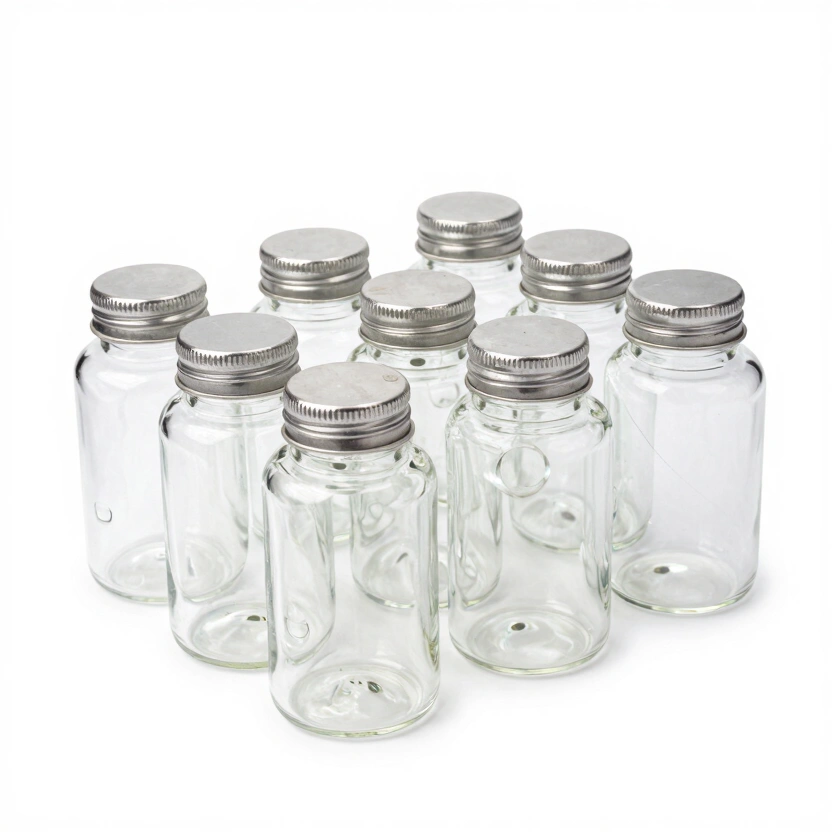
Artcome 10-Pack Glass Weights
Bulk set of heavy glass weights with easy-grip handles for large mason jar setups.
Check Price on Amazon
YINMIK Digital Spear pH Meter
Specialized pH meter with a spear probe for measuring solids like cheese or thick mashes.
Check Price on Amazon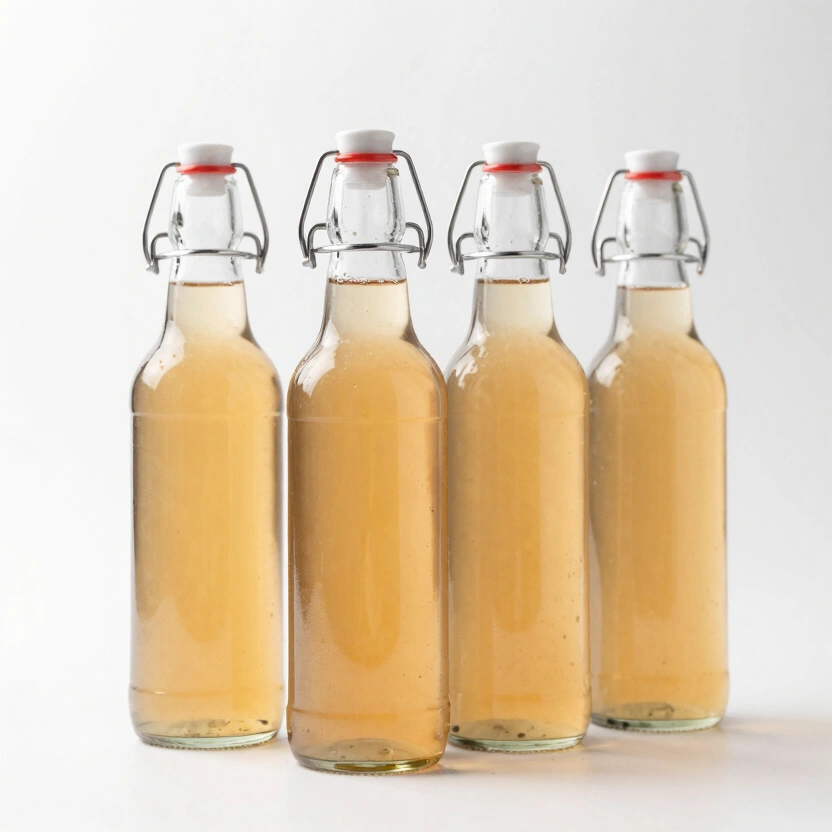
myFERMENTS Kombucha Starter Set
Large 4.25L jar set with swing-top bottles — ideal for first kombucha or kefir batches.
Check Price on Amazon* Affiliate links. Prices last updated March 3, 2026.
The Physics of Essential Oils: Why Fresh is (Usually) Better
Most fermentation guides treat dried herbs as a poor substitute for fresh. The reality is more interesting: dried herbs are often the better choice for long ferments, because they release stable polyphenols without the volatile oils that can over-extract and turn medicinal.
When you use dried herbs, you are getting the “stable” polyphenols. But when you use fresh herbs, you are getting the Essential Oils.
Essential oils are volatile—they want to escape into the air. In a sealed fermentation jar, these oils are trapped. They act as “surfactants,” lowering the surface tension of the water. This can actually help the bacteria move more freely through the brine, leading to a more even fermentation.
However, there is a risk: Over-extraction. Essential oils are highly concentrated. If you leave a whole sprig of rosemary in a jar for 4 weeks, the pinene and camphor can become so concentrated that they impart a “pine-sol” or medicinal taste.
The Rule of Thumb:
- Strong Herbs (Thyme, Rosemary, Oregano): Remove after 7 days, even if the vegetable fermentation continues.
- Soft Herbs (Dill, Basil, Cilantro): Can stay for the duration, but they will turn brown and lose flavor after 14 days.
Advanced Recipe: Botanical “Gruit” Soda
This recipe pays homage to the medieval brewers, utilizing a blend of herbs to create a stimulating, probiotic beverage without a single grain of hops.
Ingredients:
- 1 Quart Filtered Water
- 1/2 Cup Raw Honey
- 1/4 Cup Ginger Bug (Active starter)
- 1 Sprig Fresh Yarrow (or 1 tsp dried)
- 1 Sprig Fresh Mugwort (or 1 tsp dried)
- 1 Small Sprig of Rosemary (The “preservative”)
Instructions:
- The Infusion: Boil the water and pour it over the yarrow, mugwort, and rosemary. Let it steep until it reaches room temperature. This is your “Botanical Base.”
- The Sweetening: Stir in the honey until dissolved.
- The Inoculation: Once cooled (below 90°F / 32°C), strain out the herbs and add the ginger bug.
- The Ferment: Pour into a swing-top bottle and let sit for 24-48 hours.
- The Result: A complex, herbal soda that is naturally carbonated and rich in transformed polyphenols. It will have a slightly bitter, “wild” finish that is incredibly refreshing.
Herb-Fermented Honey: The Medicinal Masterclass
Hold a jar of fermenting herb honey up to the light on day 3. The honey has thinned visibly — the water drawn from the fresh herbs has activated the wild yeasts and Lactobacillus cells that were dormant in raw honey at low water activity. Tiny bubbles cling to the herb stems. It looks alive because it is.
One of the easiest ways to explore botanical fermentation is through honey. Honey is naturally antimicrobial because of its low water activity. But when you add fresh herbs, the water from the herbs leaches into the honey, raising the water activity just enough for wild yeasts and Lactobacillus to wake up.
- Fill a jar 1/3 full of fresh herbs (e.g., Elderberry, Sage, Thyme).
- Fill the rest with raw, unpasteurized honey.
- Flip the jar daily to ensure the herbs are coated.
- Within 3 days, you will see tiny bubbles. This is the fermentation.
- After 2 weeks, the honey will be much thinner and infused with the “pre-digested” compounds of the herbs. It is the ultimate cough syrup and immune booster.
Frequently Asked Questions
Why do herbs float to the surface and how does that cause mold?
Density. Herbs are less dense than brine and rise toward oxygen. Mold spores germinate at the brine surface, where oxygen is present — a floating herb sprig is both a landing pad and a growth substrate. The fix is mechanical: a Masontops fermentation weight or a small zip-lock bag filled with brine sitting on top of the herbs keeps everything submerged. No herb in oxygen, no mold germination point.
Can I use bottled essential oils to get the same antimicrobial effect as fresh herbs?
No. This is one of the fastest ways to destroy an entire batch. A single drop of bottled oregano oil contains the antimicrobial equivalent of dozens of fresh sprigs — enough to sterilize your jar and kill every beneficial organism. Whole herbs let the fermentation process extract compounds at concentrations the bacteria can tolerate. Concentrated oils overwhelm that tolerance immediately. Stick to whole or dried plant material.
My fermented basil turned completely black by day 5. Is the ferment ruined?
The ferment is probably fine; the basil is not. Oxidation of chlorophyll — the pigment in basil — produces black-brown degradation products when lactic acid breaks down the cell walls and residual oxygen in the headspace reacts with the exposed pigments. Harmless but unappetizing. Delicate herbs — basil, mint, cilantro — should be added only during a 24-hour secondary ferment, not the full primary run. You get the flavor transformation without the visual damage.
How long should strong herbs like rosemary stay in a ferment?
Seven days maximum. Beyond that, the pinene and camphor compounds in rosemary over-extract and the flavor shifts from herbal complexity to something medicinal — pine-forward, almost antiseptic. Remove the sprig at day 7 even if the vegetable fermentation is continuing. Soft herbs (dill, fennel frond) can stay the full run but lose flavor after day 14. Add a fresh sprig during secondary if you want the aroma to carry through.
What did the Zoroastrian haoma protocol get right that modern fermenters still overlook?
Ratios. The Avesta describes specific proportions of botanicals — not “add some ephedra and pomegranate,” but a defined formula refined over generations until it reliably produced the expected result. Modern botanical fermentation is mostly intuitive: add some herbs, see what happens. The haoma tradition understood that botanical concentrations matter as much as botanical identity. A pinch of thyme and a full sprig of thyme produce measurably different ferments. Weigh your botanicals the same way you weigh your salt.
The Zoroastrian priests fermenting haoma in 600 BC weren’t guessing at the plant ratios — they were following a protocol refined over generations, knowing only that specific combinations produced a specific result at a specific time. The Avesta described it in enough detail to be debated by scholars for 200 years. The underlying fermentation chemistry was never mysterious. It was just unnamed.
You have the names now. Thymol. Cinnamaldehyde. Beta-glucosidase. Tetrahydrocurcumin. Each one a lever the haoma priests were pulling without knowing it. Start with one herb you understand — thyme in a kombucha secondary, a cinnamon stick in a high-sugar fruit ferment — and watch what it does to the brine over 48 hours. That’s the entry point. Not a recipe. An observation.
Ready to stock your botanical fermentation toolkit? The best fermentation starter kits covers the airlocks, weights, and wide-mouth vessels that keep herbs submerged and the anaerobic seal intact for the full extraction window.
The physical conditions that make botanical fermentation work — anaerobic seal, correct headspace, submerged botanicals — are explained in The Technical Guide to Airlocks, Weights, and Seals.