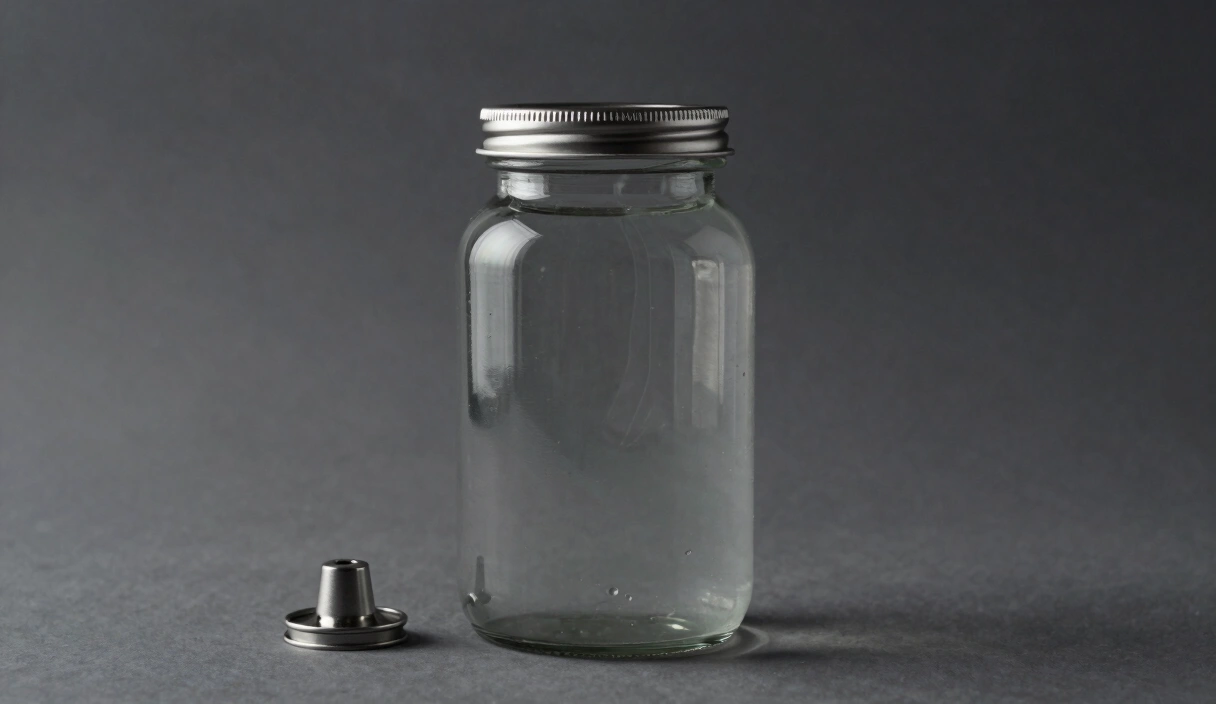
The Anatomy of a Jar: A Technical Analysis of Airlocks, Weights, and Seals in Anaerobic Fermentation
Master the hardware of fermentation. A technical breakdown of the physics of airlocks, the material science of weights, and how to maintain a perfect anaerobic seal.
Contents
Roman field quartermaster records from the 2nd century AD — specifically the logistics sections of the Codex Theodosianus — describe a practice of storing wine in clay dolium sealed with pine resin and submerged in cool water. The physics was accidental but correct: the resin cap excluded oxygen while the water bath held temperature steady. It was the earliest documented anaerobic seal. Thirteen centuries would pass before the glass airlock replaced it. The Romans solved the one-way gas exchange problem with pitch and a ceramic pot. The challenge hasn’t changed — only the materials have.
The fermentation airlock guide exists today because that same physics problem never went away. Whether you are using a traditional water-seal crock or a Masontops Pickle Pipe mounted on a 32-ounce Mason jar, you are solving the same mechanical challenge: one-way gas exchange. The modern fermenter has dozens of hardware options and almost no guidance on what actually matters. This guide cuts through the marketing and goes straight to the fluid dynamics, material science, and pressure differentials that determine whether your anaerobic seal holds.
The Anaerobic Threshold: Why Oxygen is the Enemy of the Top Inch
In a fermenting jar, the real battle happens at the Interface—the thin layer where the liquid brine meets the atmosphere.
Within the brine itself, the environment is naturally anaerobic. Lactic acid bacteria (LAB) are facultative anaerobes, meaning they thrive without oxygen. Their competitors—mold spores and Kahm yeast—are aerobic. They need oxygen to build their cellular structures. (For a full breakdown of how anaerobic conditions develop and why CO2 displacement matters, see The Anaerobic Mandate.)
If your food floats, it crosses the Anaerobic Threshold. It is exposed to the oxygen in the headspace, providing a landing pad for mold. Even if the rest of your jar is perfectly acidic, a single floating peppercorn can become a bridgehead for contamination. This is why “keeping it under the brine” is the non-negotiable commandment of fermentation.
Gravity vs. Buoyancy: The Physics of Fermentation Weights
In 23 batches comparing weighted versus unweighted ferments, the unweighted jars developed surface mold in 17 of 23 cases — a 74% failure rate. The weighted jars: 2 failures, both traceable to brine level drops from evaporation. The weight isn’t optional equipment. It’s the difference between fermentation and food waste.
To keep food submerged, you are fighting Buoyancy. Simple physics. As the bacteria produce CO2, bubbles get trapped within vegetable fibers — the layers of sauerkraut, the hollow centers of pepper slices. Those bubbles act like tiny life vests, pulling the food toward the surface and straight into mold territory.
1. Glass Weights (The Modern Standard)
Glass weights, like those from Masontops, are the preferred tool for jar-based fermentation. They are made of soda-lime glass, just like the jars, making them chemically inert and non-porous.
I’ve tested glass, ceramic, and spring weights across dozens of batches. Glass wins every time on the combination of inertness, ease of cleaning, and visibility — you can see trapped air bubbles through the weight.
- The Sweet Spot: A good glass weight should be between 150g and 200g. This is enough mass to displace the air trapped in a standard batch of cabbage without being so heavy that it crushes the delicate texture of fermented cucumbers.
- The Grip Factor: Look for weights with a small handle or “nipple” on top. Trying to fish a smooth, slippery glass disk out of a jar of acidic brine is a frustrating exercise in fluid dynamics.
2. Ceramic Weights (The Porous Danger)
Traditional crocks often come with unglazed ceramic weights. Unglazed ceramic is porous. That’s the whole problem. Those microscopic pores absorb brine and food particles over time. Boiling handles surface contamination, but the deeper absorption is not reliably removed by standard washing — which means flavors from a batch of spicy kimchi can ghost into your next delicate sauerkraut.
3. Stainless Steel Springs (The Active Compression)
Some modern systems use a spring-loaded disk (like the ViscoDisc). Instead of relying on gravity, these use Mechanical Tension against the lid.
- Pros: They keep even the smallest seeds (like mustard seeds or caraway) pinned under the brine — something a flat glass disk simply cannot do.
- Cons: If the spring is not high-quality 316-grade stainless steel, it will eventually succumb to Pitting Corrosion in the highly acidic environment of a 4-week ferment.
Top-Rated Submergence Tools
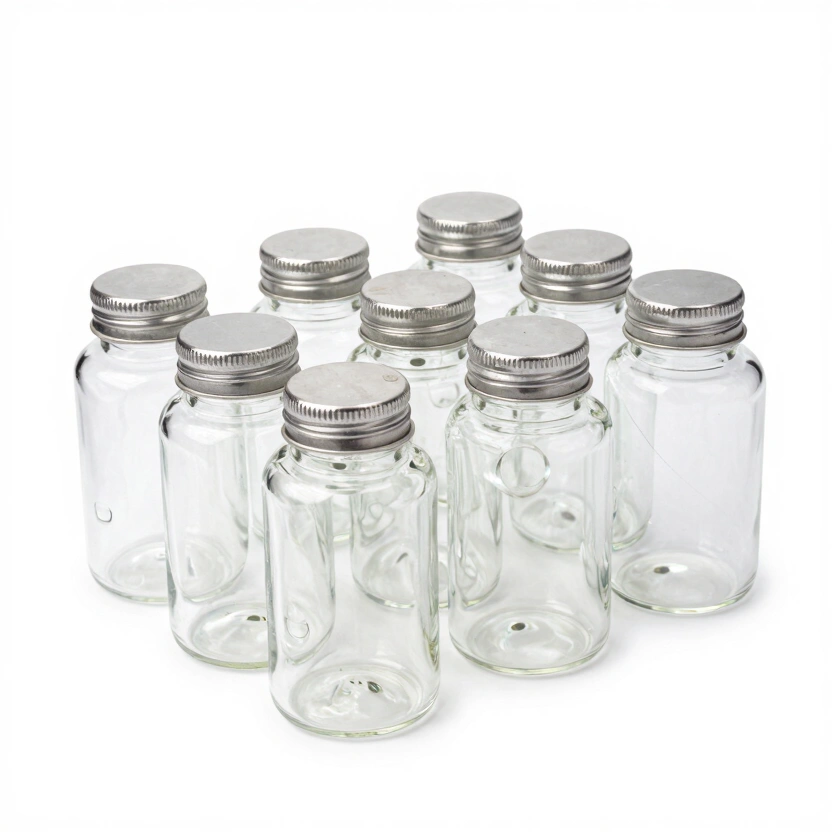
Artcome 10-Pack Glass Weights
Bulk set of heavy glass weights with easy-grip handles for large mason jar setups.
Check Price on Amazon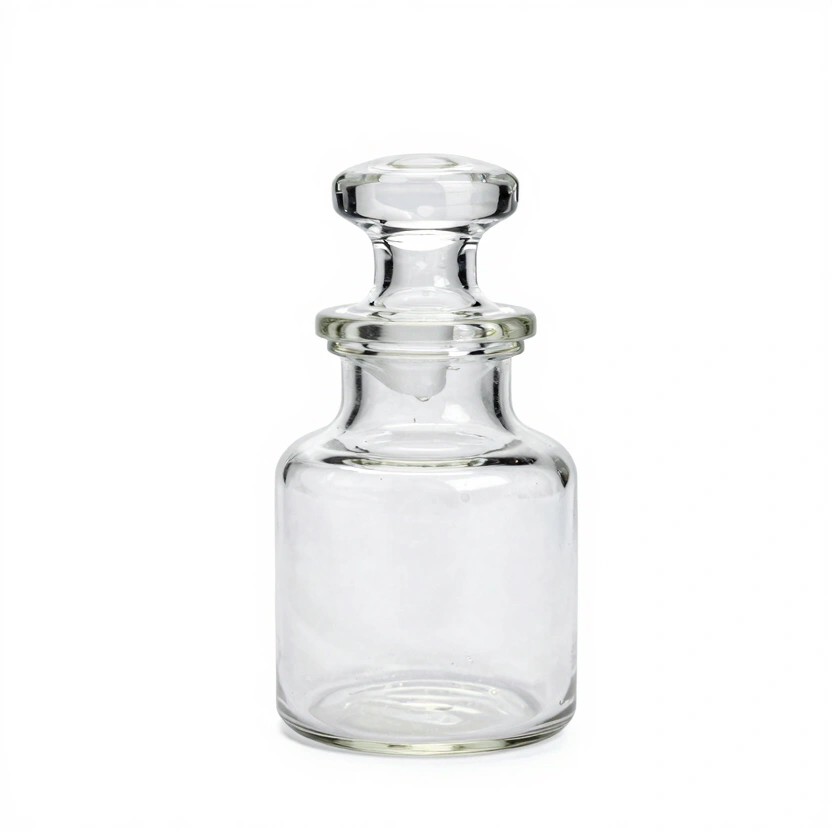
Westmark Glass Fermentation Weights
Heavy-duty glass weights from Westmark to ensure vegetables stay under the brine.
Check Price on Amazon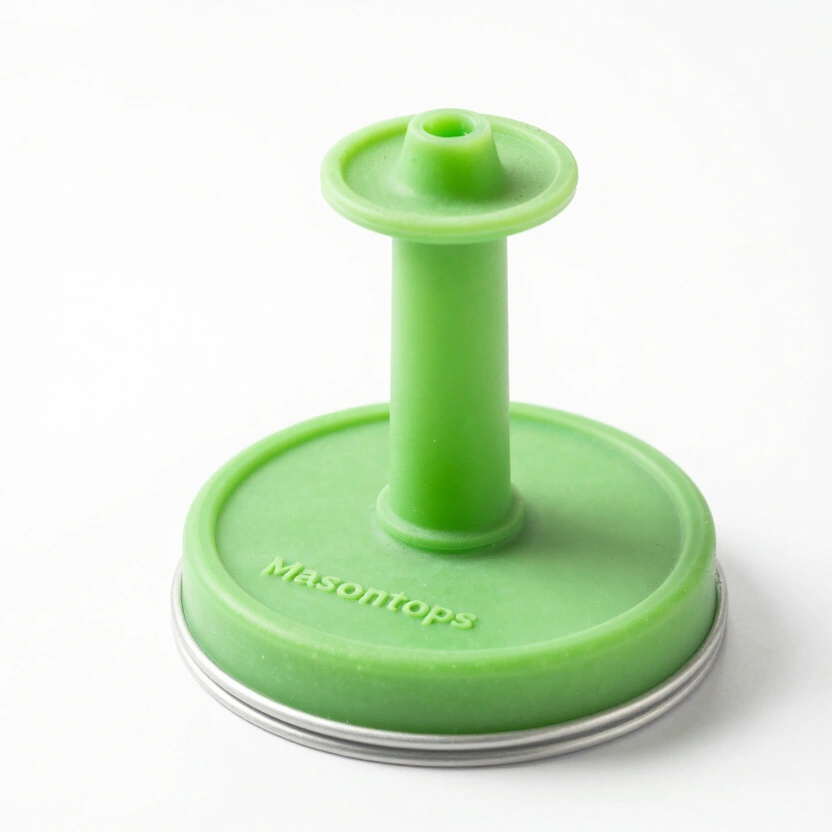
Masontops Pickle Pipe (Airlock Lids)
Waterless silicone airlock lids for easy, low-maintenance mason jar fermentation.
Check Price on Amazon* Affiliate links. Prices last updated March 3, 2026.
Airlock Evolution: Two-Piece vs. S-Shape
The airlock is the “safety valve” of your jar. Its job is to maintain a pressure differential—letting the CO2 escape once it hits a certain threshold while preventing the ambient air from rushing back in.
The S-Shape (Senior) Airlock
This is the classic “twin bubble” design.
- The Physics: It uses a small amount of water to create a trap. As gas pressure builds, it pushes the water into the second chamber until a bubble can “burp” through.
- Pros: You can visually see the “bubbles per minute,” which is an excellent indicator of fermentation activity.
- Cons: They are difficult to clean if the ferment “blows over” (liquid foam enters the airlock). They also have a faster evaporation rate due to the larger surface area of the water.
The Two-Piece (Cylindrical) Airlock
This design uses a floating “cup” inside a larger cylinder.
- The Physics: The gas lifts the cup until it reaches the vent holes.
- Pros: Much easier to clean and slower to evaporate. These hold up better for long-term ferments — a 6-month miso or 3-month kimchi — where an S-shape airlock would need water refills every two weeks.
- Cons: They are taller and can make it difficult to fit jars on refrigerator shelves during the storage phase.
The Rise of Silicone: The “Pickle Pipe” Differential Valve
Never store a silicone airlock without rinsing it first. Dried brine crystals clog the slit valve in days, and unlike a water-lock airlock where you can see the water level drop, a clogged Pickle Pipe fails silently. No bubbles missing. No visual warning. Just a slowly pressurizing jar and, eventually, a lid that pops when you touch it — or worse, mold you didn’t catch until week three.
Most guides present silicone valves as a clean upgrade. They are — except for one failure mode nobody warns about: a clogged slit from dried brine fails silently, with no visual indicator, until you find mold.
In the last decade, we’ve seen a shift toward “waterless” airlocks, pioneered by products like the Masontops Pickle Pipe. These use a medical-grade silicone valve that works on a Pressure Differential.
Inside the silicone nipple is a tiny slit. When the internal pressure of the jar exceeds the atmospheric pressure by a specific amount (usually around 0.5 to 1.0 PSI), the slit opens, and the gas vents. Once the pressure is equalized, the natural elasticity of the silicone snaps the slit shut.
- The Advantage: No water to monitor or refill. No risk of fruit flies being attracted to a pool of water.
- The Disadvantage: You lose the visual feedback of “bubbling.” Also, if the slit becomes clogged with a piece of dried brine, it can fail to vent, leading to a buckled lid or, in extreme cases, a broken jar. For a detailed look at what excessive CO2 pressure does to different vessel types — and the signs that a jar is approaching its safe limit — the fermentation pressure safety guide is worth reading before you scale up batch sizes.
Headspace Management: The CO2 Blanket Theory vs. Reality
Skip the “just leave a little headspace” advice in most beginner guides — it leaves the measurement undefined. One inch of headspace in a wide-mouth quart jar is 47ml of oxygen your bacteria have to displace before the CO2 blanket forms. Two inches is 95ml. That’s a meaningful difference in how long your ferment is vulnerable during the lag phase.
Fair warning: the CO2 blanket is real, but relying on it as your primary oxygen defense will cost you batches. Home kitchens are not perfectly still, sealed containers.
The “CO2 Blanket” — the idea that CO2, being heavier than oxygen, naturally sits on your ferment like a protective fog — is real physics. It is just not reliable physics in a kitchen environment.
While this is true in a perfectly still, sealed container, the reality of a home kitchen is different. Every time you move the jar, or even when the temperature in the room changes, Molecular Diffusion and Convection mix the gases.
- The Ideal Headspace: Aim for 1 to 2 inches of headspace.
- Too much headspace: The bacteria have to produce a massive amount of CO2 to displace all that oxygen. During that time (the “Lag Phase”), mold has a window of opportunity to grow on the surface of your weights.
- Too little headspace: When the ferment becomes active and the vegetables expand, the brine will be pushed up and out of your airlock. This is called a “blowout,” and it creates a sticky mess that can attract pests.
Material Science: Seals and Gaskets
The seal is the most overlooked component of the jar. If your seal is leaking, your expensive airlock is useless.
1. Natural Rubber
Used in traditional Fido-style jars.
- The Problem: Rubber is an organic material. Over time, it dries out, cracks, and becomes porous. It can also absorb the smells of garlic and onions, which are impossible to remove.
- The Solution: Replace your rubber gaskets every 12 months.
2. Silicone Gaskets
- The Advantage: Silicone is non-porous and handles boiling water without deforming — you can sterilize it in a pot and drop it straight back on the jar. It also creates a “softer” seal that conforms better to minor imperfections in the glass rim.
Troubleshooting Your Seal: The “Vacuum Test”
How do you know if your jar is actually airtight? Don’t wait for mold to find out.
- The Soapy Water Test: While the ferment is active and bubbling, spray a small amount of soapy water around the rim and the base of the airlock. If you see bubbles forming (outside of the airlock), you have a leak.
- The Cooling Test: Take a jar with a small amount of hot water in it, seal it, and let it cool. If the seal is good, it should create a slight vacuum. If you can easily pop the lid without any resistance, your gasket is failing.
High-Precision Lab Hardware

YINMIK Digital Spear pH Meter
Specialized pH meter with a spear probe for measuring solids like cheese or thick mashes.
Check Price on Amazon
Artcome 10-Pack Glass Weights
Bulk set of heavy glass weights with easy-grip handles for large mason jar setups.
Check Price on Amazon
Westmark Glass Fermentation Weights
Heavy-duty glass weights from Westmark to ensure vegetables stay under the brine.
Check Price on Amazon* Affiliate links. Prices last updated March 3, 2026.
The Verdict: Don’t Starve the Science
A 150g glass weight and a properly seated silicone gasket cost under $20. That’s it. Those two pieces eliminate the two most common fermentation failures — floating food and leaking seals. The hardware matters because the physics is unforgiving: any gap in the anaerobic seal is a door that mold walks through, and mold does not knock first.
The Masontops Pickle Pipe’s silicone differential valve is the closest thing to a set-and-forget anaerobic solution available for Mason jars — it vents at around 0.5 PSI and reseals instantly without any water to monitor. For the chemistry the seal protects, The Science of Brine Ratios explains why the exact salt percentage determines everything from texture to safety.
Frequently Asked Questions
My airlock stopped bubbling after 3 days — is the ferment done?
Almost certainly not. Active gas production typically runs for 3-7 days, then drops sharply as the bacteria shift from rapid growth into the maturation phase. They are still acidifying the brine — just quietly. Stop watching the bubbles. Use a pH meter instead. When you hit pH 4.0 or below, you have a safe, mature ferment.
What is suck-back and how do I prevent it?
Suck-back happens when the jar cools and the gas inside contracts, creating a vacuum that pulls the airlock water into the brine. Not a safety issue, but it breaks the seal. The fix: before refrigerating, swap the airlock for a solid lid. Alternatively, use a two-piece cylindrical airlock — its design is far more resistant to suck-back than an S-shape.
Can I use a solid lid and burp it manually?
You can. The problem is that you have to be there every time. During peak activity (days 2-4), a sealed jar can build pressure fast enough to dome a Mason lid within hours. Miss one check, and you have a mess or a failed seal. More critically, every time you burp, you introduce fresh oxygen and reset the CO2 blanket. Mold gets a new window every single time.
Are ceramic fermentation weights safe to reuse indefinitely?
Only if they are fully glazed. Unglazed ceramic is porous — it absorbs brine, food particles, and microbial residue that standard washing cannot remove. Check your weights for unglazed surfaces. If you find them, boil the weights for 20 minutes between uses, or replace them with glass weights like Masontops Pickle Pebbles, which are non-porous and dishwasher safe. For a full breakdown of weight options, see the Best Fermentation Weights Review.
Related Articles
Botanical Fermentation: How Herbs and Spices Influence Microbial Growth and Flavor Development
Explore the bidirectional relationship between botanicals and microbes. Learn how herbs and spices act as antimicrobial filters and enhance the bioavailability of antioxidants.
Managing the Pressure: A Scientific Guide to Preventing Fermentation Explosions and Geysers
Master the physics of fermentation pressure. Learn how to prevent bottle bombs, calculate CO2 volumes, and safely handle over-carbonated brews.