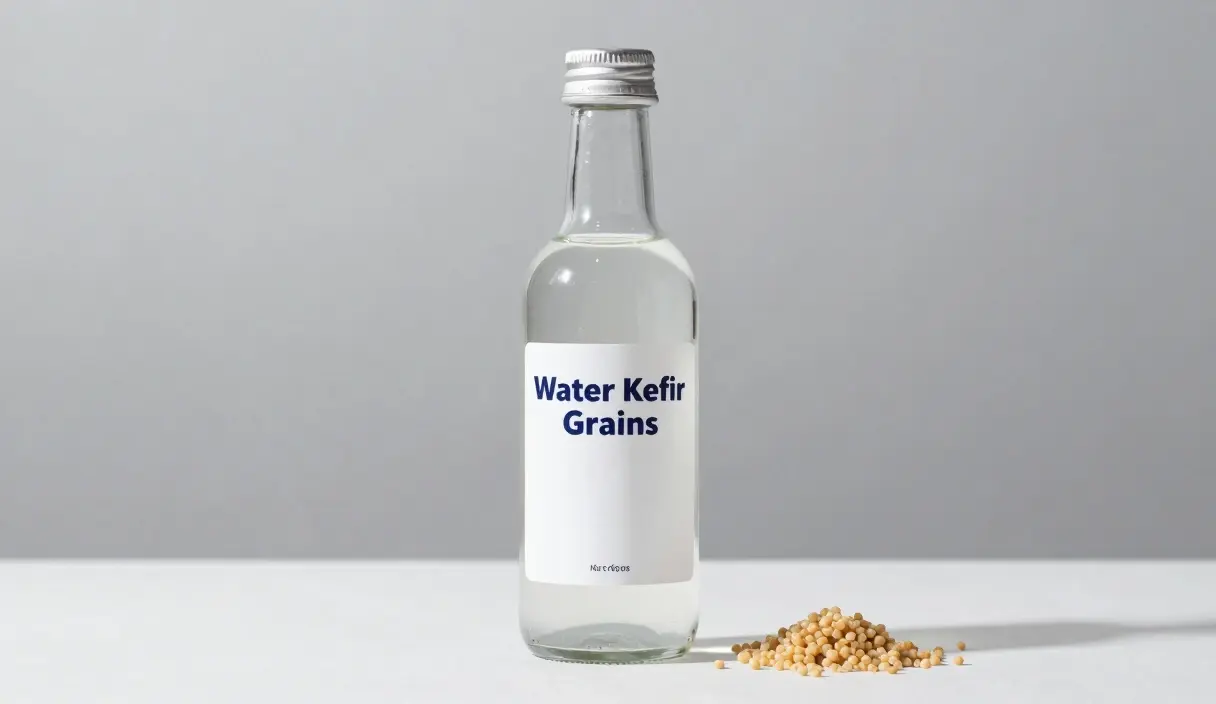
Water Kefir Grains Care: Troubleshooting Growth and Health
Why are your water kefir grains not growing? We explore the science of grain health, mineral balance, and how to rehabilitate stressed cultures.
Contents
In 2003, archaeologists excavating the Xiaohe Cemetery in China’s Xinjiang region found something astonishing on the necks and chests of Bronze Age mummies buried around 1600 BC: traces of kefir-style fermentation. Cheese proteins. Grain residues. The evidence suggested that these ancient people understood — at some biological level — how to cultivate and preserve living microbial cultures. They valued those cultures enough to bury them with the dead. The grains were precious.
That history matters when your water kefir grains not growing situation is sitting on your counter. These aren’t just a starter culture you bought off the internet. They’re a line of descent that stretches back millennia, through desert scrub and mountain villages, to a biology that is genuinely ancient. And they’re telling you something is wrong. This guide helps you hear it.
The Anatomy of the Crystal: What are the Grains?
To care for water kefir grains, you must understand what they are made of. A grain is not a single organism; it is a SCOBY (Symbiotic Culture of Bacteria and Yeast) encased in a physical house.
The Dextran Matrix
The structure of the grain is composed of Dextran, a complex polysaccharide.
- The Architect: The bacteria Lactobacillus hilgardii is primarily responsible for weaving this matrix. It takes the sucrose from your sugar water and converts it into this rubbery, protective housing.
- The Residents: Inside this matrix live dozens of other strains of Lactic Acid Bacteria and wild yeasts.
The Growth Loop
Growth occurs when the bacteria produce more dextran than is being worn away by the movement of the liquid. If the bacteria are stressed, they stop building the house, and the grains begin to shrink.
Picture a mason laying bricks in a rainstorm — calcium is the mortar. Without it, nothing binds. Lactobacillus hilgardii faces the same problem in mineral-depleted water: it keeps trying to build dextran and keeps failing.
The Mineral Mandate: The Key to Structure
Unlike Milk Kefir, water kefir grains are entirely dependent on you to provide the minerals they need to build their dextran matrix.
The Essential Trio: Calcium, Magnesium, and Potassium
- Calcium: Essential for the structural integrity of the cell walls. Without it, grains become soft and “mushy.”
- Magnesium: A cofactor for the enzymes that drive the fermentation process.
- Potassium: Helps regulate the osmotic pressure inside the grain.
Sources of Minerals
- Unrefined Sugar: Using Brown Sugar or Rapadura provides a natural boost.
- Sea Salt: A tiny pinch of high-quality sea salt per quart provides trace minerals.
- Eggshells: A sterilized eggshell provides a slow-release source of calcium.
Most troubleshooting guides stop at “add minerals.” The specific order matters: fix calcium deficiency first, then magnesium. Soft, mushy grains almost always indicate calcium starvation before anything else.
Distilled water is the silent killer here. Not chlorinated water — distilled. Strip every mineral from the water and you hand the grains a futile task: building a dextran house with zero raw material. Grains fed distilled water alone shrink within two batches, regardless of sugar quality or temperature.
The “Sugar Stall”: Fueling the Fire
Sugar is the only energy source for your grains. If you get the sugar wrong, the colony will eventually collapse.
The Concentrated Sugar Trap
- The Reality: High concentrations of sugar create Osmotic Stress, pulling water out of the grains.
- The Target: Stick to a ratio of 1/4 cup of sugar per 1 quart of water.
Why White Sugar is a Problem (Long-term)
White sugar is 100% fuel but 0% nutrients. Over 3-4 generations, grains fed only white sugar will begin to shrink and lose their “fizzing” power.
Water Quality: The “Invisible” Killer
Municipal water is designed to be sterile, which is a direct threat to grains.
Chlorine and Chloramine
If your grains are exposed to chlorine, the Lactobacillus building the dextran matrix will die first.
- The Fix: Use only spring water or filtered water treated with catalytic carbon.
Softened Water
- The Problem: These systems replace minerals with sodium. This will cause the grains to “melt” and disintegrate.
The Rehabilitation Protocol: Saving Stressed Grains
If your grains have stopped growing, follow this 3-batch “Rehab Cycle.”
- Batch 1 (Mineral Boost): Use 1 quart of spring water and 1/4 cup of dark brown sugar. Add a clean, crushed eggshell. Ferment for 24 hours. Discard liquid.
- Batch 2 (Rest): Repeat Batch 1, but move the jar to a cooler spot (68°F). Discard liquid.
- Batch 3 (Verification): Check the grains. Are they firm? Do they sound like “clinking glass” when stirred? If yes, the matrix is rebuilding.
I ran this exact protocol on grains that had been fed nothing but white refined sugar for two months. By batch three, they were producing audible CO2 again. The turnaround was faster than I expected.
These are the tools that ensure a return to peak grain health:
Kefir Grain Recovery Tools
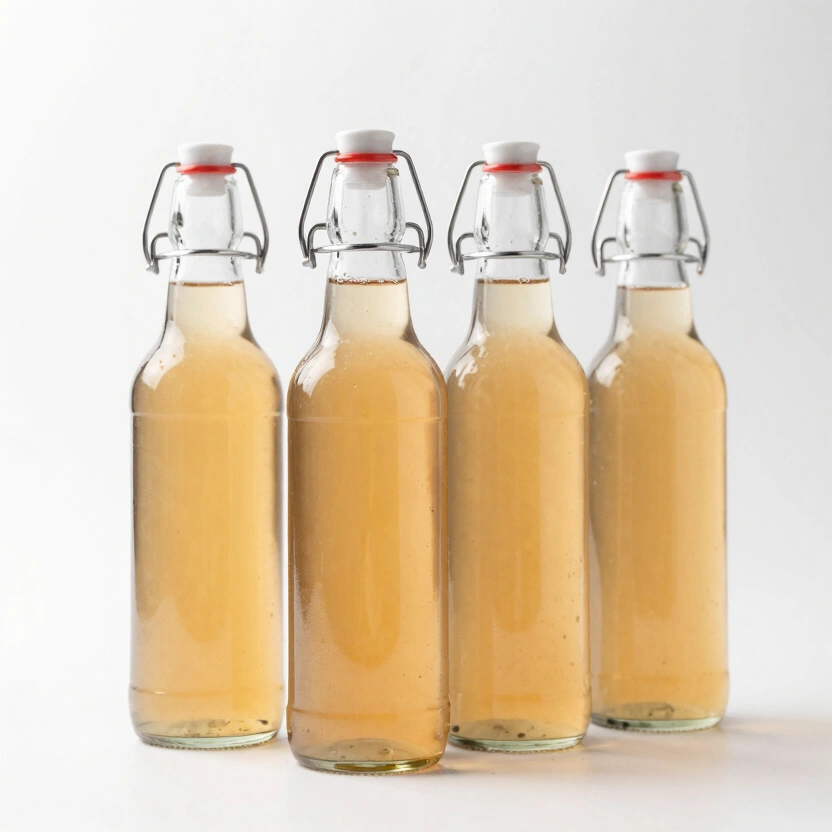
myFERMENTS Kombucha Starter Set
Large 4.25L jar set with swing-top bottles — ideal for first kombucha or kefir batches.
Check Price on Amazon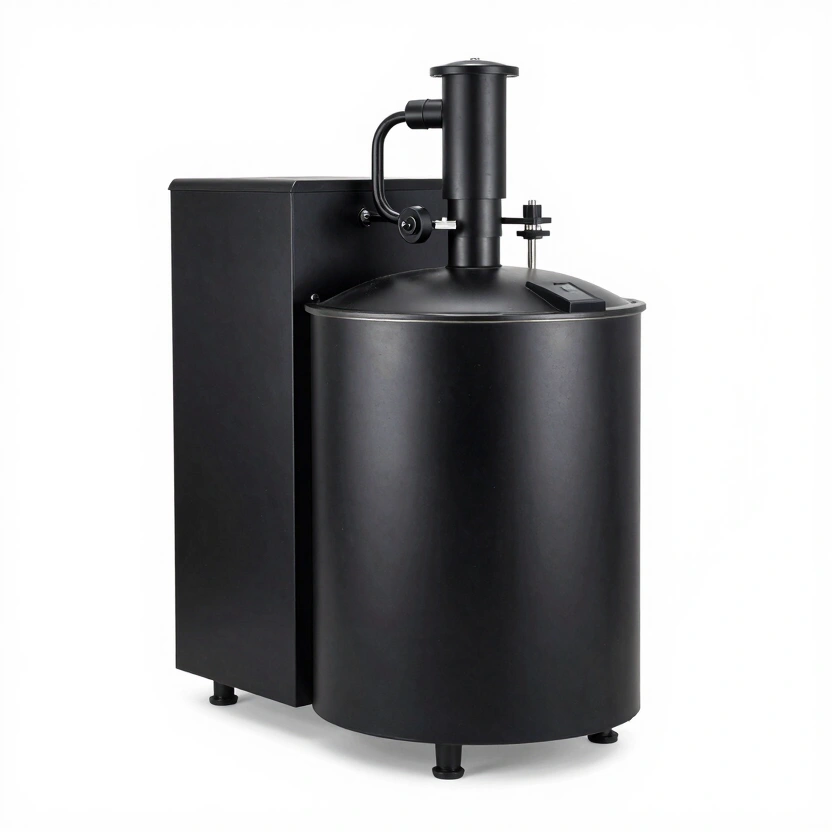
Automatic Black Garlic Fermenter (6L)
Fully automatic machine with intelligent temperature and humidity control for perfect black garlic.
Check Price on Amazon
Artcome 10-Pack Glass Weights
Bulk set of heavy glass weights with easy-grip handles for large mason jar setups.
Check Price on Amazon* Affiliate links. Prices last updated March 3, 2026.
Signs of Death: When to Say Goodbye
- The Mush Test: A dead grain will turn to mush like overcooked rice when squeezed.
- The Putrid Smell: If the jar smells like sewage or rotting eggs, the “bad” bacteria have won.
- The Transparency Shift: If grains turn from translucent to a dull, opaque grey, the colony has likely perished.
Thermal Optimization: The Metabolic Balance
- The Sweet Spot: 75°F to 80°F (24°C-27°C). At this temperature, growth is maximized.
- The Cold Stall: Below 65°F (18°C), growth stops entirely.
- The Heat Stroke: Above 85°F (29°C), the yeast can become hyper-active, outcompeting the bacteria.
Check your thermometer before blaming the grains. A kitchen counter that reads 74°F in the morning can hit 88°F by afternoon near a south-facing window. That 14-degree swing is enough to flip the microbial balance from bacterial dominance to yeast overdrive within a single batch cycle.
Long-Term Storage: How to Take a Break
- Option 1: The Fridge Nap (Short-term): Up to 2 weeks in sugar water.
- Option 2: Drying (Long-term): Rinse and air-dry until hard crystals. Store in the freezer for 1-2 years.
- Option 3: Freezing: Cover with a 50/50 mix of sugar and water and freeze.
Rehydrating Dried Grains: The Awakening
- Soak: Place 1 tbsp of dried grains in 1 cup of spring water with 1 tbsp of brown sugar.
- Wait: Change the water every 24 hours until grains produce gas and have a clean smell.
Healthy, mineral-rich grains that are working properly will actually clink against the glass when you stir them — the dextran matrix becomes hard and dense when calcium is adequate. If your grains are silent and soft, they’re telling you the mineral balance is off. Fix that before anything else.
For the full comparison of water vs. milk kefir grains and what distinguishes each culture’s needs, see Water Kefir vs. Milk Kefir.
Calcium and magnesium are not optional additions — they are the structural raw material the dextran matrix physically cannot form without. Grains fed distilled water, however pristine, are grains on a slow countdown. Use spring water, add a pinch of unrefined salt, and check the Wild Yeast Harvesting Guide if you’re ready to take the finished kefir into natural carbonation.
Frequently Asked Questions
Why are my water kefir grains floating instead of sinking?
Floating is caused by trapped CO2 gas clinging to the surface of the grains — it’s a sign of active fermentation, not a problem. Healthy, CO2-producing grains float all the time. The issue would be if they never float and never produce bubbles at all, which indicates the yeast population is dormant.
Can I use honey instead of cane sugar to feed water kefir grains?
Use it only as a partial addition — no more than 20% of the total sugar by weight. Honey’s antimicrobial properties can suppress the Lactobacillus hilgardii responsible for building the Dextran matrix if used at full concentration. Get your grains stable and growing on cane sugar first, then introduce honey gradually if you want to experiment with flavor.
My water kefir tastes too sweet after 48 hours. What’s actually happening?
Either fermentation time is too short or you have too few grains relative to the sugar volume. A grain-to-sugar ratio of 1/4 cup grains per 1/4 cup sugar in 1 quart of water, fermenting at 75°F–80°F for 24–48 hours, should consume most of the sugar. If it’s still sweet at 48 hours, your grains are stressed — run the 3-batch Rehabilitation Protocol above. Sweetness is the grain telling you it doesn’t have the metabolic capacity to process the sugar load you’re providing.
Is it safe to use tap water for water kefir if I let it sit overnight?
Sitting overnight evaporates free chlorine but does nothing about chloramine, which most modern municipal water systems use instead. Chloramine requires a catalytic carbon filter or a campden tablet (potassium metabisulfite) to neutralize. Spring water is the simplest, safest option. See our Water Quality and Chlorine Guide for the full breakdown.
What does “clinking glass” sound like and why does it matter?
When you stir healthy, mineral-rich water kefir grains with a spoon, the dense dextran matrix produces a faint glass-on-glass sound. It indicates adequate calcium content in the grain structure — the matrix is hard and solid. Soft, mushy grains make no sound at all. This simple physical test is one of the fastest ways to assess grain health without any equipment. If your EZTOCH pH meter is showing low acidity and your grains are silent when stirred, you’re facing a double deficiency — mineral and microbial both.
Related Articles
The Sauerkraut Masterclass: Achieving the Perfect Crunch with Precision Ratios
Master the ancient art of sauerkraut. Learn the science and step-by-step techniques to create the perfect crunchy, probiotic-rich kraut at home.
The Chemistry of Safety: Why pH 4.6 is the Critical Limit in Fermentation
A definitive guide to pH safety in home fermentation. Learn why 4.6 is the critical limit for preventing botulism and how to master acidity.
Fermenting Cauliflower & Broccoli: How to Avoid the 'Stink' Factor
Fermented cauliflower is a probiotic delicacy but can have a pungent sulfur smell. Learn the professional techniques to control odor and maintain crunch.