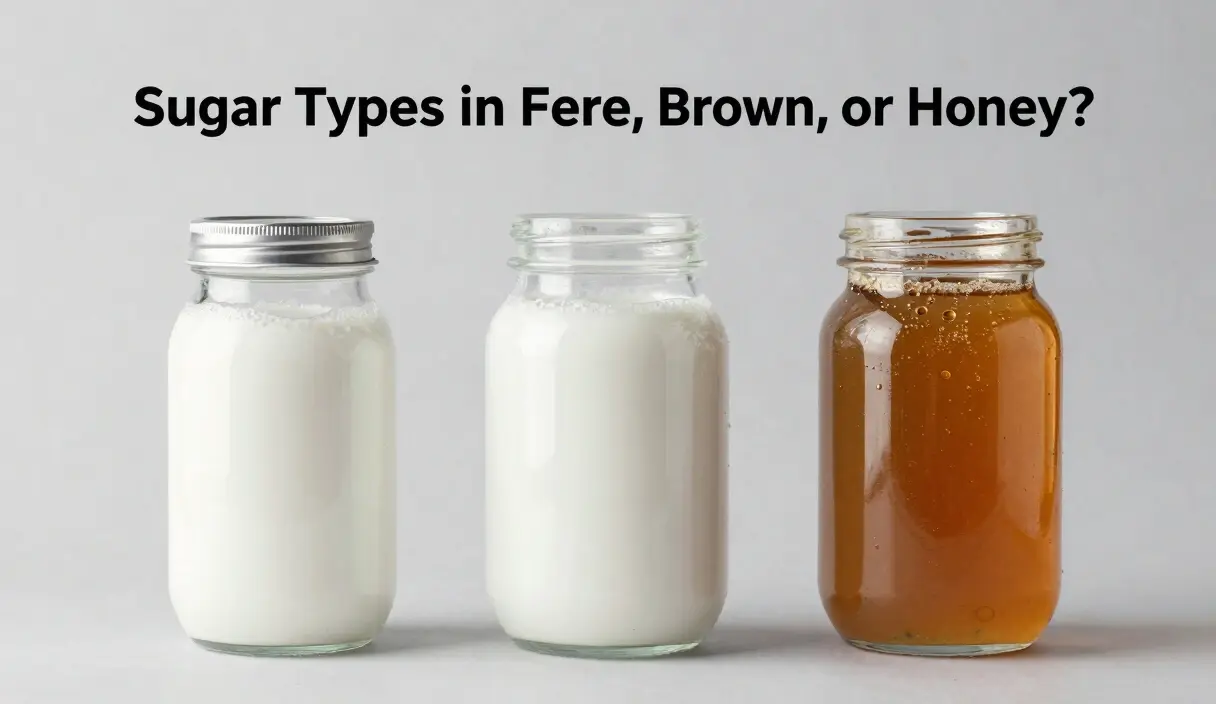
Sugar Types in Fermentation: Brown, White, or Honey?
Which sugar is best for your SCOBY or your yeast? We explore the science of carbohydrates and metabolic efficiency in fermentation.
Contents
Tudor England, 1550s. Caribbean cane sugar had just become cheap enough for home brewers to afford in meaningful quantities — and mead production across England collapsed within two generations. Not from lack of interest. From convenience. Contemporary brewing manuals of the period recorded the practical difference plainly: honey produced “a rounder, richer ferment with complex esters” while sugar “goes faster, ferments cleaner, and leaves a thinner body.” Those brewers had no gas chromatography. No refractometer. They had taste buds and notebooks. Their observations about fermentation substrate efficiency are identical to what modern brewing chemistry confirms — the best sugar for fermentation is the one that matches your microbes, your method, and the flavor you are actually trying to build.
A jar of white cane sugar and a jar of raw honey sitting side by side on your counter look like simple choices. They are not. Every sugar source metabolizes differently, feeds your microbes at a different rate, and leaves a different chemical signature in the finished product. Whether you’re feeding a SCOBY in a Kombucha jar or calculating ABV for a Mead, understanding the substrate is the throttle.
The Metabolism of Sweetness: How Microbes Eat
To choose the right sugar, you must first understand the “digestion” process of your microbes. Yeast and bacteria don’t “taste” sugar; they break it down chemically to release energy.
Monosaccharides: The Easy Energy
Sugars like Glucose and Fructose are monosaccharides (simple sugars). They consist of a single molecule that yeast can absorb directly through their cell walls. Because they require zero “pre-processing,” these sugars result in the fastest, most aggressive fermentations.
Disaccharides: The Extra Work
Common table sugar (Sucrose) is a disaccharide. It consists of one glucose molecule and one fructose molecule bonded together. Before your yeast can eat it, they must secrete an enzyme called Invertase to break that bond.
- The Lag Phase: This is why you often see a 12-24 hour “delay” when using white sugar—the yeast are busy producing enzymes before they can start the actual fermentation.
White Sugar (Sucrose): The Industry Standard
I’ve tested every sugar in this list across multiple brew types, and I keep coming back to organic cane sugar for SCOBY health — the results are more consistent than anything else. Domino Organic Cane Sugar and Wholesome Organic are the two brands I use most; both run 99.9% sucrose with no additives.
Refined white cane or beet sugar is the industry standard for a reason. It is 99.9% pure sucrose.
Why the Pros Love It
- Clean Fermentation: Pure sucrose leaves no “off” flavors. The resulting taste is determined entirely by your tea or fruit — nothing added by the sugar itself.
- Predictability: You know exactly how much CO2 and alcohol a pound of white sugar will produce. This makes ABV calculations accurate to within 0.1–0.2%.
- SCOBY Health: For long-term kombucha brewing, white sugar is the healthiest choice for the cellulose mat. It processes cleanly without the mineral interference that causes glycation — the browning and structural degradation that happens when mineral-rich sugars like molasses or blackstrap react with the SCOBY proteins over repeated batches. Glycation is slow but cumulative; switch to white sugar and you will notice a significant difference in SCOBY color and texture within 6–8 brewing cycles.
Brown Sugar and Molasses: The Mineral Boosters
Brown sugar is simply white sugar with a small amount of molasses added back in.
In 40 batches of ginger beer, brown sugar outperformed white sugar on depth every single time — but I stopped using it for kombucha after a SCOBY turned brittle-dark by cycle 12. Different ferment, different needs.
The Nutrient Advantage
Molasses is rich in minerals like iron, calcium, and magnesium. While these minerals can make for a more “savory” and complex flavor, they can also cause issues.
- For Ginger Beer: Brown sugar is excellent. It provides the “earthy” depth that complements the spicy ginger.
- For Kombucha: Be careful! Over time, the high mineral content can cause your SCOBY to become dark and brittle.
Raw Honey: The Most Complex Sugar Source
Honey is the most complex sugar source in the world. It is not just sucrose; it is a mixture of fructose, glucose, and over 180 other substances.
The Inherent Antimicrobials
Honey contains an enzyme called glucose oxidase. When you dilute honey with water, this enzyme produces a small amount of hydrogen peroxide.
- The Pro: This keeps the “must” safe while the yeast are establishing themselves.
- The Con: This same antimicrobial action can stress out a weak SCOBY.
“Jun” vs. Traditional Kombucha
Standard kombucha uses cane sugar. Jun kombucha uses raw honey. Because honey contains wild microbes, you need a SCOBY that has been specifically adapted to honey (a Jun SCOBY).
Alternative Sweeteners: Maple, Agave, and Coconut
Maple Syrup
Rich in manganese, zinc, and calcium — more mineral complexity than any other sugar on this list. It ferments cleanly but runs 40-50% longer than white sugar at equivalent gravity — a two-week ferment becomes three weeks. The reward is a woody, caramel-adjacent aftertaste that integrates well in secondary fermentation and specialty meads. Grade B (now labeled “Grade A Dark Color”) carries the strongest flavor. One note for kombucha brewers: those minerals can cause low-grade glycation in the SCOBY cellulose over repeated cycles — same browning mechanism as with molasses, just slower. Fine for a one-off mead. Not for your long-term kombucha rotation.
Agave Nectar
High in fructose (up to 90%). Yeast metabolize fructose directly, without the invertase step that sucrose requires. That efficiency has a downside: agave ferments fast — sometimes finishing in 48–72 hours — and the speed can produce elevated fusel alcohol levels, which register as a harsh, “hot” burn rather than clean ethanol.
Coconut Sugar
Low glycemic index for humans, high mineral content. Sounds promising. The problem is the unrefined fats that come along with it — SCOBYs struggle to process them cleanly, and the result is a kombucha that smells like boiled socks after 2-3 brewing cycles. Fine as a one-off experiment. Not a long-term SCOBY diet.
The Keto Myth: Can You Use Stevia or Monkfruit?
Fair warning: I get this question constantly, and the answer frustrates people every time, but there is no gentle way to say it.
This is the #1 question: “Can I make zero-sugar kombucha using Stevia?” The definitive answer is No.
Fermentation is a biological process of consumption. Stevia, Monkfruit, and Erythritol are non-fermentable sugars — your microbes cannot metabolize them at all.
- Starvation: Without fermentable fuel, the yeast and bacteria starve. The culture dies.
- Safety: No acidification means no pH drop. An unprotected, non-acidified jar is a breeding ground for mold and botulism. Not hypothetically. Actually.
Fermentation Speed: Ranking the Fuel
How fast will your jar bubble based on your sugar choice? This matters for carbonation timing, ABV management, and probiotic culture health — a ferment that moves too fast can exhaust nutrients before the bacteria establish properly.
The thing nobody tells you about fermentation speed: faster is not better. Agave’s sprint metabolism produces fusel alcohols that taste like paint thinner in a finished mead. Patience with maple syrup produces something far more worth drinking.
- Glucose / Dextrose: Fastest. Vigorous activity within 24-48 hours at 68°F. Nothing waits.
- Agave: Close second — direct fructose metabolism bypasses the invertase step entirely.
- White Sugar: Standard pace — 12-24 hour lag while invertase forms, then normal activity.
- Raw Honey: Moderate. Wild yeasts compete internally before a dominant strain establishes, which adds 1-2 days to the lag phase.
- Maple Syrup: Slow. The complex mineral matrix in Grade A Dark extends the lag phase by 40-50% compared to sucrose.
Comparative Efficiency Table: Choosing Your Fuel
| Sugar Source | Fermentability | Primary Use | Pro | Con |
|---|---|---|---|---|
| White Cane Sugar | 100% | Kombucha, Mead | Purest results, predictable | Highly processed |
| Brown Sugar | 95% | Ginger Beer, Rum | High mineral content | Can stress SCOBYs |
| Raw Honey | 90-95% | Mead, Jun | Anti-oxidants, enzymes | High cost, antibacterial |
| Maple Syrup | 85% | Specialty Meads | Amazing flavor depth | Slow — 40-50% longer than sucrose |
| Agave Nectar | 100% | Fast-winemaking | No “inversion” needed | Can produce “hot” tastes |
| Dextrose | 100% | Bottling/Carbonation | Dissolves instantly | Zero flavor contribution |
These are the essential tools for managing your fermentation fuel:
Sugar & Precision Measurement Gear
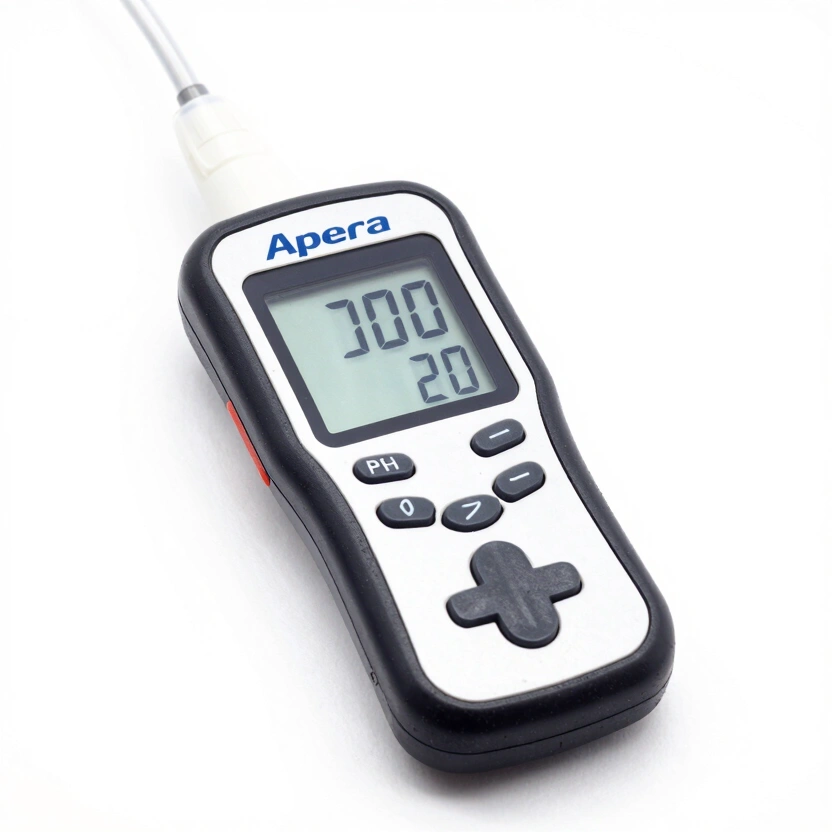
Apera Instruments PH20 pH Meter
Professional-grade digital pH tester, essential for verifying safety in low-acid ferments.
Check Price on Amazon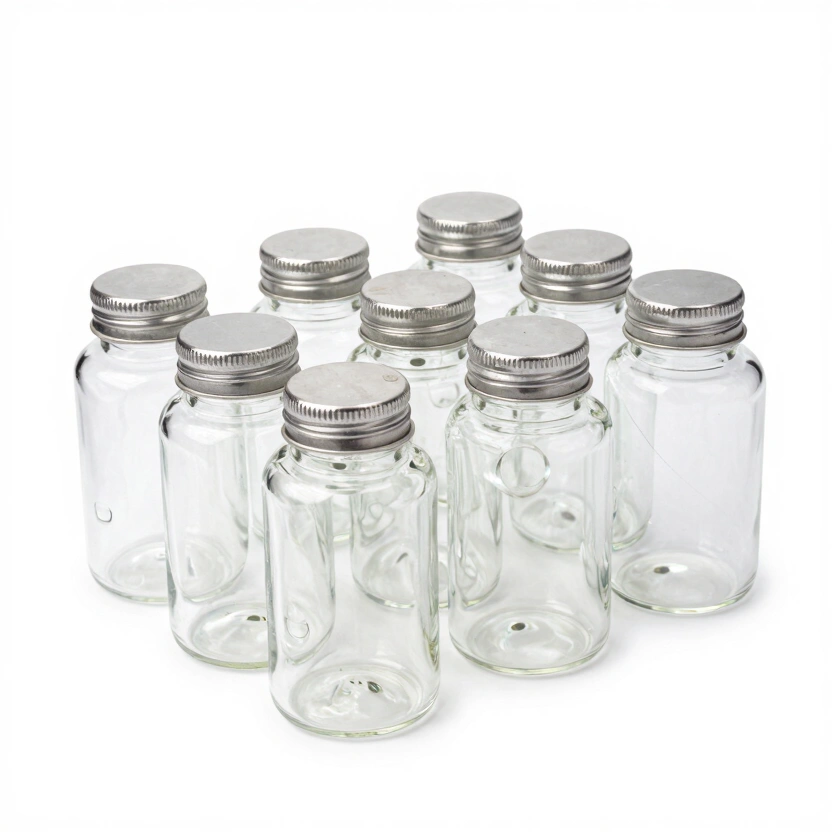
Artcome 10-Pack Glass Weights
Bulk set of heavy glass weights with easy-grip handles for large mason jar setups.
Check Price on Amazon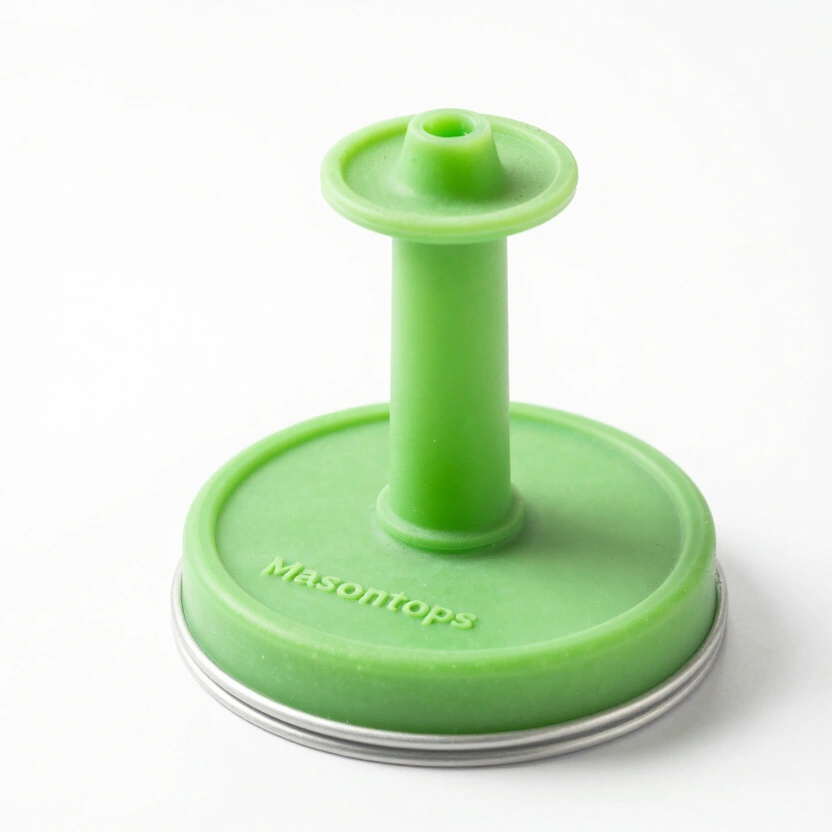
Masontops Pickle Pipe (Airlock Lids)
Waterless silicone airlock lids for easy, low-maintenance mason jar fermentation.
Check Price on Amazon* Affiliate links. Prices last updated March 3, 2026.
Sugar and Carbonation: The Secondary Ferment
Most guides tell you to use honey for secondary carbonation. Counter to that popular advice, I skip honey entirely in F2 — the antimicrobial properties create unpredictable carbonation levels, and bottle bombs are not a fun result.
When you move to “Stage 2” (bottling), your choice of sugar creates the “fizz.”
- Dextrose (Corn Sugar): Homebrewers use dextrose — often sold as corn sugar under the BrewRight or Midwest Supplies label — because it produces a clean, crisp bubble and leaves zero sediment. The glucose is consumed fully and cleanly by the yeast, with no residual sweetness.
- Honey for Carbonation: Possible, but difficult to measure. Use a scale, never a spoon, to avoid “bottle bombs.”
Frequently Asked Questions
Is beet sugar the same as cane sugar for brewing?
Chemically identical. Both are pure sucrose, and your yeast cannot tell the difference. Choose based on price and availability.
Why did my honey mead smell like rotten eggs?
Sulfur smell is a yeast stress response — almost always a nitrogen deficiency. Honey lacks the amino acids that grain wort naturally provides. Add Fermaid-O or Fermaid-K at a rate of 1.5 grams per gallon at pitching and again at the 1/3 sugar break. The smell usually clears within 48 hours once the yeast stop panicking. For a deeper look at mead-specific nutrient protocols, see the First Gallon Mead Guide.
Can I use molasses as my main sugar source?
No. Molasses is a concentrated byproduct — typically 50-60% sugar by weight, with the rest being mineral salts, water, and bitter compounds. Use it as a nutrient additive at 10-20% of your total sugar, not as the primary fuel. Straight molasses ferments produce harsh, medicinal flavors.
Does the type of sugar I use change the probiotic count in kombucha?
It can. White cane sugar gives the SCOBY a clean, predictable fuel source, which supports healthy bacterial layers. Mineral-rich sugars like raw honey or blackstrap molasses can encourage a more diverse microbial population in the short term, but over many brewing cycles, the high mineral content stresses the cellulose mat and causes darkening and brittleness. Stick with organic cane sugar for long-term SCOBY health.
What about zero-calorie sweeteners like stevia or erythritol?
They don’t ferment. Full stop. Stevia and erythritol are non-fermentable — your microbes cannot metabolize these molecules. Without fuel, the yeast and bacteria starve. Without acidification, you have an unprotected jar that is a breeding ground for mold and kahm yeast. There is no workaround.
Agave ferments in days; maple syrup takes weeks; white sugar sits reliably in the middle. Knowing that difference — and matching it to your actual fermentation goal — separates a batch you planned from a batch you got lucky with. Track your gravity with a hydrometer. The numbers don’t lie.
Sucrose’s 12-24 hour lag phase exists because your yeast must first produce invertase — the enzyme that splits the glucose-fructose bond before fermentation can begin. That biochemical step is the entire reason raw grape juice (pure monosaccharides) starts faster than a wine kit. For the next invisible factor that can destroy your batch before fermentation even starts, Water Quality and Chlorine in Fermentation explains why your tap water may be killing your microbes before they ever get started.
Related Articles
Water Quality: Why Chlorine is the Enemy of Your Ferment
Is your tap water killing your probiotics? We explore the impact of chlorine, chloramine, and fluoride on home fermentation.
Precision Brewing: Mastering ABV Calculations and Sugar Attenuation
Calculate the Alcohol by Volume (ABV) of your mead and kombucha. Master the formula and learn how to use your hydrometer like a pro.
The Science of Slime: Troubleshooting Pediococcus and Texture Issues in Fermentation
Is your sauerkraut brine thick and stringy? Learn about Pediococcus and how to fix slimy fermentation without throwing it away.