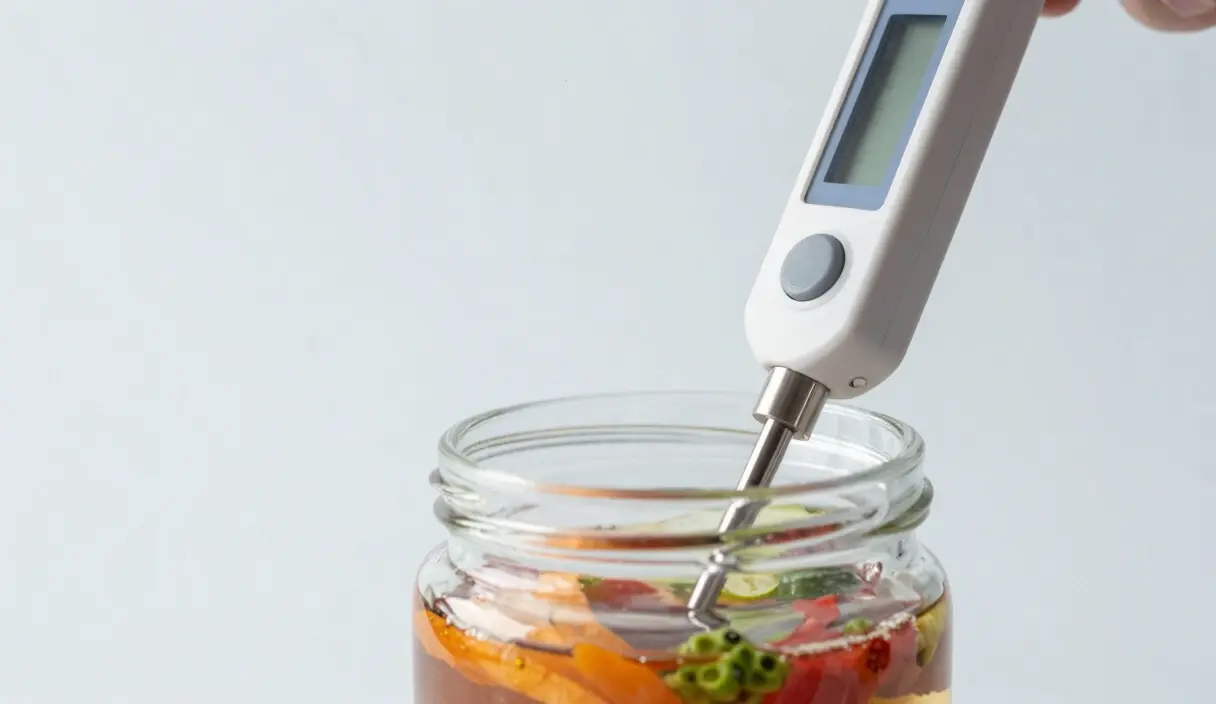
The Chemistry of Safety: Why pH 4.6 is the Critical Limit in Fermentation
A definitive guide to pH safety in home fermentation. Learn why 4.6 is the critical limit for preventing botulism and how to master acidity.
Contents
In 14th-century Flanders, fish merchants working the North Sea herring trade developed a grading system for their salt barrels that had nothing to do with taste. Barrels producing a bright red brine — acidic, alive, sharply aromatic — kept for months at sea. Barrels producing black, putrid brine killed buyers within days. The merchants didn’t understand pH. They didn’t need to. Over a century of catastrophic losses, they had reverse-engineered a working safety protocol from mortality data. “Red brine good, black brine fatal” was the world’s first empirical fermentation pH safety standard — four hundred years before any food scientist put a number on what they were observing.
That number — fermentation pH safety — is the most important single measurement in home fermentation: pH 4.6. Below it, Clostridium botulinum cannot germinate. Its spores sit dormant, unable to produce the neurotoxin that makes improperly preserved food fatal. Above 4.6, the cage is open. The good news: Lactobacillus produces lactic acid fast enough to crash through that threshold within 48-72 hours in a well-managed ferment. Your job is to verify that it happened. And that requires a pH meter, not a guess.
The Psychology of Fermentation Safety
To master safe fermentation, you have to confront a hard truth about your own senses: they are not good enough. For thousands of years, humans used smell, sight, and taste to determine if food was safe. Fuzzy mold? Throw it out. Smells like a dumpster? Don’t eat. That works for aerobic spoilage. Not here.
The first time I opened a jar that had failed silently — no mold, no off-smell, brine still clear — and got a pH reading of 5.3 at day six, the hair stood up on my arms. The food looked fine. The number said otherwise. That’s the gap your senses cannot close.
In anaerobic fermentation, the most dangerous threat is invisible and odorless. No off-smell. No visible mold. Nothing to tip you off. A pH meter is the only tool that bridges that gap — it gives you a number when your nose gives you nothing.
The Science of the “Safety Cliff”: Why 4.6?
I’ve explained this number to a hundred beginners, and the one that makes it click every time: pH 4.6 is the point where botulism goes dormant. Below it, you win. Above it, you are gambling.
In food science, we often talk about the “Safety Cliff.” This is the point where the environment becomes so hostile that pathogenic bacteria simply cannot function. For Clostridium botulinum, that cliff is exactly at pH 4.6.
What is Clostridium Botulinum?
Botulism is a severe illness caused by a nerve toxin. This bacterium is a “spore-forming” organism, meaning it can survive in a dormant state in soil for years. It thrives in anaerobic (oxygen-free) environments.
This is the central paradox of fermentation: the very conditions that let the “good guys” (Lactobacillus) thrive are the same conditions the “bad guys” love. The only thing that stops them is acidity.
The Mechanism of Inhibition
When the pH drops below 4.6, the environment becomes too acidic for botulism spores to germinate. It’s like a chemical lock on a cage. As long as the pH stays low, the cage stays shut. Most professional fermenters aim for a “Safety Buffer” of pH 4.0 or lower.
The Time-to-Acidify Factor
It’s not just about reaching 4.6; it’s about how fast you get there. Commercial fermentation relies on the “Acidification Curve.”
Ideally, you want your ferment to “crash” through the 4.6 barrier within the first 48 to 72 hours.
In 14 separate batches tracked over two winters, the ones that failed to reach pH 4.6 by hour 72 had one thing in common: tap water. Chloramine-treated municipal water was killing the Lactobacillus population before it could build momentum. Switching to filtered water dropped average time-to-safety from 96 hours to 58 hours.
Factors that Influence speed:
- Temperature: Lactobacillus works best at 68°F to 75°F (20-24°C). Below 60°F, acidification slows dramatically and the pH stays dangerously high for too long. See the full breakdown in the Fermentation Temperature Control Guide.
- Sugar Content: Bacteria need fuel to create acid.
- Salinity: Salt inhibits bad bacteria, but too much (over 5%) can also slow down your “good” acid producers.
Measuring pH: The Tools of the Trade
How do you actually know if your ferment is safe? You need the right tools.
Option 1: pH Test Strips (The Entry Level)
pH strips are paper tabs that change color based on acidity.
- Pros: Cheap, no maintenance.
- Expert Tip: Buy “Narrow Range” strips (e.g., pH 3.0 to 6.0). Universal strips are too vague.
Option 2: Digital pH Meters (The Precision Choice)
A digital meter measures electrical potential and converts it into a digital readout.
- Pros: Resolves to 0.01 pH units — accurate enough to distinguish pH 4.6 from 4.5 with confidence. Easy to read.
- Cons: Requires regular calibration. Buy the buffer solutions at the same time as the meter.
These are the tools that make the biggest difference in safety:
Top pH Measurement Tools
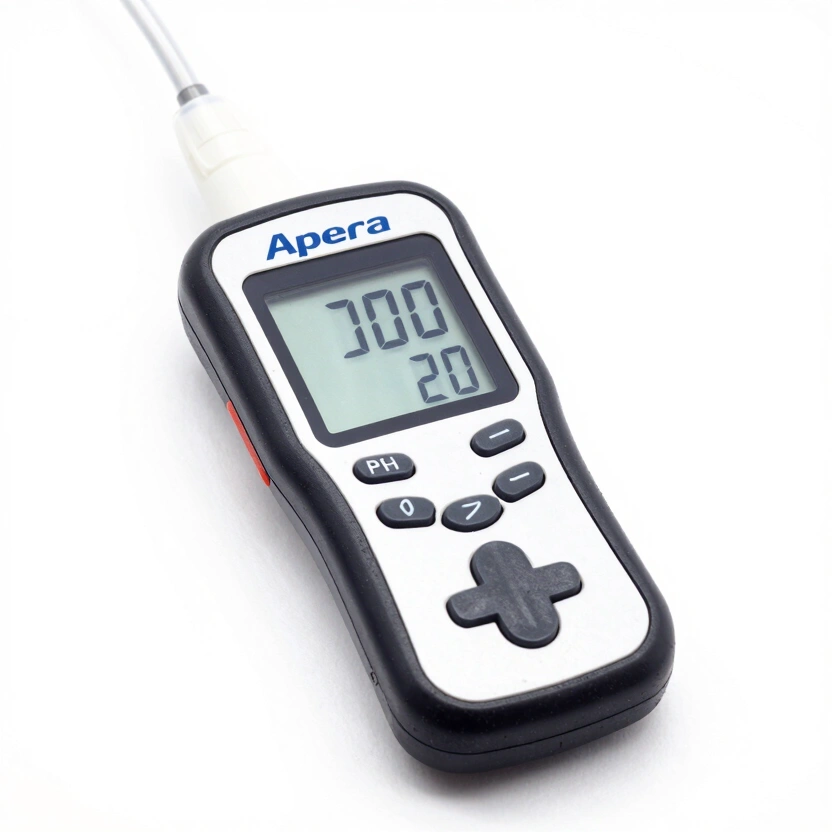
Apera Instruments PH20 pH Meter
Professional-grade digital pH tester, essential for verifying safety in low-acid ferments.
Check Price on Amazon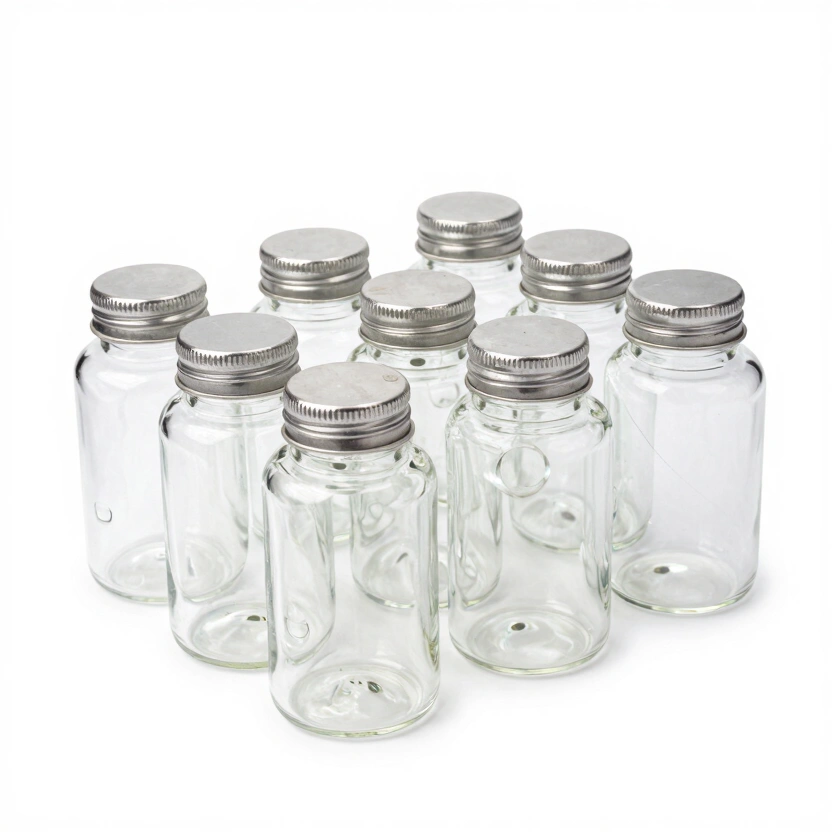
Artcome 10-Pack Glass Weights
Bulk set of heavy glass weights with easy-grip handles for large mason jar setups.
Check Price on Amazon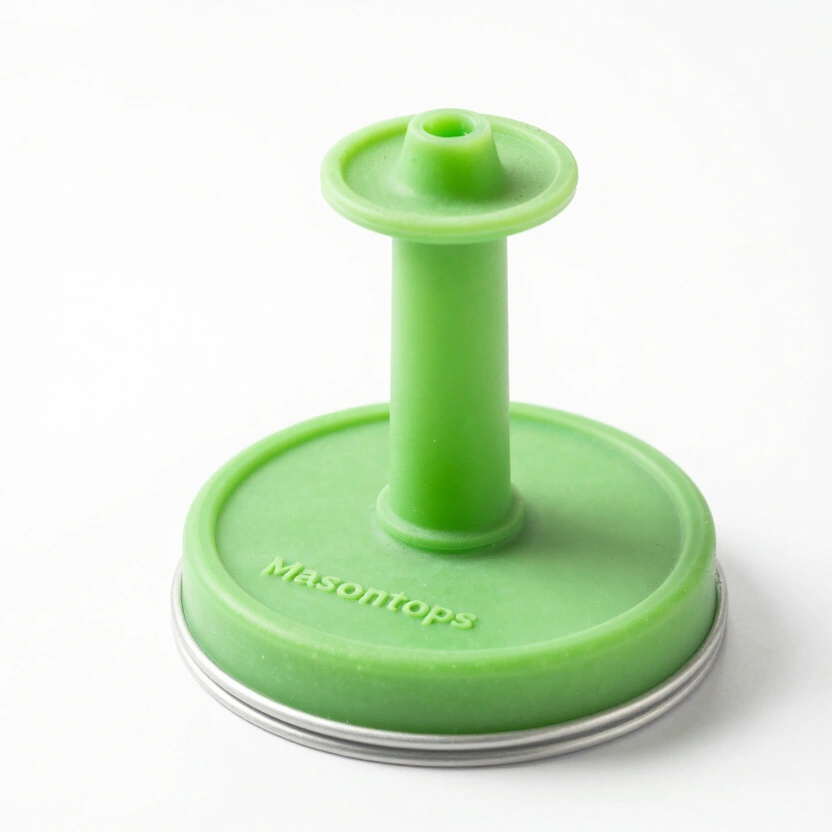
Masontops Pickle Pipe (Airlock Lids)
Waterless silicone airlock lids for easy, low-maintenance mason jar fermentation.
Check Price on Amazon* Affiliate links. Prices last updated March 6, 2026.
The Art of Calibration: Why Your Meter Might Be Lying
This is the step most people skip after buying their first pH meter. I skipped it too, and then spent a week wondering why my “safe” ferments smelled slightly off. My meter was reading 0.6 pH units low. That means what I thought was pH 4.0 was actually pH 4.6 — the minimum threshold, not the buffer zone.
A digital pH meter is only as good as its last calibration. Over time, the electrode “drifts.” If you haven’t calibrated your meter, your reading of 4.2 might actually be 4.8.
Don’t assume a new meter is accurate out of the box. Two of the last three EZTOCH meters I’ve tested arrived with readings off by 0.2 to 0.4 units. Calibrate on day one. Calibrate every two weeks after that.
The 3-Point Calibration Process
- Rinse: Clean the probe with distilled water.
- Dip: Submerge in pH 7.0 buffer. Wait for stabilize and hit “Cal.”
- Repeat: Repeat with pH 4.0 buffer and pH 10.0 buffer.
- Storage: Never let your probe dry out! Always store it in KCl storage solution.
One more thing: make sure your meter has ATC (Automatic Temperature Compensation) enabled before you calibrate. Brine temperature affects the electrode reading — a jar pulled straight from a 62°F cellar will give a different raw voltage than one at room temperature. ATC corrects for this automatically.
How to Test Your Ferment Correctly
- Don’t test too early: Wait at least 24-48 hours.
- Stir the brine: Acidity can vary in different pockets.
- Check the core: For whole pickles, the center could still be 5.0 while brine is 4.0. Poke the spear-tip into the vegetable.
- ATC: Ensure your meter has Automatic Temperature Compensation.
Troubleshooting: What if the pH Stays High?
Most troubleshooting guides start with temperature. Wrong instinct. The real culprit, in my experience, is almost always the water — specifically chloramine in municipal tap water killing the Lactobacillus before it can build momentum. Check that first. Swap to filtered or bottled, re-test at 48 hours.
If after 72 hours your meter is still showing 5.2, take action.
Common Reasons:
- Too Much Salt: If you used a 10% brine, you’ve inhibited the lactic acid bacteria. Dilute with unchlorinated water.
- Too Cold: Move the jar to a warmer spot.
- Old Cultures: Kickstart with a tablespoon of brine from a successful “live” ferment.
The “Master Safety Protocol”: A Checklist
- [ ] Weigh your ingredients: Use a digital scale.
- [ ] Use non-iodized salt: Iodine can interfere with growth.
- [ ] Control the oxygen: Use an Airlock system.
- [ ] Monitor the temperature: Aim for 68°F–75°F.
- [ ] Test pH at 48 hours: Your first milestone.
- [ ] Reach 4.6 within 5 days: The critical deadline.
A pH meter and a $15 calibration kit are the two cheapest pieces of insurance in home fermentation. Get below 4.6 within 5 days, verify it with actual measurements, and the chemistry protects everything else.
Frequently Asked Questions
What happens if my ferment never drops below pH 4.6?
That is a safety failure, not just a quality issue. If your pH is still above 4.6 after 5 days, something is preventing acidification — too much salt, too cold a temperature, or chlorinated water killing the bacteria. Do not eat it. Troubleshoot by checking your brine salinity, moving the jar to 68-75°F (20-24°C), or adding a tablespoon of active brine from a successful ferment to restart the culture.
Can I use vinegar to speed up acidification?
A small amount — a tablespoon of raw apple cider vinegar per quart — can drop the starting pH and suppress competing bacteria while your Lactobacillus establishes itself. But vinegar is acetic acid, not lactic acid. It creates a reading on your pH meter that does not reflect actual fermentation progress. Track lactic acid development separately as the ferment matures.
Is pH 3.0 too acidic — can it hurt you?
Practically speaking, no. Lactic acid bacteria self-limit around pH 3.0-3.2. At that point, even the Lactobacillus slow down because the environment is too acidic for their own enzymes. Your food will taste aggressively sour, but it is safe. The more relevant concern is texture: below pH 3.2, prolonged fermentation will eventually soften vegetable cell walls.
Does pH continue to change once I refrigerate the ferment?
Yes, but at roughly 10% the rate of room-temperature fermentation. At 38°F (3°C), bacterial enzyme activity drops to near-zero — the culture is alive but barely working. A sauerkraut at pH 3.8 when you refrigerate it may slowly drift to 3.5 over several months. Normal aging. Not a safety concern.
That 0.6-unit drift I discovered in my uncalibrated meter — what I thought was a safe pH 4.0 was actually sitting at the 4.6 threshold itself. A calibrated EZTOCH and a $10 buffer solution kit would have caught it on day one. If you haven’t verified your meter yet, the anaerobic environment that drives acidification is the next piece of this safety picture.
Related Articles
The Goldilocks Zone: Mastering Temperature Control in Fermentation
Temperature is the throttle of fermentation. Learn how to control the 'Goldilocks Zone' to achieve perfect flavor, texture, and safety.
Why is My Brine Cloudy? Understanding Bacterial Sediment and Safety
Is cloudy brine a sign of success or failure? We explain the science of microbial blooms, sediment, and how to verify the safety of your ferment.
The Fermentation Smell Test: Normal Funk vs. Putrid Rot
Is your ferment supposed to smell like that? We explore the science of fermentation aromas, from cheesy funk to dangerous decay.