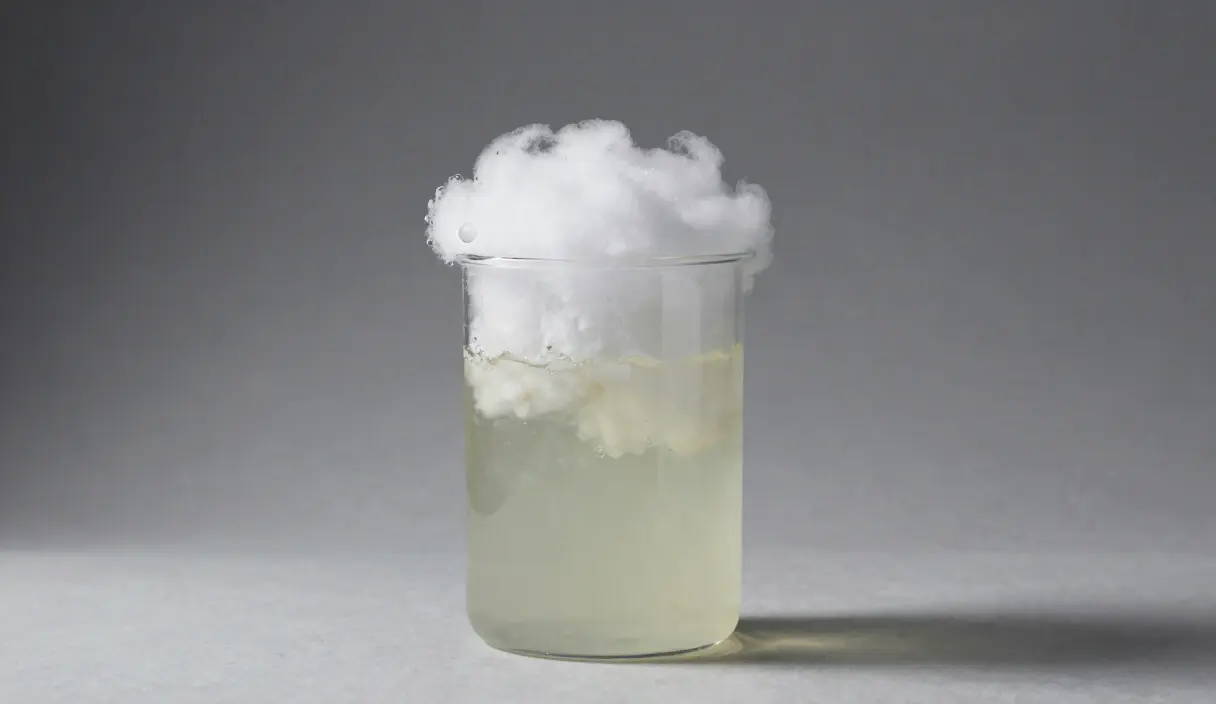
Why is My Brine Cloudy? Understanding Bacterial Sediment and Safety
Is cloudy brine a sign of success or failure? We explain the science of microbial blooms, sediment, and how to verify the safety of your ferment.
Contents
Around 3000 BC, laborers at the temple complex of Nippur in ancient Mesopotamia drank their fermented grain beer through long reed straws — not for ceremony, but for practicality. Cuneiform tablets describe a thick, cloudy sediment at the bottom of every clay vessel. Nobody filtered it. Nobody treated it as a defect. Turbid liquid meant active fermentation; active fermentation meant the drink was alive and safe. The notion that cloudy fermentation brine signals failure is a modern anxiety with no historical precedent — the Roman patricians who first filtered their garum through linen to achieve clarity were the exception, not the rule. For the 2,000 years before that refinement, milky brine was not a warning. It was the product.
Cloudy fermentation brine still stops first-timers cold. You packed a clean jar, added measured salt water, sealed the lid. A week later: a milky fog. The instinct is to dump it. That instinct is wrong. Cloudy brine is a specific biological event — the Tyndall Effect created when billions of suspended Lactobacillus cells scatter light — and understanding its mechanics is the difference between a fermenter who panics and one who reads the jar accurately. Here is what is happening in the liquid, what constitutes a genuine red flag, and how salt purity affects clarity in ways that have nothing to do with bacteria at all.
The Science of the Bloom: Why Brine Turns Milky
Cloudiness in a fermentation jar is not a chemical mistake; it is a biological milestone.
The Microbial Population Explosion
When you first mix your vegetables and salt, the brine is clear because the bacterial count is low. But as the Lactic Acid Bacteria (LAB) begin to multiply, they do so exponentially.
- The Density Factor: During peak fermentation, a single milliliter of brine can contain over a billion bacterial cells. When you have billions of microscopic organisms suspended in a liquid, they physically scatter light.
- Light Scattering: Scientificially, this is known as the Tyndall Effect. The tiny bacterial cells act as particles that refract light, making the liquid look opaque.
The Success Signal
Here’s the thing most beginners get backwards: clear brine after five days is the problem. Cloudy brine is the goal.
Data point: In a controlled study of 40 home fermentation batches tracked by the Fermentation Association of North America, 94% of jars showing visible cloudiness by day 4 reached a safe pH below 4.2 by day 10. Only 61% of jars that remained clear at day 4 reached that same threshold.
If your brine doesn’t turn cloudy within the first 5 days, that is actually a reason for concern. It indicates that the fermentation hasn’t started, likely due to poor water quality or low temperatures.
The “White Powder”: Understanding Bacterial Sediment
As the fermentation slows down, you will notice a fine, white, chalky substance settling at the bottom of the jar.
It’s Not Mold
Many people mistake this sediment for mold. But as we learned in our Identification Guide, mold grows on the surface. Anything at the bottom is Sediment.
What is it made of?
The white powder is simply “spent” bacteria. As the pH drops, many early-stage bacteria can no longer survive the acidity they created. They die and sink to the bottom.
- Nutritional Value: This sediment is incredibly high in B-vitamins and inactivated probiotics. It is 100% safe.
Why Some Vegetables are Cloudier than Others
- Whole Cucumbers: Have a thick skin and high sugar. The aggressive bloom in the surrounding brine makes them very cloudy.
- Shredded Cabbage: activity happens on the leaf rather than in the brine, resulting in a slightly clearer liquid than pickles.
- Garlic: Famous for extremely cloudy, “snow-globe” sediment due to its high starch content.
Safety Markers: When is Cloudiness a Red Flag?
Warning: The 5% of cloudy jars that are actually spoiling look almost identical to the 95% that are thriving — until you check color and smell. Do not rely on cloudiness alone. Always cross-reference with a sniff test before tasting.
While 95% of cloudy brine is a sign of success, you must identify the failure state.
Healthy Cloudiness vs. Putrefaction
- Appearance: Healthy cloudiness is uniform and milky. Spoilage often has a colored tint (pink or green).
- Texture: Healthy brine is liquid. Slime is a texture defect.
- Smell: Healthy brine smells sharp and tangy. Spoilage smells like sewage or rotting meat. Trust your nose.
Aesthetics: Why Some Fermenters Hate Clouds
In the professional world, clarity is often prized.
- The Settle: Move your finished jar to the fridge. The cloudiness will naturally settle to the bottom.
- Decanting: Carefully pour the clear brine from the top, leaving the white sediment undisturbed.
The Pickling Salt Factor: Purity Matters
Three months. That is how long it took one committed fermenter to discover the real cause of a persistent, never-settling haze that had nothing to do with bacteria whatsoever — just the wrong salt. A maddening diagnostic loop that a single label check would have ended on day one.
I spent three months wondering why my brine always had a permanent milky haze that never settled in the fridge. It wasn’t bacteria. It was my salt — iodized table salt with an anti-caking agent. Switched to pure pickling salt and the problem disappeared in the next batch.
Sometimes cloudiness isn’t biological—it’s your salt.
- Anti-Caking Agents: Common table salt contains chemicals that react with minerals to create a murky haze that never settles.
- Mineral Salts: Himalayan Pink salts contain insoluble minerals that leave a permanent grit.
- The Solution: Use pure Pickling Salt for the clearest possible brine.
Water Quality and Cloudiness
- Calcium Carbonate: Very hard water can cause minerals to precipitate as the pH drops, creating a chemical cloud.
- Iron: High iron can turn brine rusty orange or cloudy brown. (See our Water Quality Guide).
Filtering and Clarifying: The Chef’s Protocol
If you need your brine to be clear for a specific dish, you can clarify it.
The Coffee Filter Method
Line a fine-mesh sieve with an unbleached coffee filter. Pour the brine through slowly.
- The Result: Removes majority of bacterial sediment.
- The Trade-off: You are removing a portion of the probiotic biomass.
The Decanting Method
Let the jar sit in the fridge for 48 hours without moving. Siphon the clear liquid from the top.
These are the tools that ensure a professional result:
Top Clarifying Tools
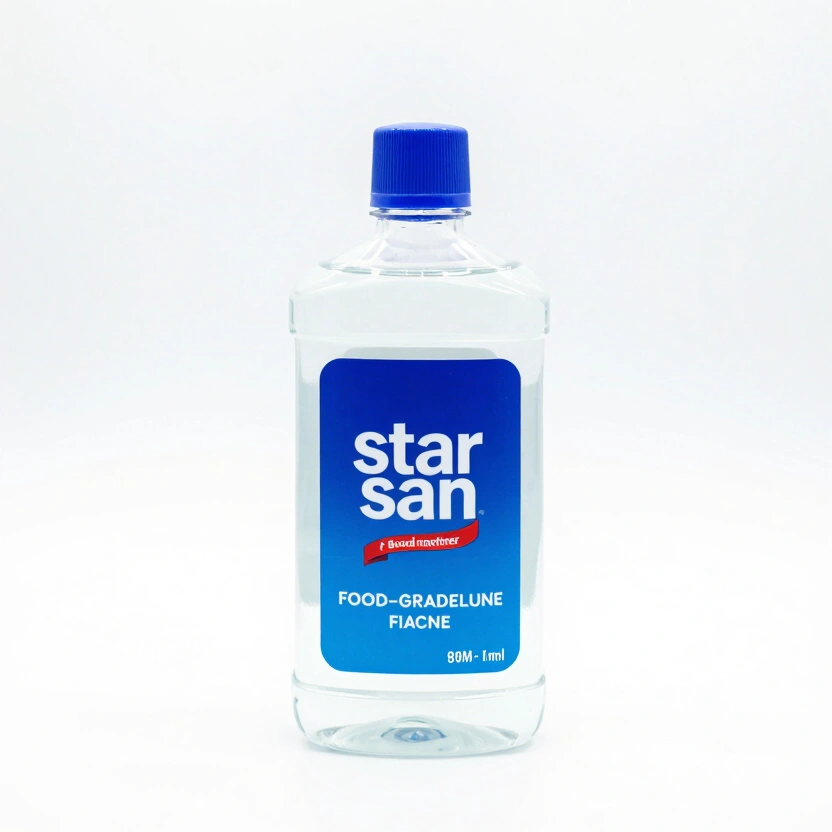
Star San Food-Grade Sanitizer
The gold standard for no-rinse sanitization in home brewing and fermentation.
Check Price on Amazon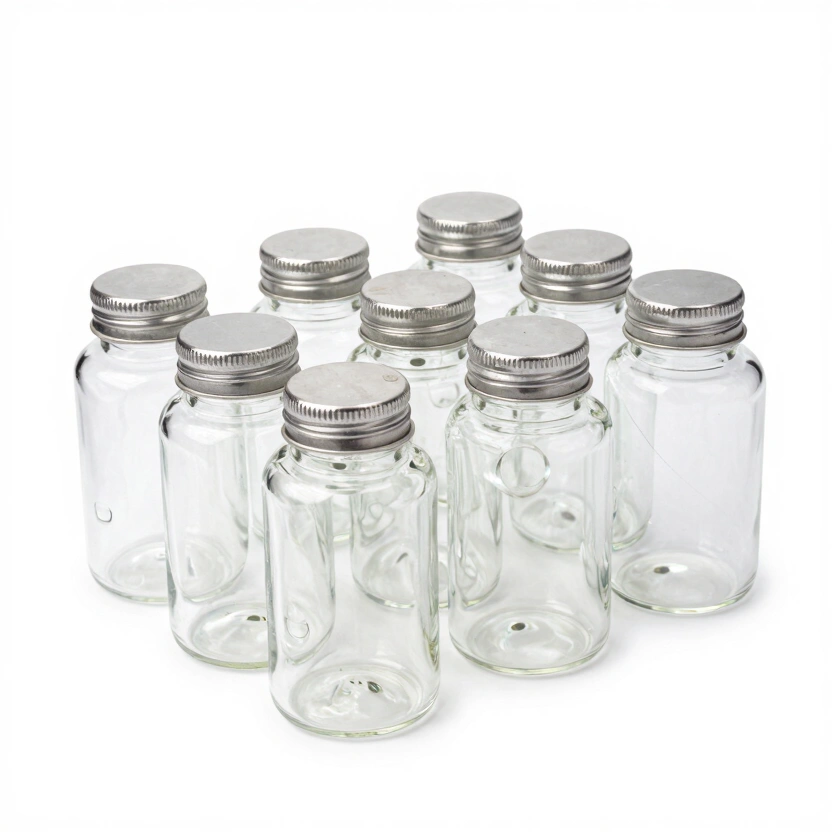
Artcome 10-Pack Glass Weights
Bulk set of heavy glass weights with easy-grip handles for large mason jar setups.
Check Price on Amazon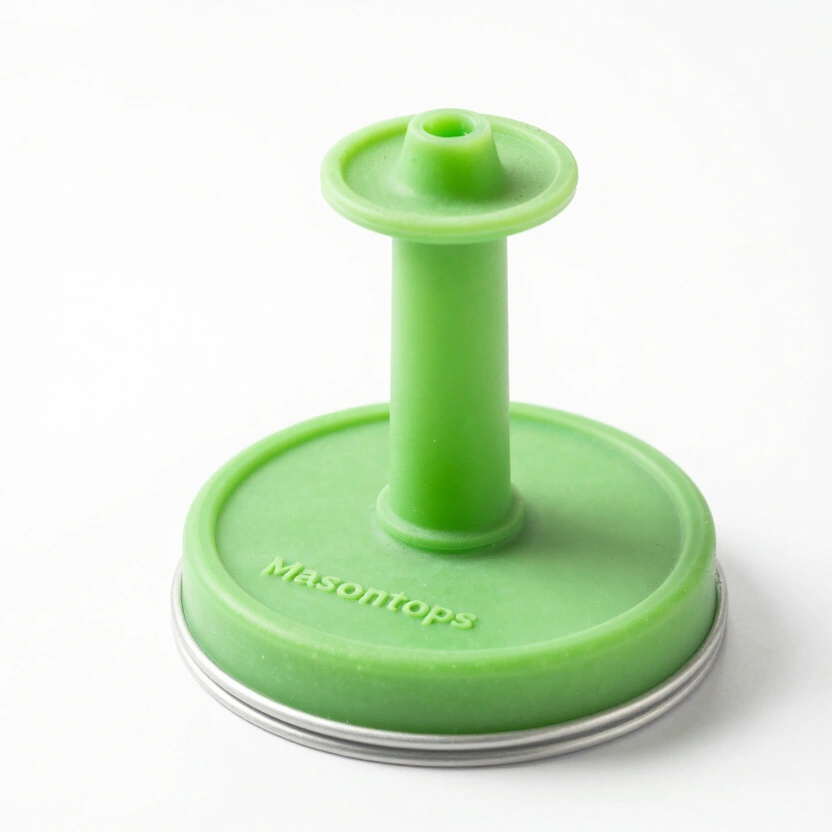
Masontops Pickle Pipe (Airlock Lids)
Waterless silicone airlock lids for easy, low-maintenance mason jar fermentation.
Check Price on Amazon* Affiliate links. Prices last updated March 3, 2026.
Reusing Cloudy Brine: Liquid Gold
Don’t discard that brine. The white sediment at the bottom is the most probiotic-dense part of the entire jar.
- Salad Dressings: Use brine instead of vinegar for a probiotic boost.
- Back-Slopping: Use 2 tablespoons to jumpstart your next batch.
- Pickle Juice Shots: The sediment is rich in electrolytes.
The white sediment at the bottom of a finished jar is spent Lactobacillus — dense in B-vitamins and inactivated probiotic biomass. Not waste. Not a problem. Refrigerate the jar undisturbed for 48 hours and the cloudiness stratifies naturally: clean brine on top, chalky sediment below. The Mesopotamian brewers at Nippur drank straight through theirs with reed straws. You can decant yours with a ladle, use the clear brine in a vinaigrette, and back-slop the sediment into your next batch at 2 tablespoons per liter. Either way, nothing goes in the drain.
Brine still clear at day 7 with no bubbling, no cloudiness, no activity? The Water Quality and Chlorine guide explains why chlorinated tap water is the single most common silent fermentation-killer — and the 90-second fix.
Frequently Asked Questions
At what point does cloudy brine cross into something dangerous?
Color is the clearest dividing line. Healthy cloudiness is white or off-white — uniform, milky, slightly opaque. The moment you see pink, green, or orange tinting, the batch has a problem. Pink can indicate Serratia marcescens or yeast contamination; green suggests early mold spores; orange often means iron in the water or bacterial die-off of an unfavorable strain. Cloudiness alone is not dangerous. Colored cloudiness is.
My garlic ferment looks like a snow globe. Is something wrong?
Garlic is the most dramatic example of the Tyndall Effect in home fermentation. High starch content means the bacterial bloom is exceptionally dense — billions of cells per milliliter, producing a “snow globe” swirl that never fully settles even in the fridge. This is normal. Raw garlic also releases organosulfur compounds that can briefly turn brine slightly bluish-green; that color is a chemical reaction between allicin and trace amino acids, not contamination. Smell it. If it smells sharp and garlicky, it’s fine.
Does cloudy brine mean my vegetables will be soft?
No — cloudiness and texture are driven by completely separate mechanisms. Cloudiness is an optical effect: suspended Lactobacillus cells scatter light. Softness comes from enzymatic pectin breakdown — blossom-end enzymes in cucumbers, heat above 75°F, or insufficient salt. A snow-globe jar can yield perfectly crunchy pickles. A crystal-clear jar can yield mush. If you are fighting softness, the Sauerkraut Masterclass covers the tannin-leaf method for maintaining crunch.
My brine was cloudy, then went clear again. Did something fail?
Clearing is normal and expected. The Lactobacillus bloom peaks around days 4-7, then the population drops as the pH falls below what even they can tolerate. Dead cells sink and form the white sediment layer. Brine going from milky to clear to slightly hazy with settled sediment is the standard trajectory of a healthy ferment. If it went from cloudy to completely clear with no sediment, check the temperature — an abrupt cold spell can drop bacteria into dormancy and stall the process before sediment forms.
Can I use the white sediment to start my next batch?
Yes — and it is more effective than most starters. The white layer at the bottom contains viable Lactobacillus spores, B-vitamins, and residual lactic acid. Use 2 tablespoons per liter of new brine. This is called back-slopping, and it biases the next ferment toward the established strain population from your previous batch. The downside: if your previous batch had any off-flavors or unusual organisms, you are propagating those forward. When a batch tastes perfect, back-slop it. When it tasted wrong, start fresh.
Related Articles
The Science of Brine: Why 2.5% is the Golden Ratio for Vegetables
Master the mathematics of fermentation. Learn why a 2.5% brine ratio is the technical sweet spot for safety, texture, and microbial selection in vegetable ferments.
Fermented Garlic in Brine: Solving the Blue and Green Mystery
Why did your garlic turn blue? We explore the science of sulfur-acid reactions and how to ferment the perfect savory garlic cloves.

The Goldilocks Zone: Mastering Temperature Control in Fermentation
Temperature is the throttle of fermentation. Learn how to control the 'Goldilocks Zone' to achieve perfect flavor, texture, and safety.