Water Quality: Why Chlorine is the Enemy of Your Ferment
Is your tap water killing your probiotics? We explore the impact of chlorine, chloramine, and fluoride on home fermentation.
Contents
London, September 1854. A single contaminated water pump on Broad Street, Soho killed 616 people in ten days. Dr. John Snow traced every death back to that one source — proving that waterborne pathogens, not “bad air,” caused cholera. The data he compiled also revealed something fermenters still discover the hard way: what’s in your water determines what survives in your ferment. Victorian home fermenters who relied on well water or spring-collected sources saw reliable results. Those who switched to the increasingly chlorinated municipal supply — which cities adopted within decades of Snow’s work — reported stalled batches and dead cultures long before they had the chemistry to explain why. Snow’s investigation predates modern understanding of chloramine by 140 years. The principle is identical: water quality for fermentation is not a secondary concern. It’s the foundation everything else sits on.
At over 90% of your jar’s volume, water isn’t a neutral carrier — it is the environment your Lactic Acid Bacteria live in. Municipal chlorination is a public health achievement, but the same chemistry that kills Vibrio cholerae in a pipe will shred your Lactobacillus colony before your brine hits 5.0 pH. Understanding what’s actually in your tap water — and how to neutralize it — is the difference between a stalled jar and a thriving ferment.
The Paradox of Potability: Safe to Drink, Dangerous to Ferment
To understand why “safe” water can be “bad” for fermentation, start with the intent of municipal water treatment.
The Biocidal Goal
Chlorine works by oxidizing the cellular membranes of bacteria, effectively shredding them. For a human, the concentration in tap water is low enough to ignore. For a single-celled Lactobacillus in your jar, that same tap water is a toxic environment. Context is everything.
The Residual Effect
Municipalities leave a “residual” amount of disinfectant in pipes to ensure sterility all the way to your faucet. That residual is the culprit. It causes ferments to “stall” — no bubbles, no pH drop, and a jar that becomes a breeding ground for mold rather than beneficial bacteria.
Chlorine vs. Chloramine: The Evolving Enemy
If you are an old-school maker, you might remember the advice: “Just leave your water out overnight.” Today, that is often dangerous misinformation. The chemistry changed.
Chlorine (The Volatile Gas)
Free chlorine is unstable. Leave it out for 24 hours or bring it to a boil, and the gas dissipates into the air. This is why the overnight trick worked for decades.
Chloramine (The Persistent Link)
I wasted three consecutive batches of ginger beer before I found out my city had switched to chloramine two years prior. The overnight trick I’d always used suddenly meant nothing. Nothing.
Many modern municipal systems use Chloramine — chlorine bonded with ammonia — because it stays active longer in the pipe network.
- The Problem: Chloramine is stable. It does not evaporate. It does not boil off.
- The Impact: If your city uses chloramine, leaving water out overnight does nothing. You are still introducing a biocide into your SCOBY.
Beyond Disinfectants: Fluoride and Minerals
Fluoride
While less aggressive than chlorine, high fluoride concentrations can inhibit the metabolic activity of yeast in Mead and Kombucha.
Hardness (Calcium and Magnesium)
“Hard” water is actually a benefit for vegetables. As we learned in our Salt Masterclass, these ions strengthen the pectin in cell walls, leading to crunchier pickles.
Filtration Methods: Removing the Killers
If your tap water is the problem, filtration is the solution.
Carbon Filtration
Standard filters use activated carbon. Know which type you have.
- Chlorine: Carbon is excellent at removing free gas.
- Chloramine: Basic carbon is ineffective. You need Catalytic Carbon to break the ammonia-chlorine bond. Regular Brita pitchers won’t cut it — the bond survives.
Reverse Osmosis (RO)
RO forces water through a semi-permeable membrane.
- The Pro: It removes 99% of everything, providing the “cleanest” slate.
- The Con: It removes beneficial minerals. You must “re-mineralize” with a pinch of sea salt for crunchy vegetables.
Vitamin C Treatment (The Chemist’s Trick)
This is the step most people skip because it seems too simple. It isn’t simple — it’s the correct answer, and it costs almost nothing. One ingredient. Thirty seconds.
Ascorbic Acid (Vitamin C) instantly neutralizes both chlorine and chloramine. Adding 50mg to a gallon of water reduces the chlorine to harmless chloride salts.
These are the tools that ensure a biocide-free environment:
Top Water Filtration Gear
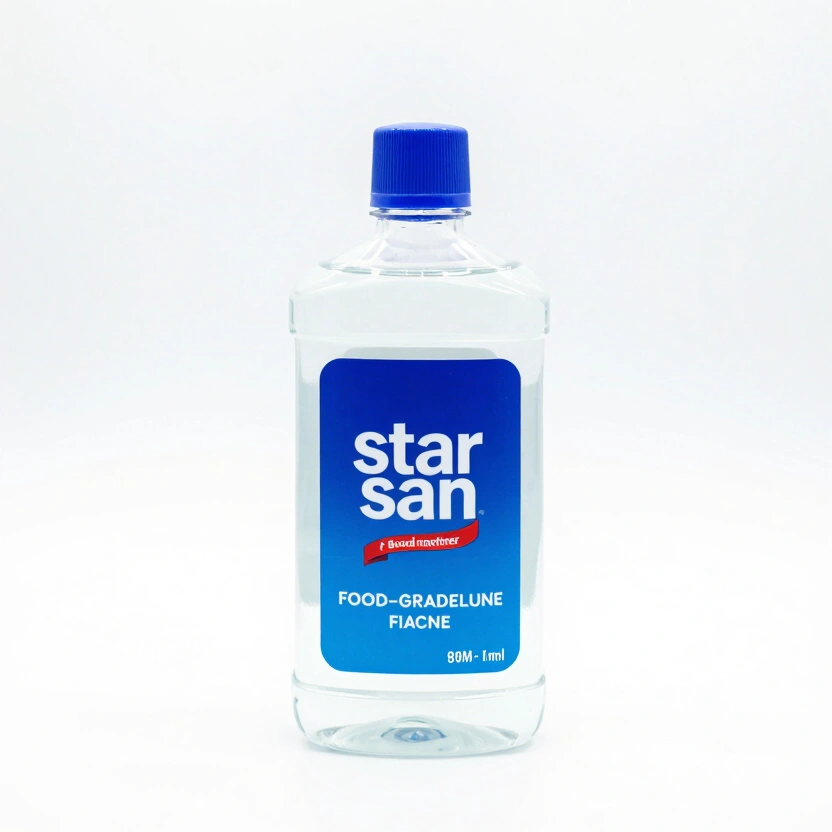
Star San Food-Grade Sanitizer
The gold standard for no-rinse sanitization in home brewing and fermentation.
Check Price on Amazon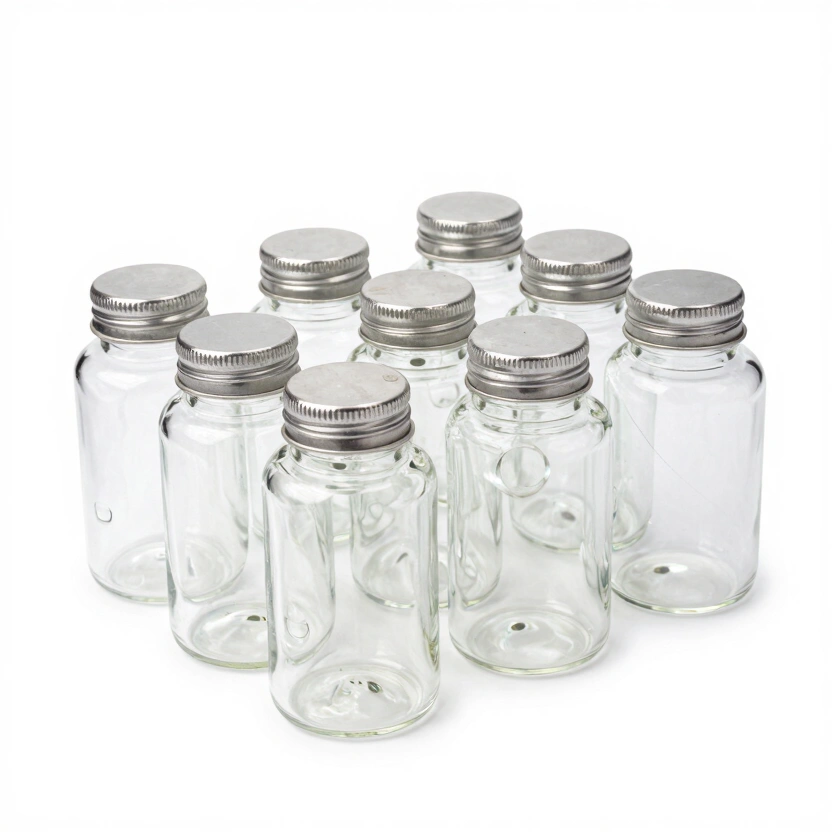
Artcome 10-Pack Glass Weights
Bulk set of heavy glass weights with easy-grip handles for large mason jar setups.
Check Price on Amazon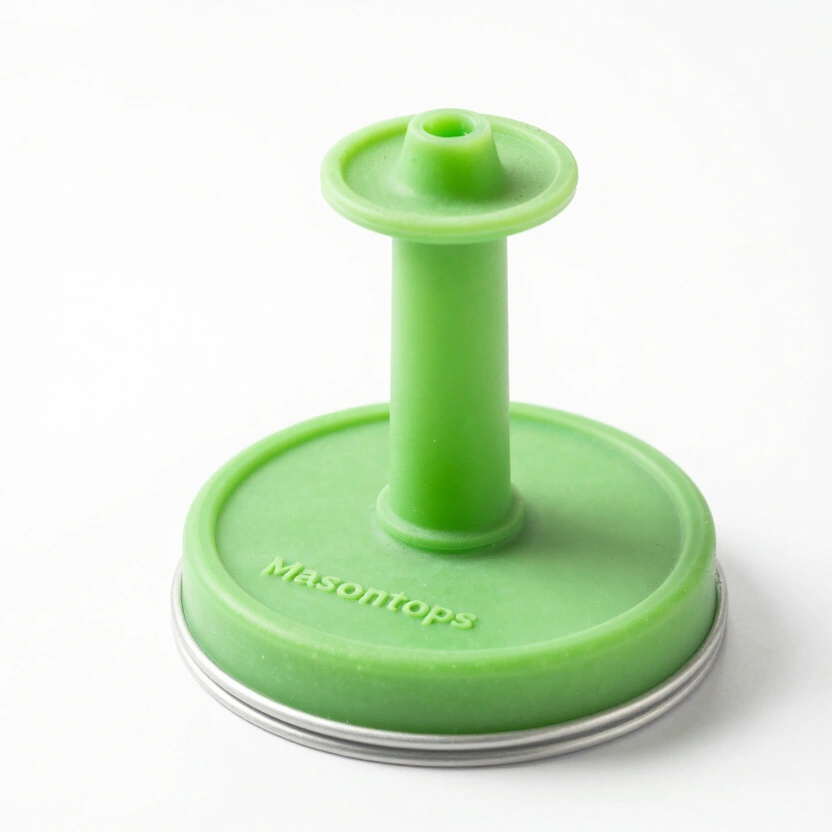
Masontops Pickle Pipe (Airlock Lids)
Waterless silicone airlock lids for easy, low-maintenance mason jar fermentation.
Check Price on Amazon* Affiliate links. Prices last updated March 3, 2026.
The Boiling Myth: Why it Often Fails
- Chlorine: You must boil for 20 minutes to drive off the gas.
- Chloramine: Boiling does nothing; it may actually concentrate the chloramine.
Expert Verdict: Do not rely on boiling unless you are 100% certain your city only uses free chlorine gas.
How to Test Your Water Quality at Home
- The City Report: Search for your city’s “Annual Water Quality Report” (CCR).
- Chlorine Strips: Buy simple strips that measure “Free” and “Total” chlorine.
- The Smell Test: If it smells like a swimming pool, the residual is high.
Distilled vs. Spring Water: The Bottled Solution
Spring Water (The Recommended Path)
Naturally filtered and rich in minerals. Chlorine-free. The best investment for any batch where you’re pitching a starter culture or relying on wild Lactobacillus colonization from the vegetable surface.
Distilled Water (The “Hungry” Water)
Distilled water lacks ions and can pull minerals out of your vegetables, leading to mushiness.
Well Water and Rainwater: The Wild Options
Well Water
Most guides treat well water as risky. Counter to that instinct, well water is often the best fermentation water available — chlorine-free, mineral-balanced, and biologically active in ways that support fast acidification.
Excellent because it’s chlorine-free and mineral-rich. Always test for pathogens like E. coli annually.
Rainwater
Traditional but risky in the modern world due to atmospheric pollutants. Avoid unless you have a professional filtration system.
Water Quality and Sourdough: The Baker’s Struggle
Wild yeast cultures are notoriously sensitive. Chlorine “bleaches” the yeast cells, preventing the starter from rising. If your starter smells like “old band-aids,” it is likely a chlorine reaction.
Frequently Asked Questions
Can I just leave tap water out overnight to make it safe for fermentation?
Only if your city uses free chlorine — and many no longer do. Chloramine (chlorine bonded with ammonia) is stable. It will not evaporate in 24 hours, 48 hours, or a week. Check your municipality’s Annual Water Quality Report (search “[your city] CCR water report”) to find out which disinfectant your supplier uses. If it says “chloramine,” the overnight trick is useless.
Is hard water a problem for vegetable ferments?
No — it’s a benefit. Calcium and magnesium ions strengthen the pectin in vegetable cell walls, which is the biological mechanism behind crunchy pickles. The problem is soft water, which lacks these ions and can lead to soft, mushy ferments. For mead, a small amount of mineral hardness supports healthy yeast cell membrane development.
What is the fastest way to neutralize chlorine and chloramine?
Ascorbic Acid — plain vitamin C powder. Add 50mg per gallon, stir for 30 seconds, and both chlorine and chloramine are neutralized instantly. You can buy food-grade ascorbic acid powder for a few dollars. This is what many professional brewers use when filtered water is not available. Your fermentation starter cultures will thank you.
Does fluoride harm kombucha SCOBYs?
High concentrations can slow SCOBY metabolism over many successive batches, but normal municipal fluoride levels (0.7 mg/L in US water) are unlikely to cause acute problems. If your SCOBY is progressively weakening across multiple brews and you have ruled out sugar and temperature issues, switching to spring water is a reasonable diagnostic step.
50mg of ascorbic acid per gallon costs less than a cent and eliminates the most common invisible cause of fermentation failure. That one habit — treating water before every batch — will do more for your success rate than any premium equipment.
With your water sorted, the next variable that can make or break a batch is your microbial starting point: Starter Cultures vs. Wild Fermentation breaks down when to trust nature and when to bring in reinforcements.
Related Articles
The Visual Masterclass: Distinguishing Kahm Yeast, Mold, and Biofilms
Found white spots in your jar? We provide a complete visual catalog to help you distinguish between harmless yeast, beneficial sediment, and dangerous mold.
Starter Cultures vs. Wild Fermentation: When to Inoculate Your Jar
Do you really need to buy starter cultures? We compare spontaneous 'wild' fermentation with lab-grown inoculation for safety and speed.
Precision Brewing: Mastering ABV Calculations and Sugar Attenuation
Calculate the Alcohol by Volume (ABV) of your mead and kombucha. Master the formula and learn how to use your hydrometer like a pro.