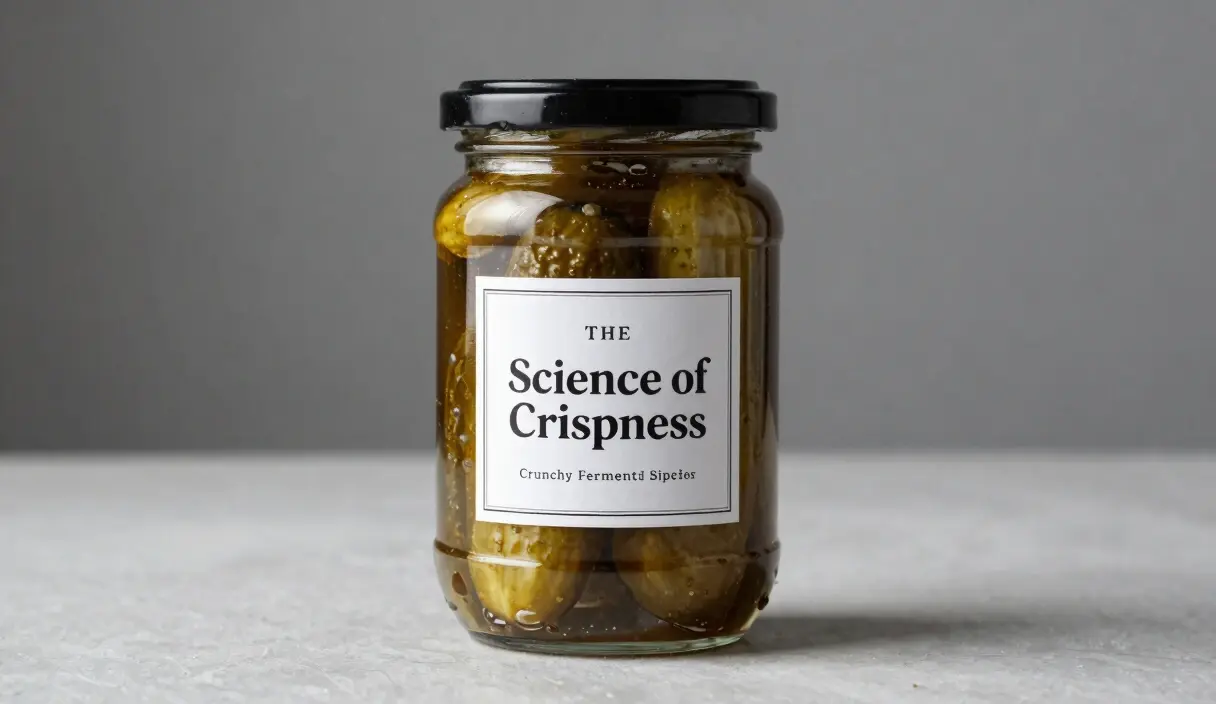
The Science of Crispness: How to Keep Fermented Pickles Crunchy
Why do fermented pickles go soft? We explore the science of pectin, the use of calcium chloride, and the power of tannins for the perfect snap.
Contents
The difference between a pickle that snaps and one that’s soft comes down to two molecules: pectin and calcium. The entire science of fermented pickle texture is a fight between pectinase enzymes (which break pectin down) and tannins plus calcium ions (which protect it). Most guides mention “add grape leaves for crunch.” None of them explain the mechanism. This one does.
Three forces are working against your crunch right now: polygalacturonase enzymes concentrated in the cucumber’s blossom end, microbial enzymes from competing bacteria in a slow-acidifying ferment, and heat above 75°F accelerating both. The defenses are mechanical (trim the blossom end), botanical (tannins from grape leaves), and chemical (Calcium Chloride’s “Egg Box” bridging mechanism). Understanding all three is what separates consistent results from a jar of expensive mush.
Pectin Science: The Biological Glue
To solve the problem of softness, we must first understand what makes a vegetable firm.
The Middle Lamella
Inside every plant cell is a layer called the Middle Lamella. Think of this as the “biological cement” that holds the individual plant cells together. The primary component of this cement is Pectin—a complex carbohydrate (polysaccharide) that provides structural integrity.
- Crispness = Intact Pectin: When the pectin remains a solid, tangled mesh, the vegetable is crisp.
- Mushiness = Degraded Pectin: When the pectin chains are broken apart, the cells slide past one another, and the vegetable becomes soft.
The Hydration Factor
Pectin is highly hydrophilic—it loves water. In a fresh cucumber, the pectin is fully hydrated and under pressure (turgor pressure). As we ferment, we use salt to manage this pressure, but the chemical stability of the pectin mesh is what ultimately dictates the final texture.
The Enzymatic Threat: Polygalacturonases
Most guides present soft fermented vegetables as a mystery. It isn’t. Polygalacturonase is the culprit in nearly every case, and it’s completely manageable once you know the three conditions that activate it.
You have probably lost a batch to soft texture. You didn’t fail — you just weren’t told which lever to pull. The blossom end trim alone has saved more ferments than any piece of equipment. It takes four seconds.
The primary enemy of the crunchy ferment is an enzyme called Polygalacturonase (PG).
Microbial vs. Endogenous Enzymes
There are two sources of these pectin-destroying enzymes:
- Microbial Enzymes: Produced by “bad” bacteria or wild yeasts if the acidification curve is too slow.
- Endogenous Enzymes: Naturally present within the vegetable itself. In cucumbers, these enzymes are highly concentrated in the “blossom end” (the tip where the flower was attached).
The Attack Mechanism
Enzymes are biological catalysts. They work like microscopic scissors, snipping the long pectin chains into smaller, water-soluble pieces. This process happens most rapidly in warm environments (above 75°F) and in low-acidity environments (pH above 4.5). Once the enzymes have done their work, the damage is irreversible.
The “Blossom End” Secret: Mechanical Prevention
Before we use chemistry to protect our pickles, we should use physics.
As mentioned, the blossom end of a cucumber is a factory for pectinase enzymes.
- The Protocol: Always trim 1/16th to 1/8th of an inch off the blossom end of every cucumber before placing it in the jar.
- The Result: By removing the source of the enzymes, you significantly reduce the “internal attack” on the pectin, giving the Lactobacillus a better chance to acidify the jar and naturally inhibit any remaining enzymatic activity.
The Tannin Defense: Botanical Enzyme Inhibitors
For centuries, traditional cultures have added specific leaves to their fermentation crocks. Today, we know the reason is Tannins.
How Tannins Work
Tannins are polyphenolic compounds that bind to proteins. Because enzymes are made of protein, tannins “bind up” the pectin-destroying enzymes, effectively neutralizing their ability to snip the pectin chains.
- The Sources:
- Grape Leaves: The gold standard. Neutral flavor. Use 1-2 large leaves per quart jar.
- Oak Leaves: Extremely potent. Ensure they are from a clean, non-poisonous species.
- Black Tea: A high-tannin emergency alternative. Use a single organic tea bag.
- Bay Leaves: Adds a pleasant aroma and moderate tannins. Use 2-3 per jar.
Calcium Chloride: Molecular Bridging (Pickle Crisp)
If you want the absolute highest level of crunch—what we call “Industrial Snap”—you need Calcium Chloride (CaCl2).
The “Egg Box” Model
In biochemistry, we describe the interaction between calcium and pectin as the “Egg Box Model.”
- The Mechanism: Calcium ions (Ca++) act as bridges between individual pectin chains. Imagine two parallel lines of pectin; the calcium ions snap into place between them, locking them together into a rigid structure.
- The Pro-Tip: You only need a tiny amount. Roughly 1/8th to 1/4th of a teaspoon per quart of brine is enough to chemically reinforce the cell walls.
These are the tools that make the biggest difference:
Essential Crispness Gear
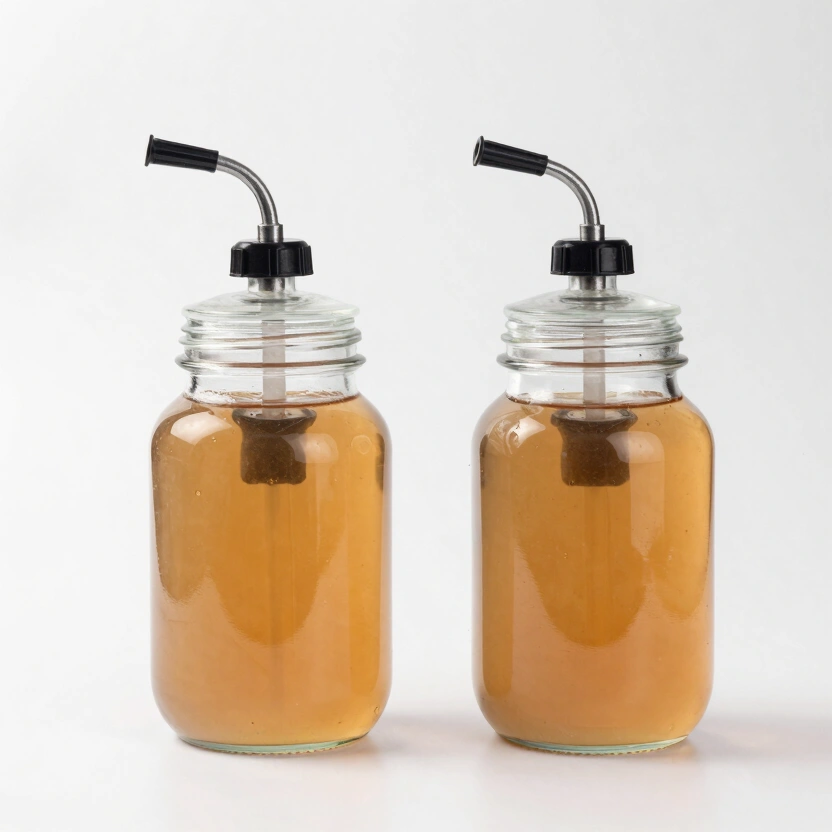
Green Wise Fermentation Jar Set (2 Pack)
Large 1.4L jars with integrated airlock valves. Perfect for sauerkraut, kimchi, or tomatoes.
Check Price on Amazon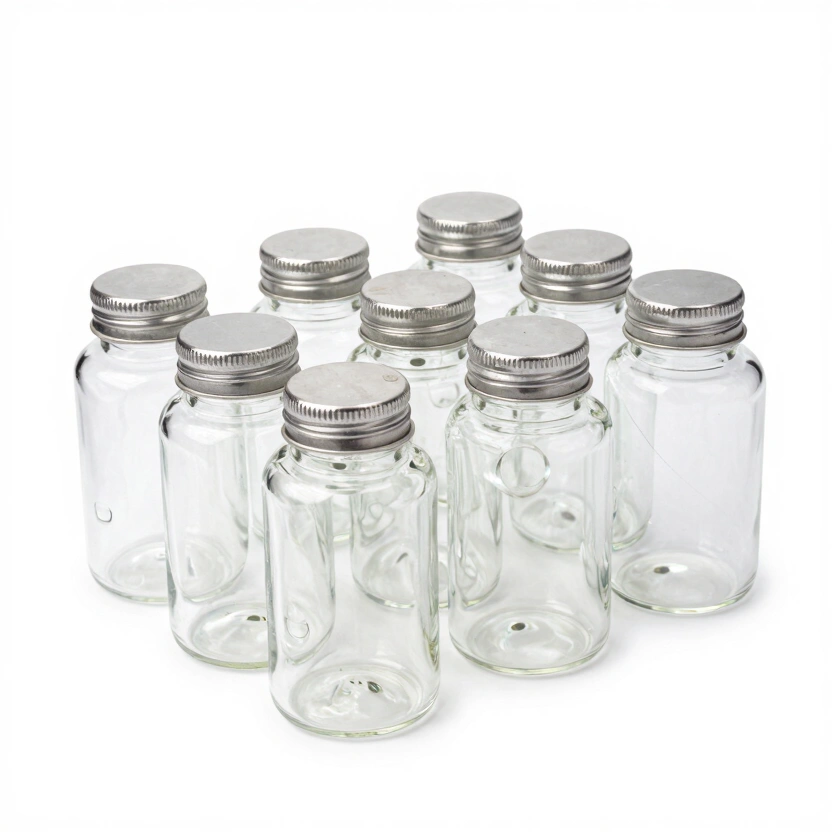
Artcome 10-Pack Glass Weights
Bulk set of heavy glass weights with easy-grip handles for large mason jar setups.
Check Price on Amazon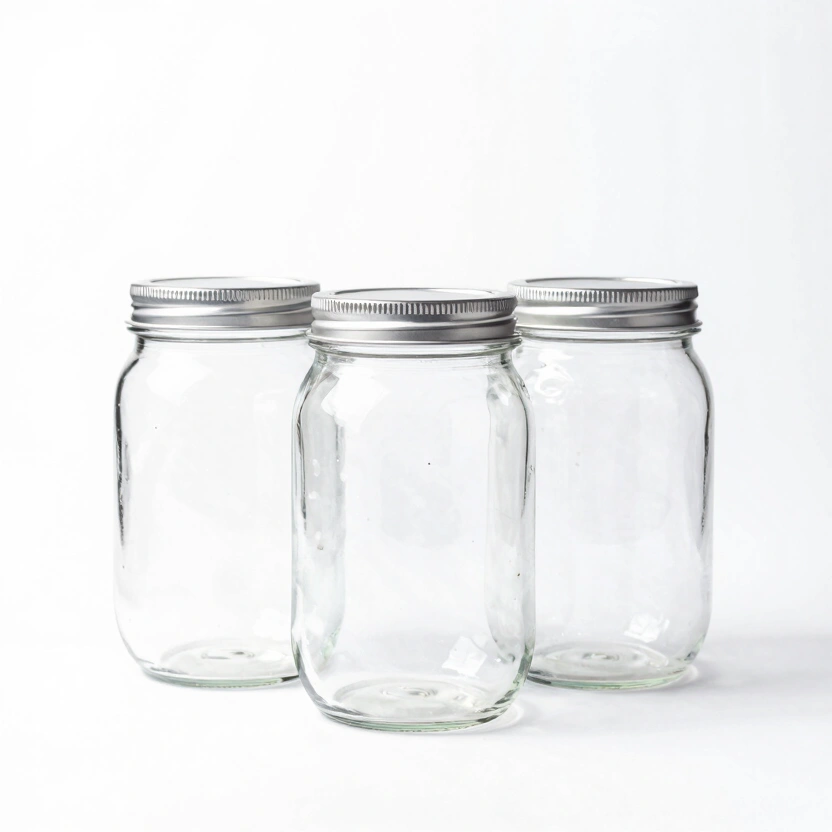
Tebery Wide Mouth Mason Jars (1.9L)
High-capacity glass jars perfect for bulk vegetable fermentation or continuous brew kombucha.
Check Price on Amazon* Affiliate links. Prices last updated March 3, 2026.
The Ice Water Soak: Pre-Fermentation Prep
I spent two years not doing this step and wondering why my cucumbers were softer than a neighbor’s. Turgor pressure recovery in cold water is a simple 2-hour investment that costs nothing and is genuinely one of the highest-impact steps in the whole process.
One of the most effective mechanical tricks for crispness happens before the vegetables ever enter the jar.
Do not skip this step because it seems too simple. The most common objection is “I don’t have room in my refrigerator for a bowl of cucumbers.” Make room. The 2-hour soak is the cheapest intervention in this entire guide.
Turgor Pressure Recovery
By the time a cucumber reaches your kitchen, it has lost some of its internal water pressure (turgor).
- The Protocol: Soak your cucumbers in a bowl of ice-cold filtered water for 2 to 4 hours before fermenting.
- The Result: The cells rehydrate and the cucumber becomes turgid and firm. Starting with a “stiff” vegetable makes it much easier for the salt and acid to preserve that structure.
Temperature Dynamics: The 70°F Threshold
As we learned in our Temperature Control Masterclass, heat is the primary driver of enzymatic speed.
- The “Crunch Killer” Zone: Above 75°F (24°C), the pectin-destroying enzymes work at high velocity. Even with tannins and calcium, a high-heat fermentation will often result in softer pickles.
- The “Snap” Zone: Aim for a steady 65°F to 68°F (18°C-20°C). This slower pace allows the bacteria to produce acid and drop the pH before the enzymes can cause significant damage.
Here is the part most people get wrong: a cooler ferment is not a weaker ferment. Slower acidification does not mean inadequate acidification. At 65°F, Lactobacillus builds acid steadily. The enzymes lose. The crunch stays.
Salinity Ratios for Texture: The Brine Bouncer
Salt is more than just a preservative; it is a structural support.
- The 3.5% Standard: For whole cucumbers, which are 95% water, you need a higher concentration than for kraut. Aim for a 3.5% to 5.0% brine.
- The Science: High salinity creates a stronger osmotic pressure, which keeps the cell walls from collapsing during the initial 48-hour microbial bloom.
Variety Selection: Kirby vs. The World
This is the step that defeats most beginners before they’ve even added brine: using the wrong cucumber variety. English cucumbers are bred for fresh eating, not fermentation. Their thin skin and high water content produce mush by day three regardless of your technique.
You can’t make a crunchy fermented cucumber out of a salad variety.
Grocery store cucumbers labeled “seedless” or “English” are bred for shelf display — smooth skin, high water content, engineered to look perfect for three weeks. Every trait that makes them sell makes them ferment badly. The variety decision is made before you leave the store.
- Kirby / Pickling Cucumbers: The gold standard. Thick, bumpy skin and a small seed cavity.
- Persian Cucumbers: A good secondary choice. Thin-skinned and firm.
- English / Hot House Cucumbers: Avoid for fermentation. They are designed for fresh slicing and will turn into mush within 3 days.
Every soft-pickle failure traces back to one of four variables: wrong variety, missed blossom-end trim, temperature above 75°F, or salinity below 3.5%. Fix one per batch and you’ll have your answer by Day 7. Fix all four at once and you’ll open a jar of genuinely crisp, audibly snapping cucumbers that bear no resemblance to a deli pickle from a shelf. That gap — between the store-bought product and the thing you made at 65°F in a proper brine — is what this guide was built around.
The crispness is the point. It’s also the proof that every variable was controlled.
Applying consistent downward force is the mechanical side of crunch preservation — the best fermentation weights review covers which weights are heavy enough to keep cucumbers below the brine line through the full fermentation window.
These principles hold across every vegetable ferment — see the Fermenting Root Vegetables guide Cauliflower and broccoli present a specific texture challenge — the fermenting cauliflower and broccoli guide covers the tannin and blanching variables that keep florets crisp. for how tannins and Calcium Chloride behave on denser, higher-starch vegetables where texture management is even more critical.
Frequently Asked Questions
My cucumbers came out soft despite following all the steps. What went wrong?
One variable. Usually temperature. A kitchen that runs 76°F during summer fermentation is enough to overcome every other protective measure — the tannins, the calcium, the blossom-end trim. Polygalacturonase at that temperature outpaces Lactobacillus acidification. Check your actual fermentation temperature with a thermometer rather than guessing by room feel. Summer kitchens are reliably 4-6°F warmer than you think they are.
Can I use Calcium Chloride on vegetables other than cucumbers?
Yes — carrots, peppers, cauliflower, turnips, green beans. The chemistry is identical regardless of vegetable: calcium ions bridge pectin chains and lock in structure. Use 1/8 to 1/4 teaspoon per quart. The only ferments where it’s unnecessary are soft vegetables where texture was never the goal — sauerkraut, for instance, where the shred is the point.
How do I tell the blossom end from the stem end?
The blossom end is the slightly more rounded tip opposite the stem scar. It’s where the flower was attached before the cucumber formed. If you can’t tell with confidence, trim 1/8 inch from both ends — that’s a safe default that covers the enzymatic risk on either side.
Will grape leaves or oak leaves change the flavor of my ferment?
No detectable change in a salt brine. This surprises people, but tannins bind to protein (specifically the enzyme proteins) — they’re not releasing grape flavor into the liquid. Oak leaves are the same: extremely potent tannin delivery, zero oak taste in the finished product. Bay leaves are the mild outlier — they contribute a faint herbal note, which many fermenters consider a feature.
Is there a point of no return once a pickle has gone soft?
Yes. Once polygalacturonase has cleaved the pectin chains, the structure can’t be rebuilt. The cucumbers are still safe to eat. Blend them into a fermented green sauce, chop them fine for a relish, or stir them into a dressing. They won’t recover crunch. The lesson goes into the next batch, not the current one.
Related Articles
Xanthan Gum and Consistency: The Technical Secret of Hot Sauce
Why does your hot sauce separate? We explore the science of emulsification and how to use xanthan gum for professional, stable results.
The Science of Slime: Troubleshooting Pediococcus and Texture Issues in Fermentation
Is your sauerkraut brine thick and stringy? Learn about Pediococcus and how to fix slimy fermentation without throwing it away.
Fermenting Parsnips and Turnips: Mastering the Forgotten Roots
Why are parsnips and turnips the secret weapons of the crock? We explore the science of starchy root fermentation, sweetness, and savory depth.