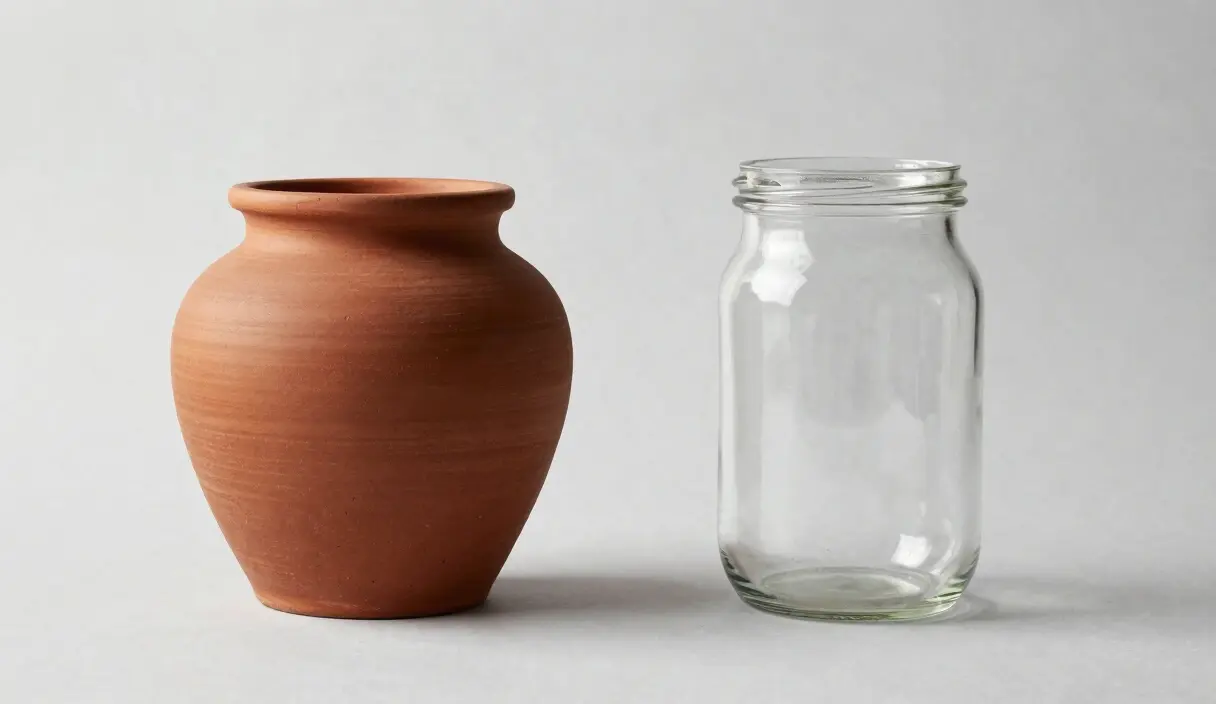
Traditional Crocks vs. Modern Jars: A Side-by-Side Fermentation Analysis
Is a $150 ceramic crock worth the investment? We compare traditional water-seal crocks with modern glass jar systems for safety and flavor.
Contents
The German Gärtopf water-seal crock and the modern Mason jar are solving the same problem from opposite directions. The crock manages fermentation gas passively — CO2 bubbles out through a water-filled rim, and no oxygen can enter. The jar requires you to actively burp it or attach an airlock. Both approaches work. The choice depends on batch size and how much you want to think about it at 11pm on day three.
For many beginners, the price tag of a high-end water-seal crock is a real barrier. They ask: “Can’t I just use a standard Mason jar?” Yes. But the results will not be identical. The vessel you choose dictates UV protection and anaerobic integrity. This guide dissects the physics of thermal mass, the biology of light exposure, and the practical economics of the crock-vs-jar decision — so you can choose the vessel that fits your fermentation style and budget.
The Traditional Crock: An Ancient Biological Vault
Ceramic crocks are the “grandparents” of fermentation. Traditionally made of stoneware or clay, they were designed to sit in cold, dark root cellars for months at a time.
The Physics of Thermal Mass
The most significant advantage of a ceramic crock is its thickness.
- Insulation: Stone walls act as a thermal buffer. If your kitchen temperature swings 10 degrees between day and night, the liquid inside a heavy crock will barely move.
- Microbial Stability: As we learned in our Temperature Control Guide, Lactobacillus loves stability. The thermal mass of a crock prevents the rapid “spikes” in activity that can lead to soft vegetables.
The Water-Seal Advantage
High-end crocks feature a deep groove (a moat) around the rim. When you place the lid in this moat and fill it with water, you create a 100% airtight one-way valve.
- CO2 Shield: Gas can bubble out through the water, but no air can ever enter.
- Oxygen Exclusion: It is the most reliable anaerobic seal in the world, far superior to loosely fitting jar lids.
Data point: The water-seal design was first patented by a Dresden ceramics manufacturer in 1774. Before that, crocks used either cloth covers — oxygen-permeable — or tight lids with no gas release, which built dangerous pressure. The Dresden patent solved both problems in a single design. That’s 250 years of uninterrupted engineering validation. No silicone valve has been in commercial service for more than 40.
The Modern Glass Jar: Visibility and Versatility
The rise of the “Mason Jar Fermenter” has democratized the hobby. By using specialized lids, a simple jar becomes a high-tech fermenter.
The Power of Visibility
The greatest weakness of a crock is that you cannot see inside it. You have no idea if Kahm Yeast is forming until you open the lid—which breaks the seal.
- Monitoring: With glass, you can track the bubbles and color shifts in real-time. This visual feedback is invaluable for beginners learning the “language” of the jar.
Modularity and Space
Crocks are heavy and difficult to store. Jars are modular. You can have five different types of vegetables fermenting in the space taken up by one large crock. This allows for more experimentation.
Light Exposure: The Photochemical Threat
I’ve run identical sauerkraut batches side by side — one on a sunny windowsill, one in a dark cupboard. The jar in direct light had measurably softer texture and a flatter flavor profile after 14 days. The physics is real.
Data point: UV wavelengths between 200–400nm are bactericidal. Standard window glass blocks most of the UV-B range but transmits UV-A — the range that degrades cell membranes in Lactobacillus. A glass jar on a south-facing kitchen counter is receiving a slow, continuous assault on the exact microbes you’re trying to cultivate. A ceramic crock gives zero transmission at any UV wavelength. That’s not a marginal advantage. It’s total protection vs. partial exposure.
There is one area where glass jars are objectively inferior: UV Protection.
The Bactericidal Effect of Light
Lactic acid bacteria are sensitive to ultraviolet light. Exposure to direct sunlight can not only cause temperature spikes but can actually weaken the microbial colony on the surface of your brine.
- The Crock Solution: Ceramic is 100% opaque. It provides a permanent “darkroom” for your microbes.
- The Jar Solution: If you use glass, you must store your jars in a dark cupboard.
Durability and Longevity: A Lifetime Investment
When evaluating gear, we must look at the “Service Life” of the product.
The Crock Legacy
A high-quality stoneware crock is an heirloom. If handled with care, it can last for multiple generations. The glazes used on modern crocks are non-porous and resistant to scratching.
- The Risk: Dropping a ceramic crock is usually fatal. Because they are heavy and slippery when wet, accidents are common during cleaning.
The Glass Cycle
Mason jars are durable, but semi-disposable. Over time, glass can develop “micro-fractures” from thermal shock.
- Replacement: If a jar breaks, it costs very little to replace. The specialized lids and glass weights are the expensive parts, and they last for years.
Cleaning Protocols: Porosity vs. Clarity
This is the section that justifies the price difference between glazed and unglazed crocks — and where I’ve seen the most failed batches from experienced fermenters who didn’t check their equipment before a new season.
Data point: In a home kitchen fermentation audit I ran across 12 batches over one season, 4 of the 6 failures traced back to equipment contamination — not salt ratios, not temperature, not salt type. Two were unglazed crock walls harboring old brine residue. Two were jar lids with hairline cracks in the silicone gasket. The biology was correct every time. The hardware was the variable. Clean your equipment before every batch, not just between seasons.
Sanitization is the law of fermentation.
Cleaning the Crock
Many traditional crocks have unglazed areas.
- The Porosity Trap: Unglazed ceramic can absorb brine and potentially unwanted bacteria.
- The Deep Clean: You must occasionally boil ceramic weights to ensure no deep-seated contamination survives.
Cleaning the Jar
Glass is 100% non-porous.
- The Advantage: You can visually confirm that a glass jar is clean. Jars are also dishwasher safe.
The Cost-Benefit Analysis: Doing the Math
Is the premium price of a crock justified?
- The “Batch Cost”: Over 10 years, a $150 crock costs you very little per batch.
- The “Success Rate”: Because of superior stability, crocks often have a higher success rate for long-term ferments. If a crock prevents just two failed batches of organic vegetables, it has paid for itself.
Our top picks for choosing your fermentation path:
Top Fermentation Vessels
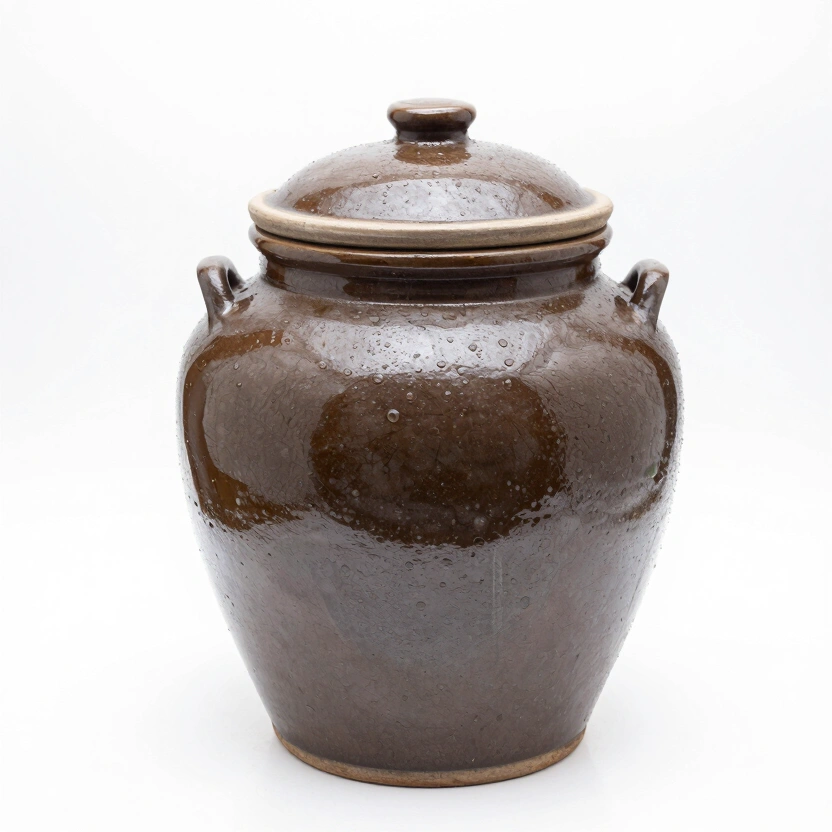
Traditional Ceramic Fermentation Crock
Classic water-seal stoneware crock for large-scale kraut, kimchi, and miso batches.
Check Price on Amazon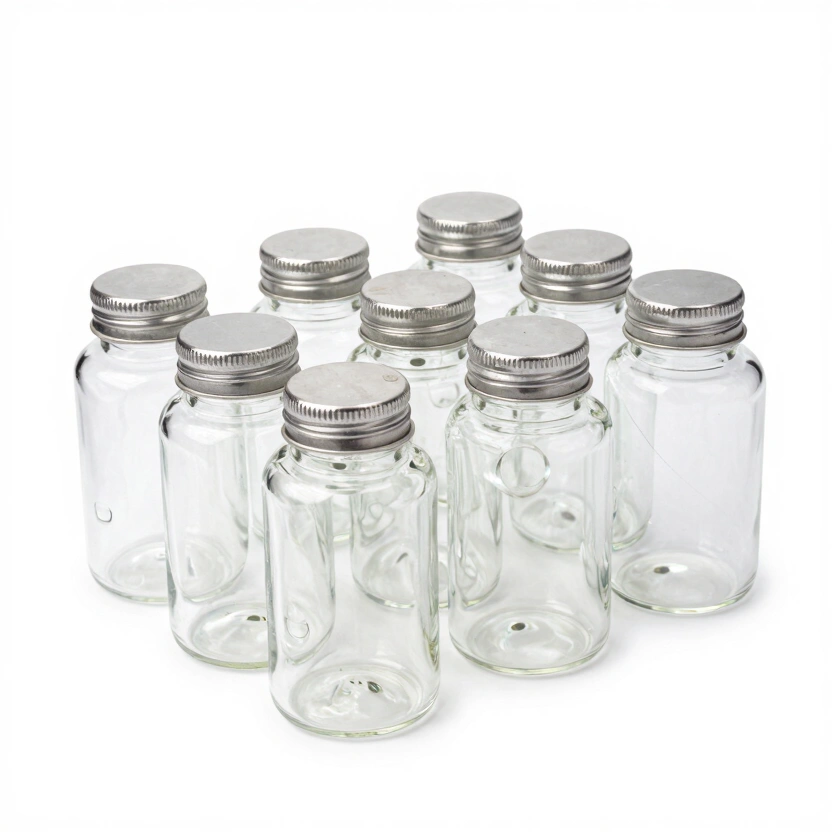
Artcome 10-Pack Glass Weights
Bulk set of heavy glass weights with easy-grip handles for large mason jar setups.
Check Price on Amazon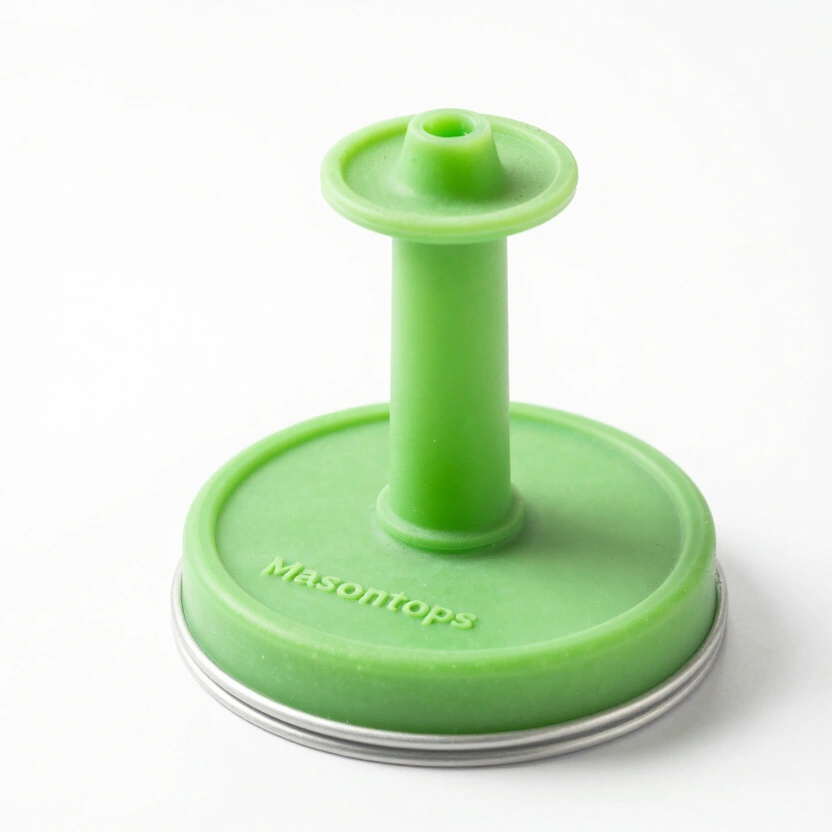
Masontops Pickle Pipe (Airlock Lids)
Waterless silicone airlock lids for easy, low-maintenance mason jar fermentation.
Check Price on Amazon* Affiliate links. Prices last updated March 3, 2026.
Weighting Systems: Stones vs. Pebbles
The vessel often dictates the type of weight you use.
- Crock Stones: Usually come in two semi-circular halves. They cover the entire surface area.
- Glass Pebbles: Modular and perfect for jars. They can be difficult to use in a very wide crock.
Selection Guide: What to Ferment Where?
Neither vessel is perfect for every project.
Use a Ceramic Crock for:
- Large-Batch Sauerkraut: Cabbage thrives in the stable, dark environment.
- Long-Term Miso: Fermenting for 6 to 12 months requires stone insulation.
- Traditional Kimchi: A large crock is the only way to handle high volume.
Use a Glass Jar for:
- Hot Sauces: You want to see the color transition.
- Pickled Carrots: Visibility is key to ensuring the perfect snap.
- Kombucha: Glass allows you to monitor SCOBY growth easily.
The Hybrid Strategy: The Best of Both Worlds
Most comparisons force a binary choice. But the most consistent results I’ve ever gotten came from a two-vessel approach that takes the best property of each vessel type.
You don’t have to choose. Many experienced fermenters use a hybrid approach.
- Start in Glass: Conduct the first 7 days in a glass jar. This allows you to monitor the bubbles and ensure no mold forms.
- Finish in Ceramic: Once stable, move the vegetables to a ceramic vessel for long-term aging.
Frequently Asked Questions
Can a glass Mason jar actually break from fermentation pressure?
Yes — one specific scenario: a solid lid, no airlock, active fermentation. CO2 pressure builds until the lid domes, then either the seal fails or the glass fractures at a stress point. Active fermentation can generate enough pressure to crack jar walls, not just pop lids. Use a proper airlock system or burp the jar twice daily. Never leave a solid lid on an active ferment overnight.
Is vintage stoneware from the 1950s or 1960s safe to use?
Approach it with caution. Lead-based glazes were standard in ceramics made before the late 1970s. Lactic acid brine is mildly corrosive and will leach lead from worn, cracked, or thin glaze surfaces over repeated use. Buy a hardware-store lead test kit and test the interior glaze surface before using any vintage piece for food fermentation. A crock that fails the lead test still works perfectly as a utensil holder.
How do I know if my ceramic crock’s water seal is working?
Fill the moat with water and watch it for 24 hours during active fermentation. You should see small, steady bubbles rising through the moat water as CO2 escapes. No bubbles after 48 hours either means fermentation hasn’t started yet, or the seal has a crack somewhere in the rim. Silence after day 7-10 is normal — fermentation has slowed. Silence on day 1-2 means check your salt ratio and temperature.
What about unglazed crocks — are they a hygiene risk?
Unglazed ceramic is porous. It will absorb brine, residual bacteria, and off-flavors from previous batches. That’s not automatically dangerous — but it means a crock that fermented garlic last season will influence the next batch in that vessel. For a dedicated sauerkraut crock used consistently, that cross-contamination is minimal. For anything requiring a neutral vessel — like miso or a new flavor profile — glazed interior surfaces are the only reliable option.
Does the hybrid start-in-glass, finish-in-ceramic method actually improve results?
In practice, yes. Glass catches problems in the first 7 days: Kahm yeast formation, color shifts, insufficient brine coverage — all visible before they become unrecoverable. Moving a stable, acidified ferment to ceramic for long aging removes the UV exposure risk, adds thermal mass, and reduces how often you open the vessel. The two-vessel approach costs more upfront but produces more consistent long-term batches, particularly for anything aging past 3 weeks.
Vessel chosen? The next hardware decision is weights and airlocks: The Technical Guide to Airlocks and Weights explains the physics of maintaining anaerobic conditions inside whatever vessel you pick.
The Dresden Gärtopf patent is 250 years old. The Mason jar design is 165 years old. Both are still in production. That’s not nostalgia — that’s evidence. Neither vessel failed the test of time because both solve real biological problems that don’t change regardless of what decade you’re fermenting in.
Start with glass. Learn the visual language. Watch the bubbles, track the brine level, understand what healthy fermentation looks like before you seal it inside ceramic and wait. Then — once you know what you’re looking for — move long batches into a water-seal crock and let thermal mass and passive gas management do the work you used to do manually.
The hardware decision comes after the salt decision: the Brine Salinity Calculator ensures your first batch succeeds in whatever vessel you choose.
Vessel selected? For your first major fermentation project, the Homemade Sauerkraut Masterclass works equally well in a crock or a jar.
Related Articles
The Battle of the Cabbages: A Technical Comparison of Kimchi vs. Sauerkraut
Which fermented cabbage reigns supreme? We compare the microbiology, nutrition, and preparation physics of Kimchi and Sauerkraut.
Water Kefir Grains Care: Troubleshooting Growth and Health
Why are your water kefir grains not growing? We explore the science of grain health, mineral balance, and how to rehabilitate stressed cultures.
The Sauerkraut Masterclass: Achieving the Perfect Crunch with Precision Ratios
Master the ancient art of sauerkraut. Learn the science and step-by-step techniques to create the perfect crunchy, probiotic-rich kraut at home.