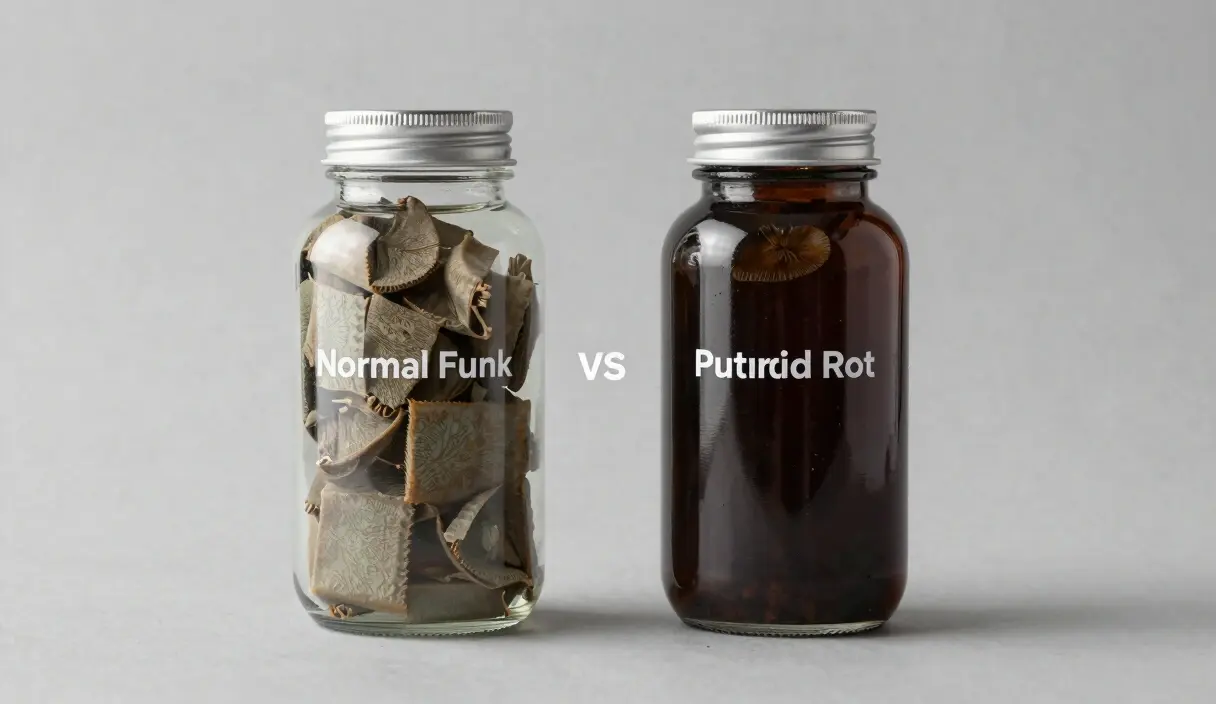
The Fermentation Smell Test: Normal Funk vs. Putrid Rot
Is your ferment supposed to smell like that? We explore the science of fermentation aromas, from cheesy funk to dangerous decay.
Contents
In 1666, King Charles VI of France granted the Société des Caves de Roquefort a Royal Charter to produce Roquefort cheese exclusively in the Combalou plateau caves above Roquefort-sur-Soulzon. Within that guild, the affineurs — the cheese maturation specialists — maintained a written lexicon of acceptable and unacceptable odors. “Piquant and clean” was the language for a cheese ready to sell. “Rancid and chemical” meant discard. No tasting until the smell test passed. This was not artisanal intuition; it was a professional fermentation smell test protocol developed to protect customers at scale. That vocabulary — built by the Société des Caves over generations of systematic olfactory assessment — is the direct ancestor of the smell-based safety framework that home fermenters use today, almost entirely without knowing its origins.
Your nose processes around 10,000 distinct odor compounds. For millions of years, it was your only fermentation safety instrument. It is still the fastest. The problem is that precision fermentation produces a range of smells — sulfurous, cheesy, boozy, funky — that can trigger alarm in a brain wired to associate those aromas with spoilage. Some of those smells are safe. Some are not. Here is the molecular breakdown of the key fermentation aroma compounds, what each one signals, and the exact threshold between “keep going” and “discard immediately.”
The Biology of Olfaction: Why Your Brain Panics
To be a successful fermenter, you must understand why your brain reacts to certain smells.
The Survival Instinct
Our brains are designed to detect Amines (like cadaverine and putrescine) and Sulfides. These are the byproducts of “bad” bacteria breaking down proteins. When your nose detects these, your limbic system triggers a “disgust” response.
The Learned Palate
Our reaction to fermentation smells is largely cultural. If you grew up eating Natto or blue cheese, your brain categorizes those pungent aromas as “food.” As you gain experience, your “internal database” will expand, allowing you to distinguish between a healthy microbial bloom and a contamination.
The Normal Range: What Healthy Fermentation Smells Like
Before we talk about bad smells, let’s establish the baseline for success.
The Tangy “Zing” (Lactic Acid)
The gold standard. It smells like a sharp, clean pickle or a fresh lemon. It is the scent of a pH dropping below 4.6. It should make your mouth water.
The Yeasty “Bread” (Saccharomyces)
If you are fermenting Ginger Bug, a yeasty smell is a sign of victory. It smells like a warm bakery or a fresh beer.
The Sulfurous “Funk” (Brassica)
Fair warning: the sulfur phase of sauerkraut is more alarming than most first-timers expect. Your entire kitchen will smell like old gym socks for 3-5 days. This is normal. Don’t panic. Don’t open the jar.
Making Sauerkraut or Kimchi will involve sulfur. Cabbage is rich in organosulfur compounds. When bacteria break these down, they release a smell from “mildly eggy” to “old gym socks.” This is a normal part of the process for all Brassicas.
The Danger Zone: Smells That Mean “Stop”
Do not taste anything in this section. Not a small taste, not a cautious lick of the spoon. The danger smells listed below can indicate toxin-producing organisms that bypass the gag reflex entirely — you will not know you have consumed something dangerous until symptoms appear hours later.
If your nose detects any of the following, do not taste the food. Discard immediately.
Putrid / Rotting Meat (The Cadaverine Alert)
The ultimate warning sign. It smells like a dead animal.
- Cause: Clostridium or other putrefactive bacteria have taken over due to low salt or high pH.
- Verdict: Lethal Danger.
Sewage / Feces (The E. coli Indicator)
If the jar smells like a bathroom, it has been contaminated by enteric bacteria.
- Cause: Poor hygiene or contaminated water.
- Verdict: Biohazard.
Vomit (The Butyric Acid Marker)
A sharp, rancid smell identical to human vomit.
- Cause: Production of butyric acid by “unfriendly” bacteria.
- Verdict: Spoilage. Discard.
The Grey Area: Pungent but Potentially Safe
Some smells are alarming but common in specific fermentation stages.
Ammonia (The Protein Breakdown)
A sharp, stinging smell.
- Common in: Tempeh and Natto.
- The Science: A sign of protein over-degradation. Normal in alkaline ferments, but a sign of failure in acidic ones like Kraut.
Cheesy / Sweaty Feet (The Pediococcus Phase)
Check the pH before you do anything else. The isovaleric acid smell is almost indistinguishable from the early stages of butyric spoilage to an untrained nose — one is safe and temporary, the other is not. A pH reading of 3.8 tells you in 15 seconds which situation you are in. Do not rely on smell alone in the grey zone.
This is the smell that convinced me to throw out two batches I should have kept. Isovaleric acid smells genuinely unpleasant — like a locker room combined with aged blue cheese. But if the pH is low, it is safe and temporary.
A lingering scent of aged cheddar.
- The Science: Caused by Isovaleric acid. Usually coincides with a slimy texture phase.
- Verdict: If the pH is low (< 4.0), it is safe. Often “ages out” in two weeks.
The Alcohol / Solvent Trap: Yeast Overdrive
Paint Thinner / Nail Polish Remover (Ethyl Acetate)
A sharp, chemical smell.
- Cause: Wild yeasts producing high levels of ethyl acetate, often because the temperature was too high (above 80°F).
- Verdict: Safe but unpleasant.
Strong Alcohol / Boozy
- Cause: Pure yeast dominance. Common in fruit ferments.
- Verdict: Safe. You’ve made a very dry, alcoholic version of your project.
How to Perform a “Scientific Sniff”
Never put your nose directly over a suspected spoiled ferment and inhale. A single deep breath of concentrated cadaverine or hydrogen sulfide causes immediate nausea and can trigger a vomiting response that contaminates your kitchen workspace. The affineurs at Roquefort used a waft technique for exactly this reason. Use the same method.
Most people put their nose directly over the open jar and take a full breath. That is the worst way to do this — it overwhelms your receptors and forces you into a purely instinctive, non-diagnostic reaction. Use the waft method.
- The Waft: Open the lid slightly and use your hand to wave the air toward your nose. Do not inhale directly.
- The Room Check: Walk into the room. If the entire kitchen smells bad, the jar has a problem.
- The Deep Sample: If suspicious, use a clean spoon to take a bit of brine and smell it separately.
These are the tools that help contain and verify the safety of your jar’s aroma:
Aroma Containment & Verification
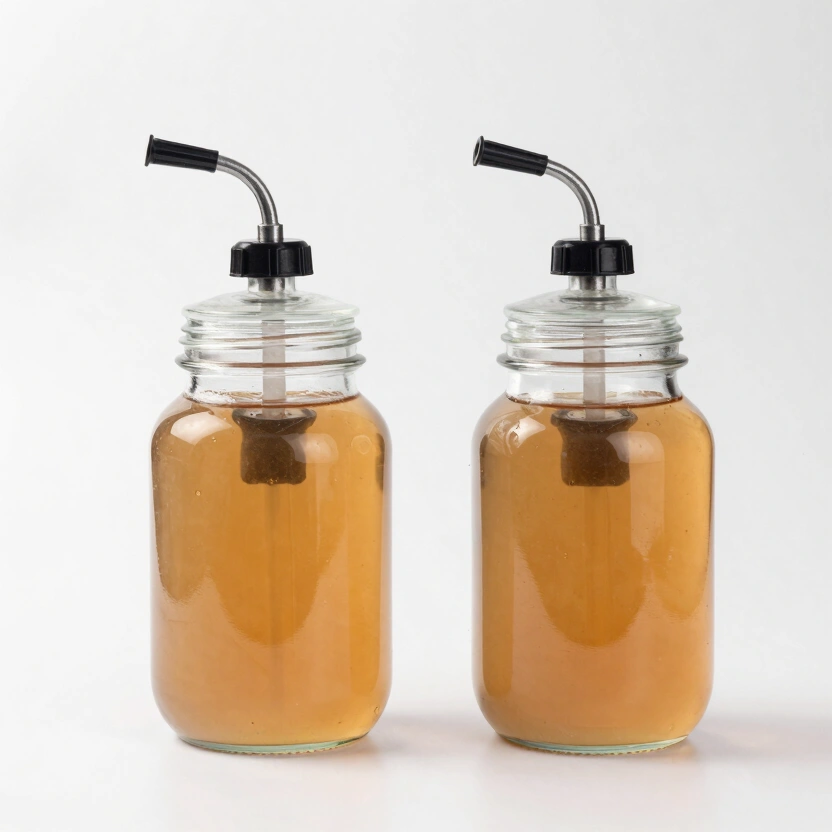
Green Wise Fermentation Jar Set (2 Pack)
Large 1.4L jars with integrated airlock valves. Perfect for sauerkraut, kimchi, or tomatoes.
Check Price on Amazon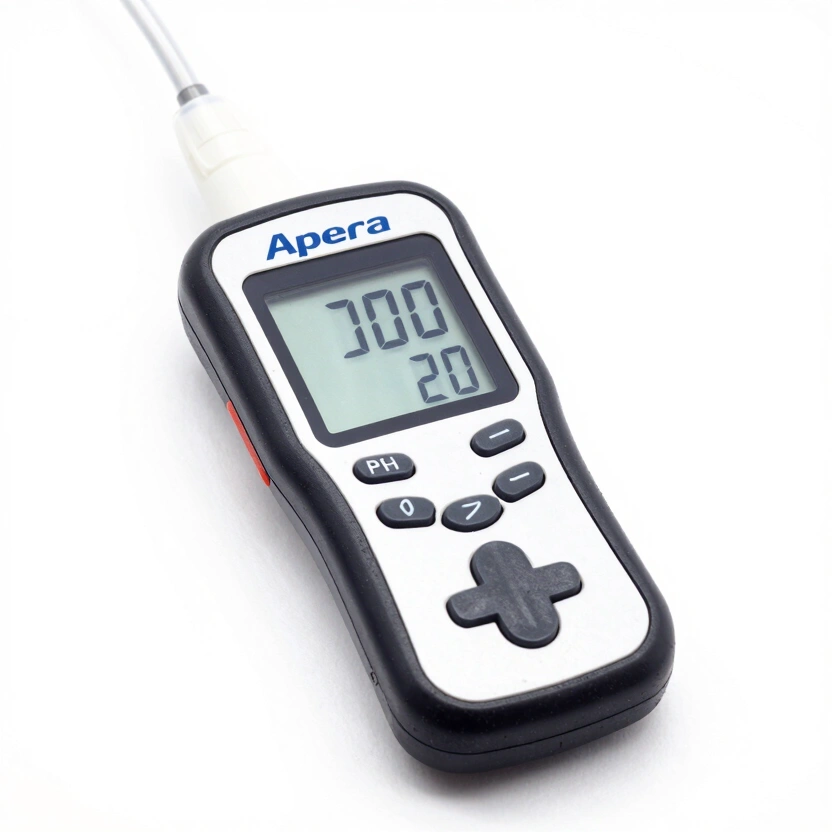
Apera Instruments PH20 pH Meter
Professional-grade digital pH tester, essential for verifying safety in low-acid ferments.
Check Price on Amazon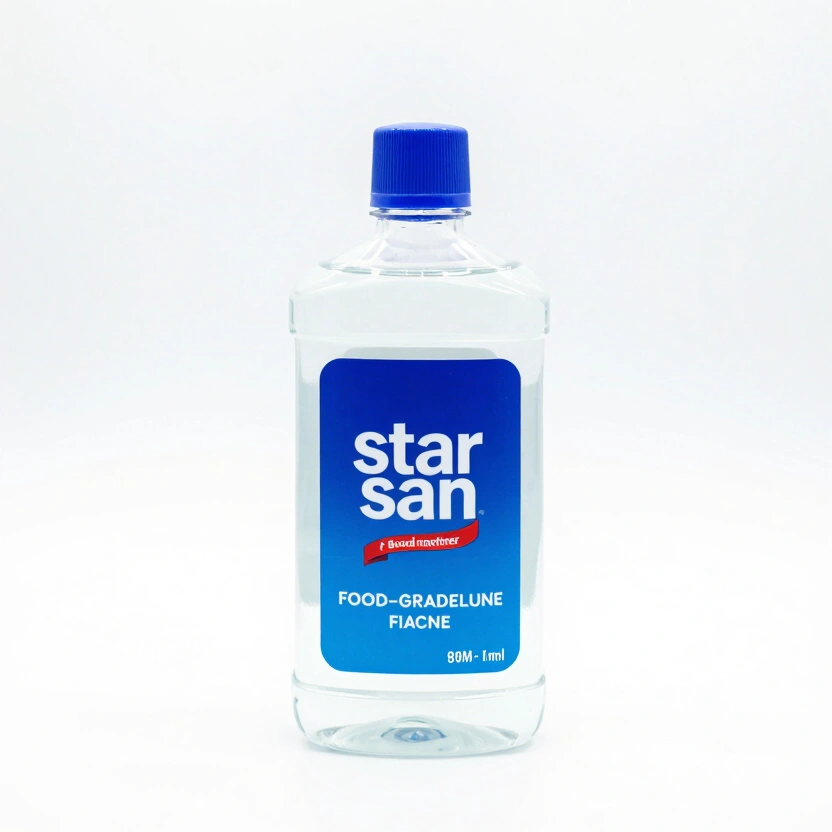
Star San Food-Grade Sanitizer
The gold standard for no-rinse sanitization in home brewing and fermentation.
Check Price on Amazon* Affiliate links. Prices last updated March 3, 2026.
The Ingredient Factor: Natural Aromatic Heavyweights
- Garlic: Fermented garlic can smell like natural gas. This is normal sulfur release.
- Onions: Can smell “rank” for the first 10 days before mellowing. (See our Onion Guide).
- Seafood (Fish Sauce): In Kimchi, this will smell like “decaying ocean” for the first week before transforming into umami.
Seasonal Smells: Winter vs. Summer Aromas
- Summer (80°F+): Encourages yeast. Expect more “bready” or “fruity” smells.
- Winter (60°F): Slows aromatics. Your jar might smell like nothing for weeks, then develop a clean lactic scent.
Post-Fermentation: How Cold Storage Changes Everything
- Mellowing: Fermented flavors “marry” in the cold. A harsh, sulfurous kraut will often become nutty after a month in the fridge.
- CO2 Absorption: Fizzy smells become a more integrated, “sparkling” aroma in cold storage.
The Société des Caves affineurs did not sniff Roquefort by instinct alone — they had a written lexicon, years of calibration, and a strict protocol for ambiguous cases. That same structure applies here. Trust your nose completely for the extreme cases: cadaverine, putrescine, raw sewage, and vomit are unambiguous. For the grey zone — cheesy, sulfurous, musty, boozy — the nose is a hypothesis generator. The pH meter gives you the verdict. Use both tools, in that order, every time you open a jar you are uncertain about.
For the complete combined diagnostic — surface growth correlated with off-smells, with the visual and olfactory sequences mapped against each other — the Kahm Yeast vs. Mold Guide is the logical next read. Surface growth and off-smells almost always appear together.
Frequently Asked Questions
My sauerkraut smells like a locker room during days 3-5. Is this normal?
Yes, and it is one of the most frequently misread normal fermentation smells. Cabbage is dense with organosulfur compounds – glucosinolates – that break down under bacterial metabolism into hydrogen sulfide, methanethiol, and dimethyl sulfide. The result is a smell ranging from mildly eggy to aggressively gym-sock-like, typically peaking between days 3 and 7. Check the pH: if it is falling toward 4.0, the process is working correctly and the sulfur phase will mellow by day 10. Keep the jar sealed and do not open it to air it out – that introduces oxygen and can slow the acidification.
My ferment smells completely fine but I can see surface growth. Which do I trust – nose or eyes?
Trust both, but in different ways. A good smell with visible surface growth is a classic kahm yeast presentation – flat, white, non-fuzzy film that produces mild off-aromas (dusty, mildly cheesy) or sometimes no additional smell at all. A good smell is reassuring, but it does not override the visual diagnosis. Skim the film, check pH, and verify the ferment remains below 4.6. A good smell with fuzzy, colored, or raised growth means you have a mold colony that has not yet produced enough off-gas to dominate the aroma. Discard.
Can a ferment smell wrong but still be safe?
Yes. The grey-zone aromas – isovaleric acid (sweaty/cheesy), ethyl acetate (nail polish remover), strong alcohol, and ammonia in alkaline ferments – are frequently alarming and frequently safe. The smell is a hypothesis. The pH reading is the verdict. A batch smelling of sweaty feet at pH 3.7 is safe. A batch smelling pleasantly of lactic tang at pH 5.2 is not. Never use smell as the sole safety criterion in the ambiguous range.
How do I know when the fermentation smell has settled and is ready for the fridge?
You are looking for two shifts: sulfur compounds mellowing from sharp to faintly eggy, and lactic acid aromas sharpening from broadly sour to clean and ferment-specific. The smell should be consistently tangy and stable across two consecutive checks 24 hours apart. A ferment that still smells actively different each day has not finished its active phase. For most vegetable ferments at 68 degrees F to 72 degrees F, this stable-smell point arrives between day 10 and day 21 depending on salt concentration.
Why does my fermented garlic smell like natural gas?
Garlic contains allicin and over 30 additional organosulfur compounds that break down under fermentation into compounds including diallyl sulfide – which is structurally related to the mercaptan compounds added to natural gas for odor detection. The similarity is real and it is alarming the first time. Check that the smell comes from the garlic itself, not from any actual gas appliance, then proceed normally. Fermented garlic smell peaks around days 5-10 and mellows significantly in cold storage. The Water Quality and Chlorine guide explains how chlorine in tap water can intensify this effect by suppressing the competing bacteria that would otherwise moderate the sulfur phase.
Related Articles
Why is My Brine Cloudy? Understanding Bacterial Sediment and Safety
Is cloudy brine a sign of success or failure? We explain the science of microbial blooms, sediment, and how to verify the safety of your ferment.
Fermented Garlic in Brine: Solving the Blue and Green Mystery
Why did your garlic turn blue? We explore the science of sulfur-acid reactions and how to ferment the perfect savory garlic cloves.

The Goldilocks Zone: Mastering Temperature Control in Fermentation
Temperature is the throttle of fermentation. Learn how to control the 'Goldilocks Zone' to achieve perfect flavor, texture, and safety.