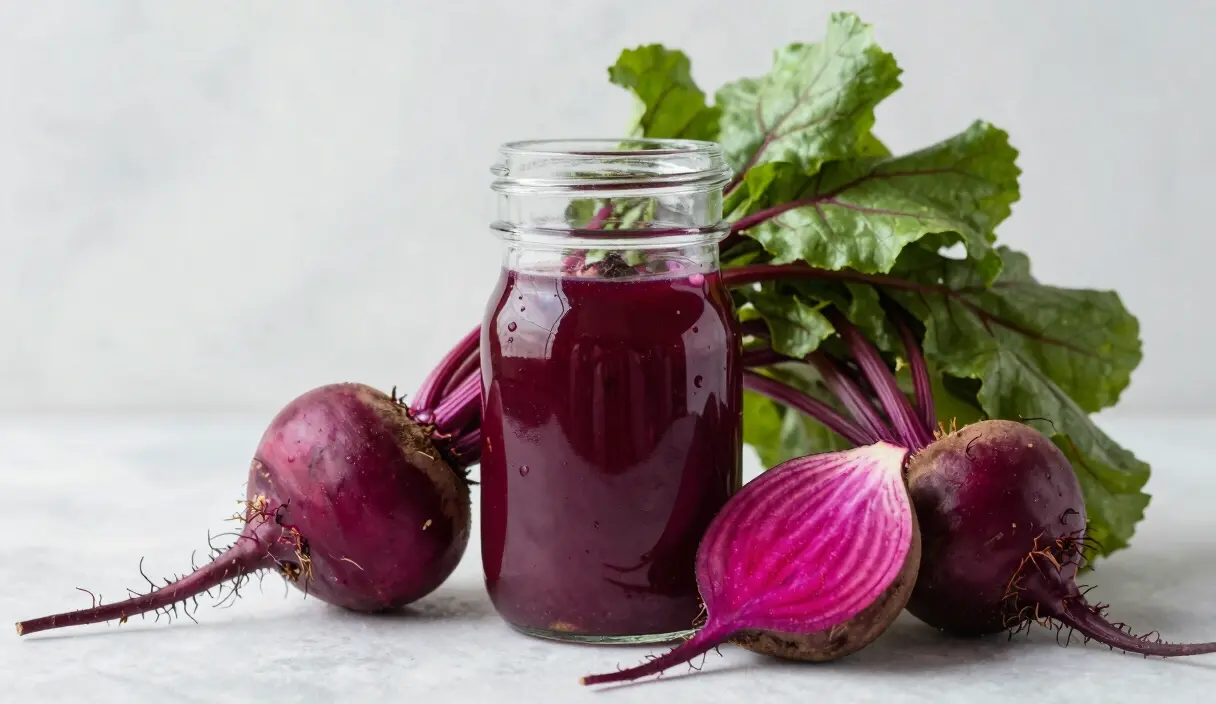
Fermented Beets: Mastering the Earthy Earth-Apple at Home
Why do beets taste like dirt? Learn the science of geosmin and how to create the perfect fermented beets without the mush.
Contents
Fermented beet brine — kvass in Ukrainian and Russian tradition — is one of the oldest household ferments in Eastern Europe. Not the beets themselves: the liquid. A shot glass of beet kvass brine has more bioavailable iron than a 100g serving of raw spinach. Most people fermenting beets at home serve the solids and discard the brine. That’s backwards.
The beets themselves matter too. Boiling concentrates geosmin — the compound behind the “wet soil” flavor — and amplifies it with heat. Fermentation does the opposite. Lactic acid bacteria drop the pH below 4.6, the acidic environment breaks down geosmin molecules, and the flavor shifts toward something bright, fruity, and deeply savory. People who have refused beets their entire lives change their mind after the fermented version.
This guide covers the 2.5-3.0% salinity rule that prevents the Pediococcus slime problem, the geosmin neutralization chemistry, and the preparation styles that control texture and timeline.
The Geosmin Mystery: Why Beets Taste Like “Dirt”
To master the fermented beet, you must first understand Geosmin. If you’ve ever walked outside after a rainstorm and smelled that earthy, “fresh soil” aroma, you were smelling geosmin.
The Microbial Origin
Geosmin is a volatile organic compound produced by soil bacteria (specifically Streptomyces). For decades, scientists believed that beets simply “absorbed” this smell from the surrounding soil. Recent research revealed something more interesting: beets are one of the few plants capable of producing their own geosmin endogenously. It is literally part of their genetic makeup.
Fermentation as a Deactivator
Many people who hate boiled beets love fermented ones.
- Acid Neutralization: Geosmin is highly sensitive to acid. As your Lactic Acid Bacteria drop the pH below the 4.6 safety limit, the acidic environment begins to break down the geosmin molecules.
- The Result: Fermentation “brightens” the flavor of the beet, replacing the heavy damp-earth taste with a vibrant, fruity tang.
The Pigment Advantage: Betalains and Nitrates
Beets are not just colorful; they are biologically active in ways that few other vegetables can match.
Betalains: The Antioxidant Powerhouse
The deep red color of a beet comes from Betalains. Unlike the anthocyanins found in red cabbage, betalains are much more stable under high-heat conditions but remain highly bioavailable when eaten raw or fermented. They are powerful anti-inflammatories that protect the liver and the vascular system. Boiling destroys roughly 25% of betalain content; fermentation loses almost none.
The Nitrate-Nitrite-Nitric Oxide Pathway
Beets are exceptionally high in dietary nitrates. When you eat them, your mouth bacteria convert nitrates into nitrites, which the body then converts into Nitric Oxide (NO).
- Vasodilation: Nitric oxide is a signaling molecule that tells your blood vessels to relax and widen. This is why beet consumption is clinically proven to lower blood pressure and increase oxygen delivery to muscles.
- Fermentation Boost: Some studies suggest that the fermentation process “pre-digests” these nitrates, making the cardiovascular benefits even more immediate than eating raw beet juice. (See our Science of Probiotics Guide for more on bioavailability).
Salinity Balance: The 2.5% vs. 3.0% Rule
I’ve pulled a beet jar at day four to find the entire brine had turned thick and ropy — classic Pediococcus slime from under-salting. The fix is a higher brine concentration from the start, not a rescue attempt after the fact.
Beets are a high-sugar root vegetable. In the world of fermentation, sugar is a double-edged sword.
The Risk of the “Slime”
Because beets have such a high concentration of sucrose, they are a prime target for Pediococcus and other exopolysaccharide-producing bacteria. If your salt is too low, your beet jar will turn into a viscous, syrupy mess.
- Standard Recommendation: For most vegetables, 2% salt is enough. For beets, we recommend 2.5% to 3.0% total salinity.
- The Brake System: This higher salt concentration acts as a microbial brake, slowing down the rapid early fermentation and ensuring that the Lactic Acid Bacteria establish a clean, crisp acidification curve.
Preparation Styles: Sliced, Grated, or Whole?
The way you cut your beets determines how the microbes interact with the vegetable and how much pigment is released into the brine.
Sliced (The Salad Classic)
Cutting beets into uniform 1/4-inch thick slices or cubes.
- The Advantage: Provides a satisfying, crunchy texture.
- The Timeline: Takes about 10 to 14 days to reach maturity.
Grated / Shredded (The Fast Ferment)
Shredding beets with a coarse grater (similar to Sauerkraut).
- The Advantage: Massive surface area leads to a very fast fermentation (4-7 days). It creates a jam-like consistency that is perfect for spreading on sandwiches or mixing into yogurt.
- The Downside: The texture is soft, and it releases the most pigment, turning everything else in the jar deep purple.
Whole Baby Beets (The Patience Test)
Fermenting small, whole beets.
- The Advantage: The best texture. The interior remains sweet and dense while the outside develops a tangy “skin.”
- The Timeline: Requires 4 to 6 weeks. (See our Temperature Control Guide for managing long-term ferments).
That timeline is not a suggestion — at 3 weeks I opened a whole-beet batch expecting it to be ready and pulled out something grainy in the center. Fermentation had acidified the exterior before the brine fully penetrated the core. Four to six weeks is the actual minimum.
The Master Protocol: Step-by-Step Fermented Beets
Follow this precise schedule to ensure a safe, crisp, and vibrant result.
Ingredients:
- 1 lb (500g) Fresh Red Beets
- 1 inch Fresh Ginger (sliced) - Ginger helps inhibit Kahm yeast.
- 2 Whole Cloves - Adds an aromatic Eastern European depth.
- The Brine: 3% Salinity (30g non-iodized sea salt per liter of water).
The Workflow:
- Prep: Wash the beets thoroughly to remove all soil. Peeling is optional—if you have organic beets, keep the skin for extra wild microbes.
- Pack: Slice the beets and pack them tightly into a quart jar. Tuck the ginger and cloves between the layers.
- Submerge: Pour the 3% brine over the beets. Ensure they are submerged by at least 1 inch of liquid.
- Weight: Apply a heavy glass weight. Beets contain a lot of sugar and gas production can be intense; a heavy weight is mandatory to keep them underwater.
- Seal: Attach an airlock. Store in a dark place at 65°F to 70°F.
These are the tools that make the biggest difference:
Essential Beet Fermentation Gear
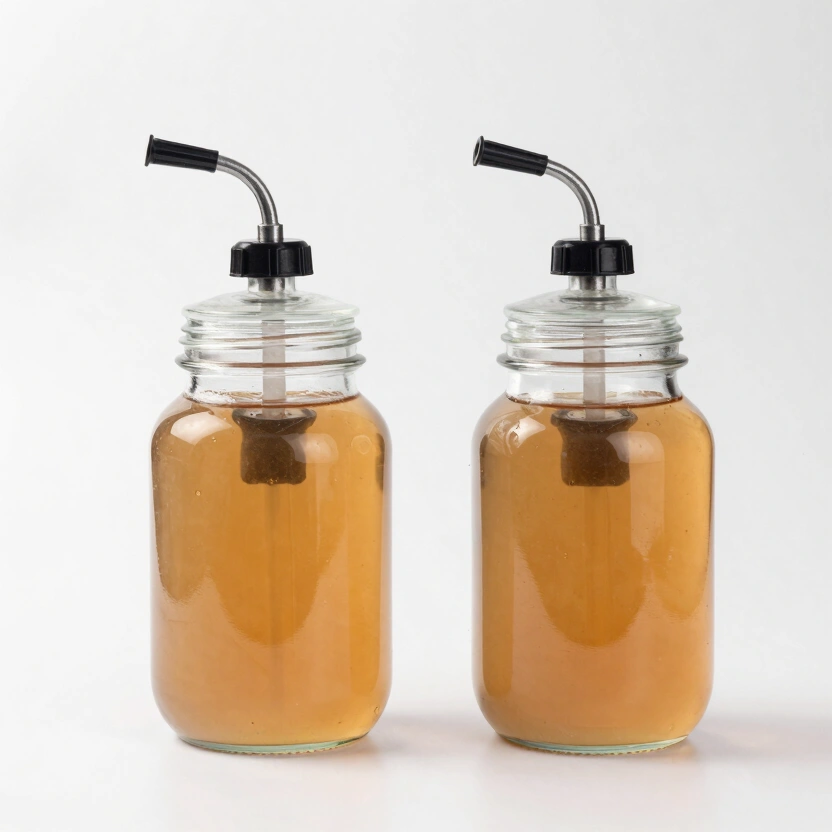
Green Wise Fermentation Jar Set (2 Pack)
Large 1.4L jars with integrated airlock valves. Perfect for sauerkraut, kimchi, or tomatoes.
Check Price on Amazon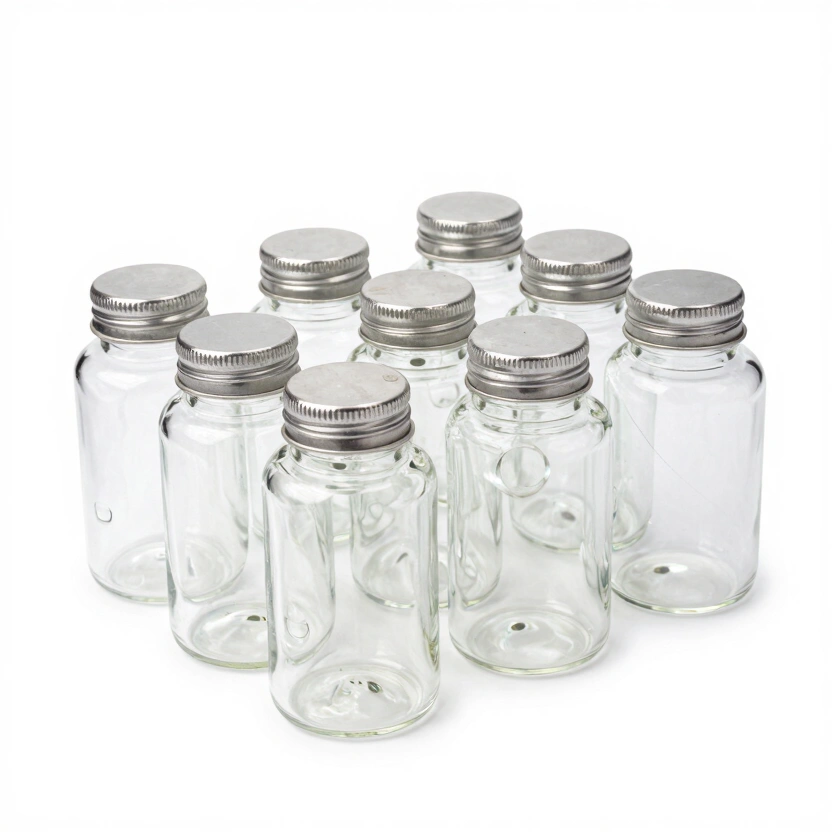
Artcome 10-Pack Glass Weights
Bulk set of heavy glass weights with easy-grip handles for large mason jar setups.
Check Price on Amazon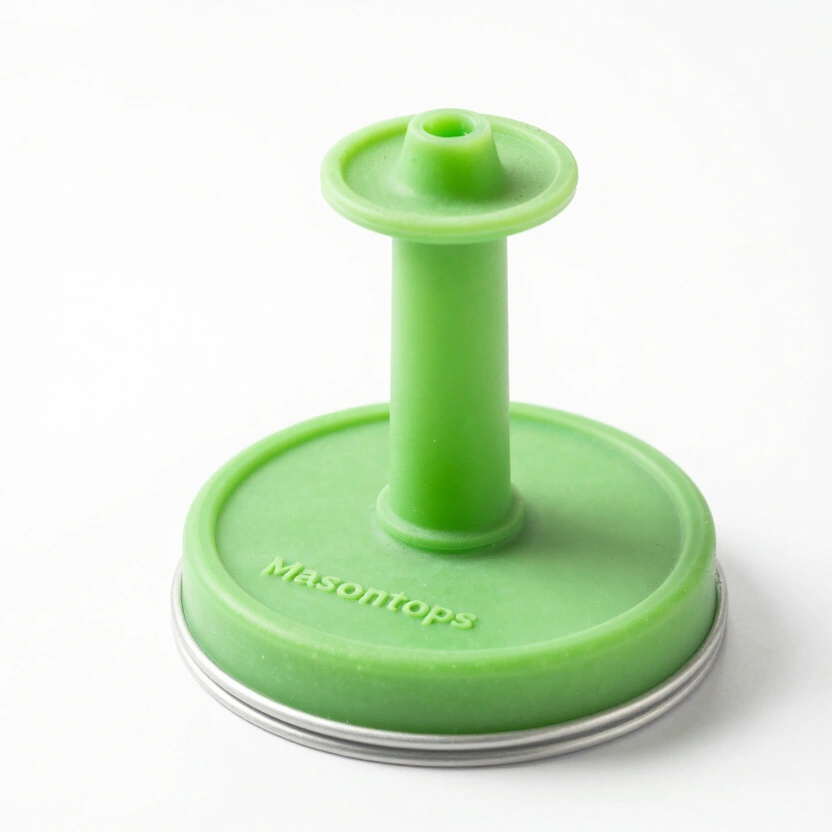
Masontops Pickle Pipe (Airlock Lids)
Waterless silicone airlock lids for easy, low-maintenance mason jar fermentation.
Check Price on Amazon* Affiliate links. Prices last updated March 3, 2026.
The “Bonus” Superfood: Beet Kvass
Here’s what most fermentation guides don’t tell you: the liquid in your beet jar after 10 days is arguably more valuable than the beets themselves — a concentrated tonic of lactic acid, betalains, and pre-digested nitrates that takes 30 seconds to prepare and delivers the same cardiovascular benefits as fresh beet juice.
When you ferment sliced beets, you aren’t just making a vegetable snack; you are creating Beet Kvass.
- What is it? The liquid brine in your jar is now a concentrated tonic of lactic acid, betalains, and nitrates.
- How to use: Traditionally, a small glass of this “liquid gold” is drunk daily for liver support. (We will cover the full history of this drink in our Kvass Masterclass).
Culinary Innovations: Pairing the Earth-Apple
Beets thrive when paired with bright, acidic, or warming ingredients.
- The “Bright” Blend: Ferment beets with green apples and lemon zest. The malic acid from the apple complements the lactic acid of the ferment perfectly.
- The “Warm” Blend: Beets, ginger, and a pinch of caraway seeds. This is the classic flavor profile of a Polish Barszcz base.
Safety and Troubleshooting: The Purple Shield
Beets are one of the few ferments where visual monitoring is tricky — everything turns dark purple within 48 hours, which makes it genuinely harder to spot surface growth against the stained jar walls. Check the brine surface directly, not through the side of the jar. The staining also means you won’t notice a pH problem visually. Test with a meter, not by eye.
Because beets are high in sugar and earthy Geosmin, they present unique challenges.
The “White Film” Panic
Beets are extremely prone to Kahm Yeast because of their high sugar content.
- Identification: If you see a white, wrinkled film on top of your deep purple brine, it is Kahm.
- Action: Skim it off immediately. If you leave it, the yeast will consume the lactic acid, raising the pH and inviting actual mold.
The pH Guarantee
Use your digital pH meter. Because of the sugar, beets should drop to a pH of 3.8 to 4.2 very quickly (within 4 days). If your pH remains above 4.6 after a week, the high sugar content has likely encouraged the wrong bacteria—discard the batch.
Long-Term Storage: Decanting the Flavor
Once your beets reach the perfect level of tang and crunch, move them to the refrigerator.
- Mellowing: Beets, like wine, benefit from a “cold-cure.” After 2 weeks in the fridge, the sharp acidity mellows into a silky, sweet savory profile.
- Shelf Life: Fermented beets will last 6 to 12 months in cold storage. The beets will slowly become softer over time, but they remain safe as long as they are submerged.
Sliced beets at 3% brine reach pH 3.8-4.2 by day 10-14. Move them to cold storage at that point. Two weeks in the refrigerator after active fermentation and the sharp acidity mellows into something silky and sweet-savory — the jar you serve to the person who swears they hate beets. Don’t discard the brine. Drink it.
The kvass is the thing most guides don’t mention. That liquid, concentrated with lactic acid, betalains, and pre-digested nitrates, is worth more nutritionally than the solids it surrounded.
Beets build intense CO2 pressure and need serious downward force — the best fermentation weights review For a fast, high-sugar ferment that works on the same active-brine principle, the lacto-fermented tomatoes guide is the ideal contrast project — days instead of weeks, explosive carbonation instead of slow acidification. covers which glass and ceramic options are heavy enough to hold dense, high-sugar roots submerged through the most active phase.
For the full breakdown of how dietary nitrates and lactic acid fermentation interact to support gut microbiome diversity, the Science of Probiotics and Gut Health guide covers the relevant research.
Frequently Asked Questions
Why did my beet brine turn into thick, ropy syrup?
That’s a Pediococcus exopolysaccharide reaction — the bacteria converted high beet sugar into a slimy matrix. It happens when salt is below 2.5% for a high-sugar vegetable. Technically safe to eat; the slime often breaks down over 2-3 weeks as other bacteria dominate. Prevention is simpler: use 3% brine from the start and don’t reduce salinity to save the flavor. See the Slimy Fermentation Troubleshooting guide for recovery options.
Do I need to peel the beets?
Not if they’re organic and scrubbed clean. The skin carries wild bacteria and yeasts that contribute to fermentation, and keeping it intact slows color bleed into the brine. Conventional, commercially-grown beets may carry pesticide residue — peel those.
My beet jar is completely dark purple inside. How do I check for surface growth?
Don’t look through the side of the jar — the staining makes it impossible to read. Open the jar and inspect the brine surface directly with a light source. Kahm yeast shows as a flat, wrinkled white film on the surface. Mold shows as raised fuzzy patches with color. If you can’t tell the difference through the glass, open it and look.
Is it normal for urine to turn bright red after eating fermented beets?
Yes. This is beeturia — betalain pigments passing through the digestive system without being fully broken down. Roughly 10-14% of people experience it regardless of how many beets they eat; others never do. Completely harmless, though startling the first time.
Can I use the leftover beet brine as a starter for the next batch?
Yes. It contains active Lactobacillus and established acid that accelerate the next ferment by 1-2 days. Add 2-3 tablespoons to a new jar before pouring fresh 3% brine. The brine also works as a standalone drink — that’s the kvass tradition, and it’s worth trying before you default to treating it as waste.
Related Articles
Koji-Kin: The 'National Fungus' and its Enzymatic Power
Master the foundation of Japanese fermentation. We explore the science of Aspergillus oryzae and how to grow koji at home.

Xanthan Gum and Consistency: The Technical Secret of Hot Sauce
Why does your hot sauce separate? We explore the science of emulsification and how to use xanthan gum for professional, stable results.
Natto Health Benefits: The Science of Nattokinase and Vitamin K2
Is it a superfood or a challenge? The science of Natto — nattokinase, vitamin K2 MK-7, and how to make it at home with precision temperature control.